Which exercise should I start with?
Always with the start routine and a short, visible hide: the dog must first understand the start command, then experience an easy, quick find that builds confidence before increasing difficulty.

Mantrailing Romania
Basic mantrailing exercises are the foundation of any K9 training program and help the dog correctly understand the concepts of the trail, target scent, and teamwork with the handler.
A positive and patient approach is essential in mantrailing training.
Reward every bit of progress and keep training sessions short, enjoyable, and suited to your dog's level to avoid fatigue or boredom.
Every dog learns at their own pace, so it's important to adapt the exercises based on the dog's abilities, experience, and confidence.
These basic mantrailing exercises will help develop your dog's natural abilities and build a strong connection between you and your canine partner.
These basic exercises are recommended for dogs at the beginning of their mantrailing journey and should be constantly adapted according to each dog's level and motivation.
Step by step
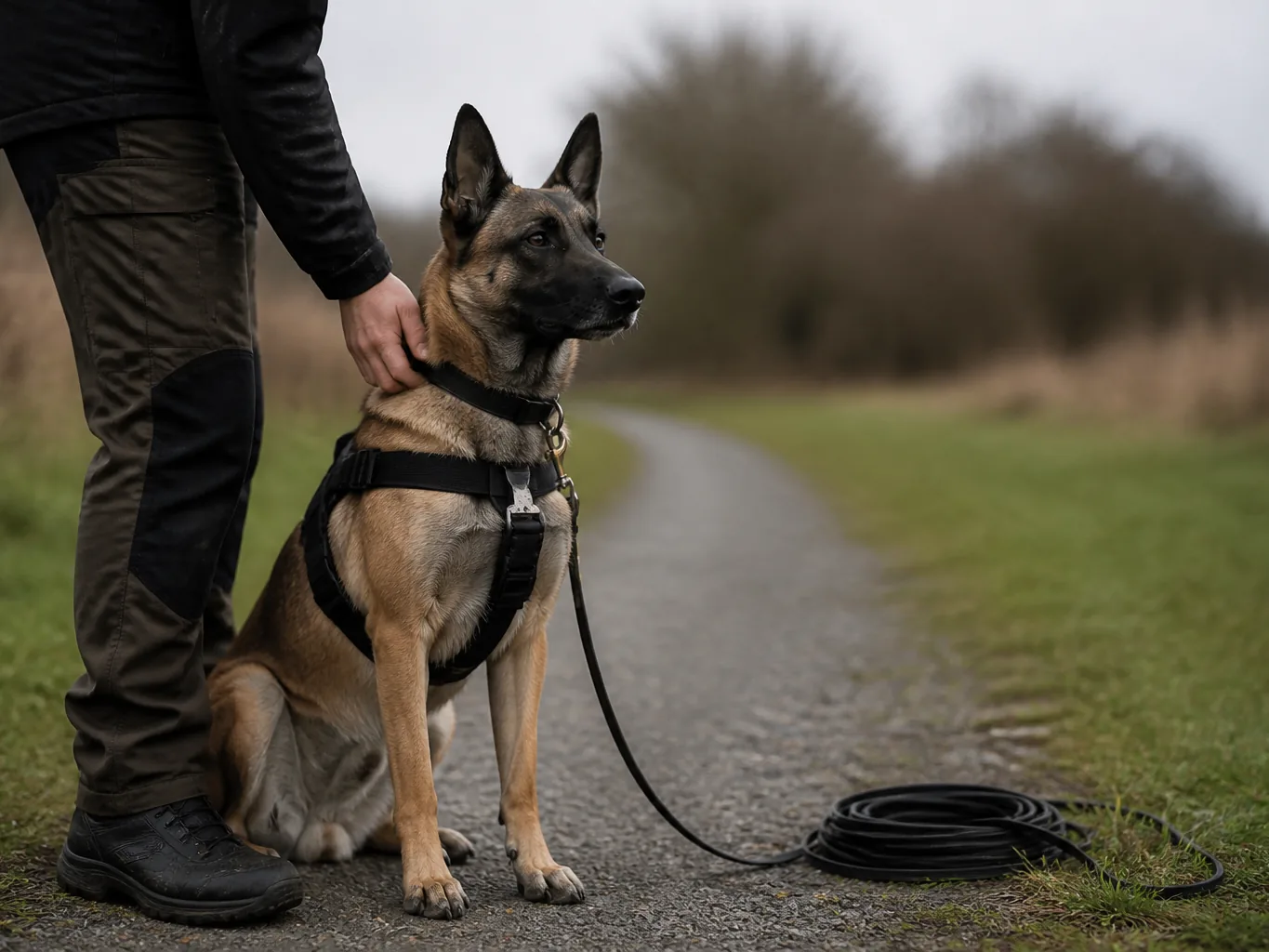
Establishing a clear start routine helps the dog understand when the search begins. Use the same verbal command or specific gesture every time (for example, “Search!"). Repeating this ritual in each training session will create a clear association and improve the dog's focus.
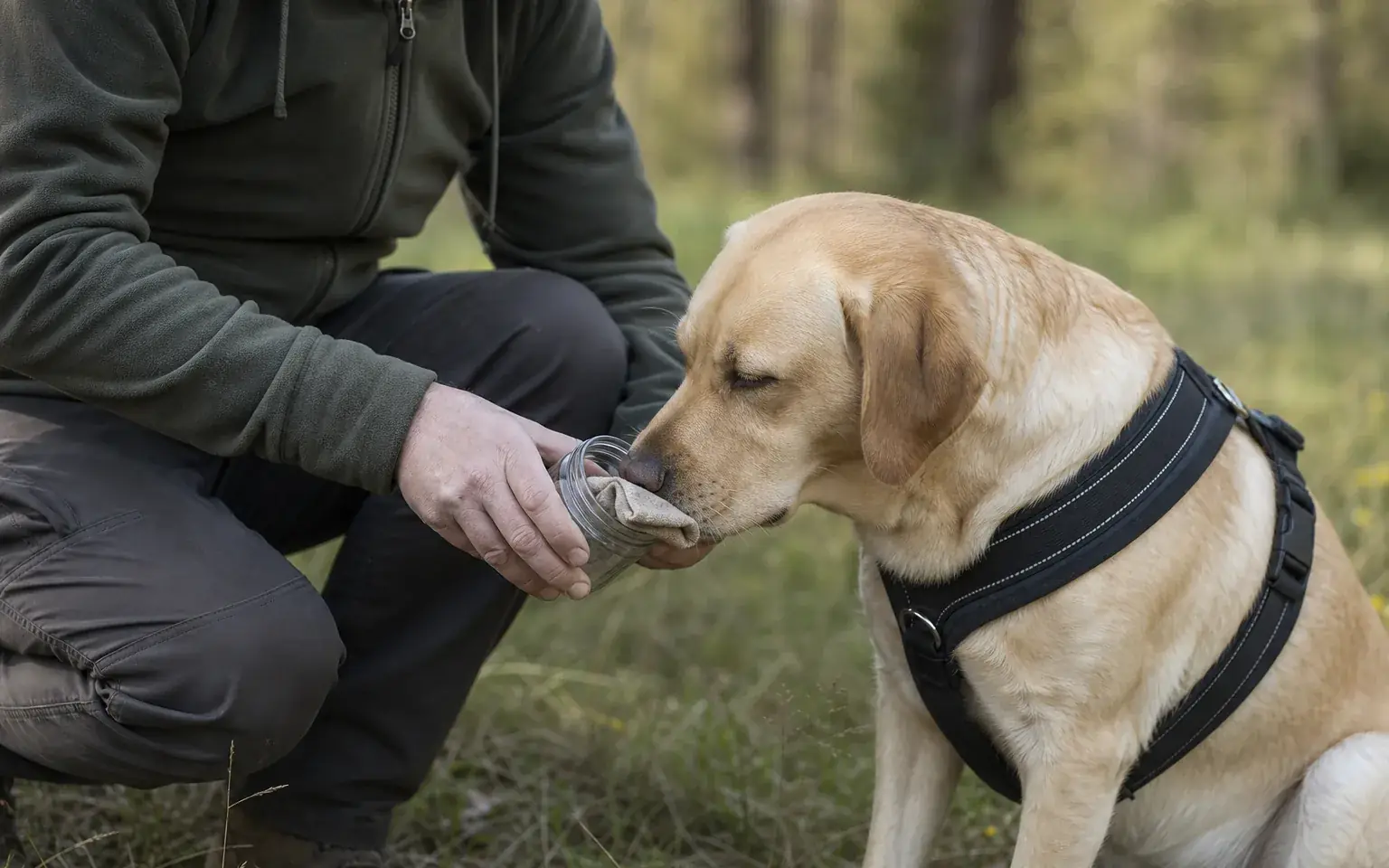
Use an object carrying a person's scent, such as a piece of fabric or clothing. The person hides in an easily accessible location at a short distance (for example, behind a tree or a door). Allow the dog to smell the article, then guide them toward the person. Once the person is found, the reward should be given immediately in the form of food, play, or affection.
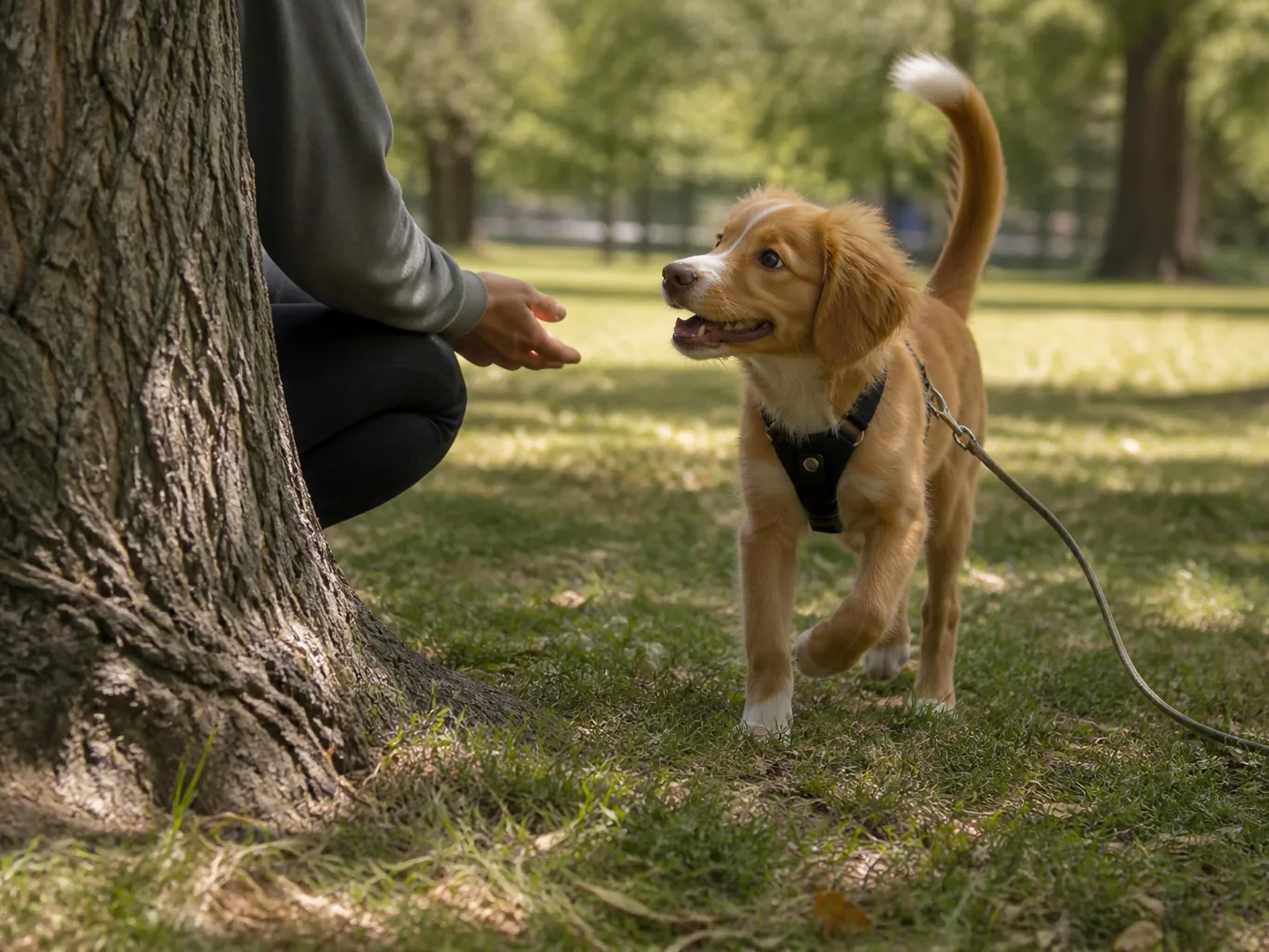
This exercise builds the dog's confidence and motivation to search. The person to be found walks away from the dog and hides at a short distance in a relatively visible location. The dog should observe the departure, but not necessarily the exact hiding spot. The reward must be immediate and positive to reinforce the desired behaviour.
This step focuses on developing the dog's ability to follow a longer scent trail. The person hides at a greater distance and leaves a clear trail, possibly stepping more firmly to intensify the scent. The dog starts from the scent article and follows the trail. The distance should be increased gradually as the dog gains confidence and experience.
This exercise introduces the dog to new and more challenging environments. Practice in different locations such as forests, parks, or urban areas. The person to be found may hide in less obvious places, such as behind a fence or inside a vehicle. The dog is encouraged to rely solely on scent cues to successfully complete the search.
Frequently asked
Always with the start routine and a short, visible hide: the dog must first understand the start command, then experience an easy, quick find that builds confidence before increasing difficulty.
5-10 minutes is enough. Short sessions with a guaranteed positive ending keep the dog more motivated than long sessions that risk leading to fatigue or boredom.
When the dog consistently succeeds at the current exercise, confidently and without hesitation, for 3-4 sessions in a row. Moving to a harder exercise too soon is the most common cause of frustration for beginners.
Go back to an easier level - shorter distance, more visible hide - and end the session with a guaranteed success. The goal of every session, especially early on, is for the dog to win, not to be tested.
Discover why mantrailing is one of the most engaging and rewarding canine sports.