
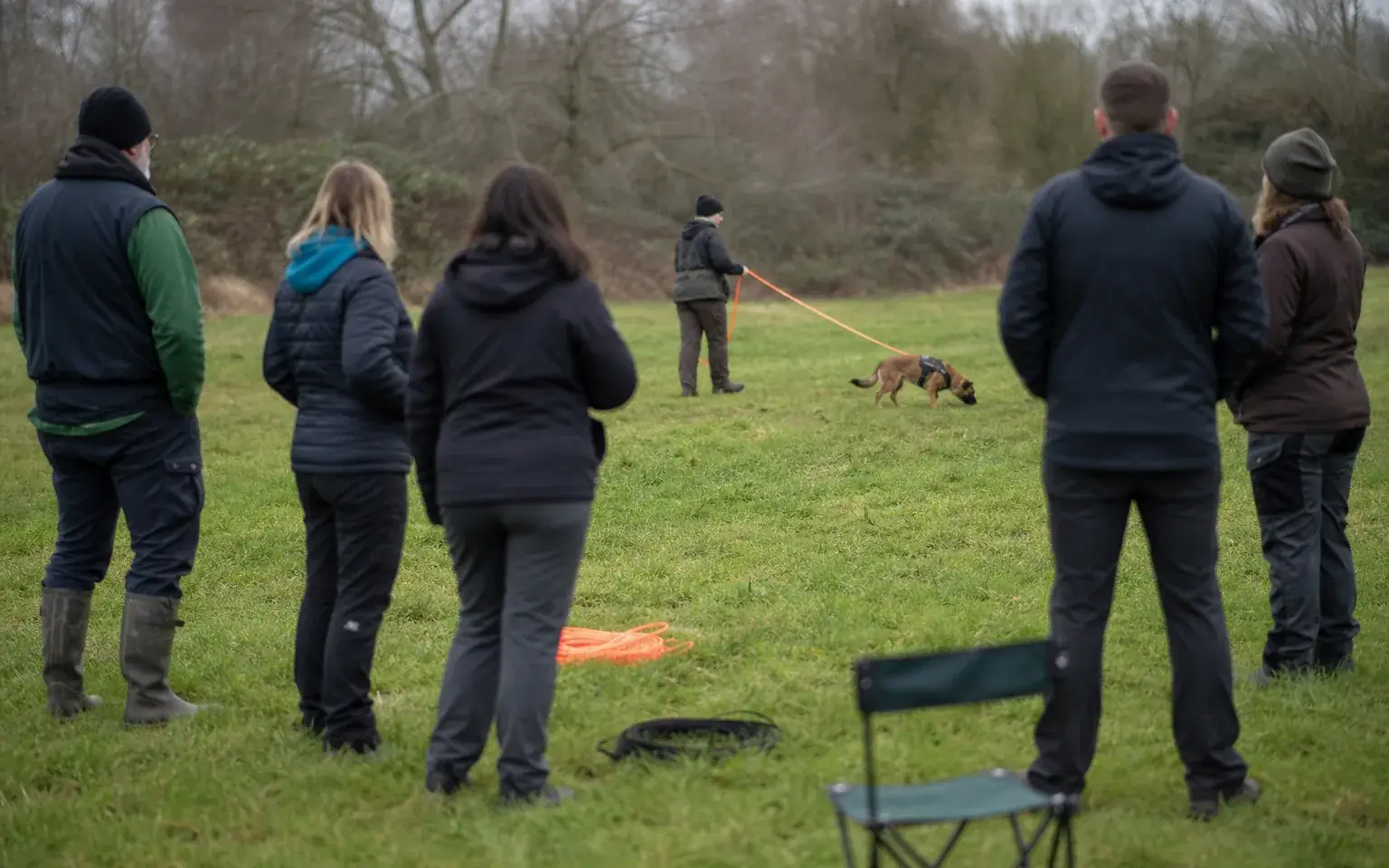
Mantrailing cannot be practised alone. Unlike other canine sports where the handler and dog work independently, mantrailing requires a group of people to function. Understanding the roles within the group and how sessions are organised is essential for anyone wanting to start - whether as a handler or as a volunteer.
Roles in a mantrailing session
Every mantrailing session involves three distinct roles, each equally important:
- The handler - the person who holds the dog on the leash and follows the dog's indications throughout the trail. The handler does not know the route in advance - their role is to trust the dog and follow where it leads.
- The layer - the person the dog will search for. The layer leaves before the team, walks a pre-set route, and hides at the end. They leave behind the scent trail that the dog will follow. No experience with dogs is needed to be a layer - anyone can fill this role.
- The observer - a person who knows the route the layer walked and watches the team (handler and dog) from a distance. They provide feedback after the session: where the dog followed the trail accurately, where it deviated, and why. The observer is a key source of information for the handler's development.
Why the group improves training
A dog that always trails the same layer will begin to recognise that person's scent and follow memory rather than the actual trail. A diverse group - with different scents, walking styles, and routes - keeps the dog working genuinely on its nose at every session.
Beyond the direct benefit to the dog, the group gives you as a handler access to scenarios you could not organise alone. These include trails in new locations, varied terrain, aged trails, and feedback from experienced observers.
How you contribute as a volunteer
Volunteering in mantrailing means participating in group sessions as a layer or observer, even if you don't (yet) have a dog. It is one of the best ways to learn mantrailing before practising it yourself. You will understand how dogs follow a trail, how handlers think, and what the most common mistakes are.
No prior experience with dogs is required to get involved. All you need is the availability to participate regularly and the desire to be part of an active community.
If you would like to join Mantrailing Romania as a volunteer or handler, get in touch and we will guide you through the first steps.
How Many People Do You Need for a Training Session?
A basic training session works with a minimum of 3 people: the handler with the dog, the layer, and an observer. Ideally, an active group has between 5 and 10 participants. This way, several dogs can work in the same session, each with a different layer, and rotating roles lets everyone gain experience in every position.
The more diverse the group, the more valuable the training. People with different walking styles, heights, and scents each add to the olfactory variety the dog needs to process. A dog always trained with the same 2-3 people will become less and less precise, because it will start anticipating the scent instead of actively tracking it.
How a Group Mantrailing Session Unfolds
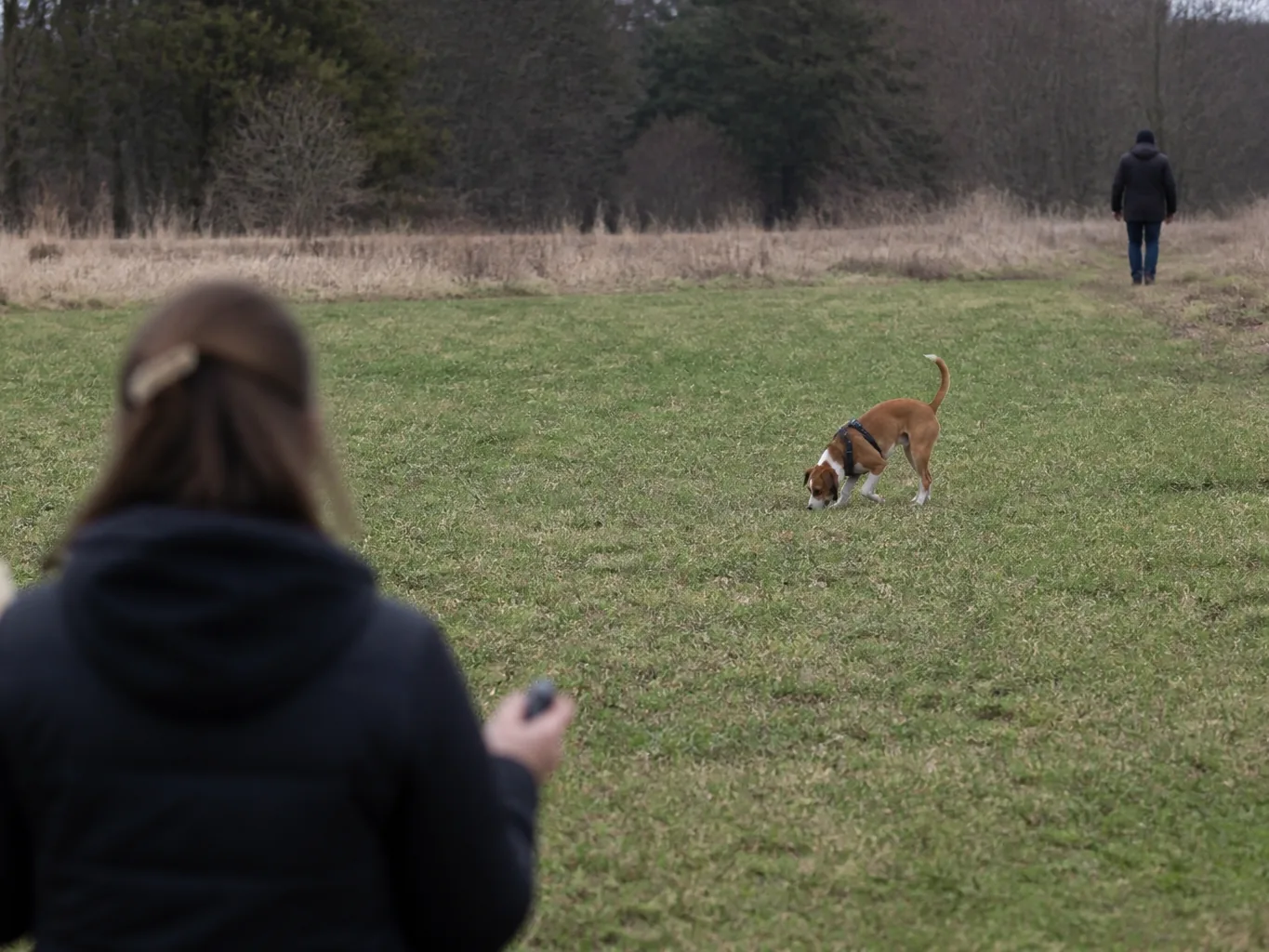
A typical session follows a clear flow. The layer leaves first - 5-15 minutes before the start, depending on the dog's level - walks the planned route together with the observer, and hides at the end. The handler receives the scent article: a personal item or a collection bag touched directly by the layer. From that moment on, the dog takes the lead.
The observer watches the team from a distance, without interfering, and notes the key moments: where the dog confirmed the trail accurately, where it hesitated, where it temporarily deviated. The debriefing session that follows is just as valuable as the session itself - that's where you analyse what worked and what needs adjusting.
The flexibility of rotating roles is one of the most useful aspects of group work. Whoever was the layer today can become the observer tomorrow and bring their own dog-handler team next week. This dynamic turns a simple training group into a genuine community of practice.
Why Choose Mantrailing?
Discover why mantrailing is one of the most engaging and rewarding canine sports.