Is Water Agility a competitive sport?
No. It has no federation, rules, classes or titles, and for now it's only run as sessions by private centres. The name says “agility”, but none of agility's competition structure carries over.

Water sports
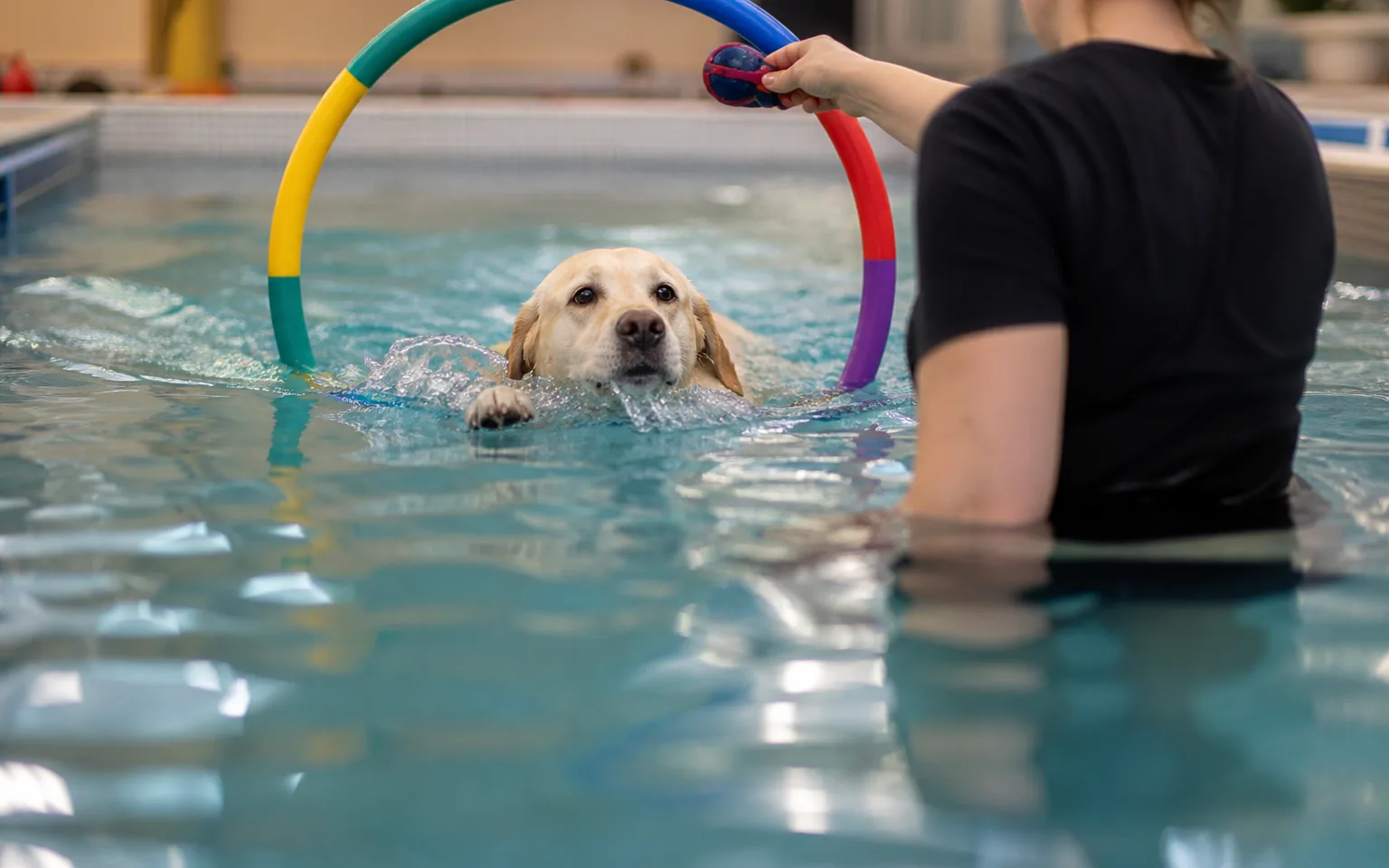
The dog swims a course of hoops and floating obstacles. There's no rulebook and no competition. You'll find it in classes, mostly used for conditioning and rehab.
About the discipline
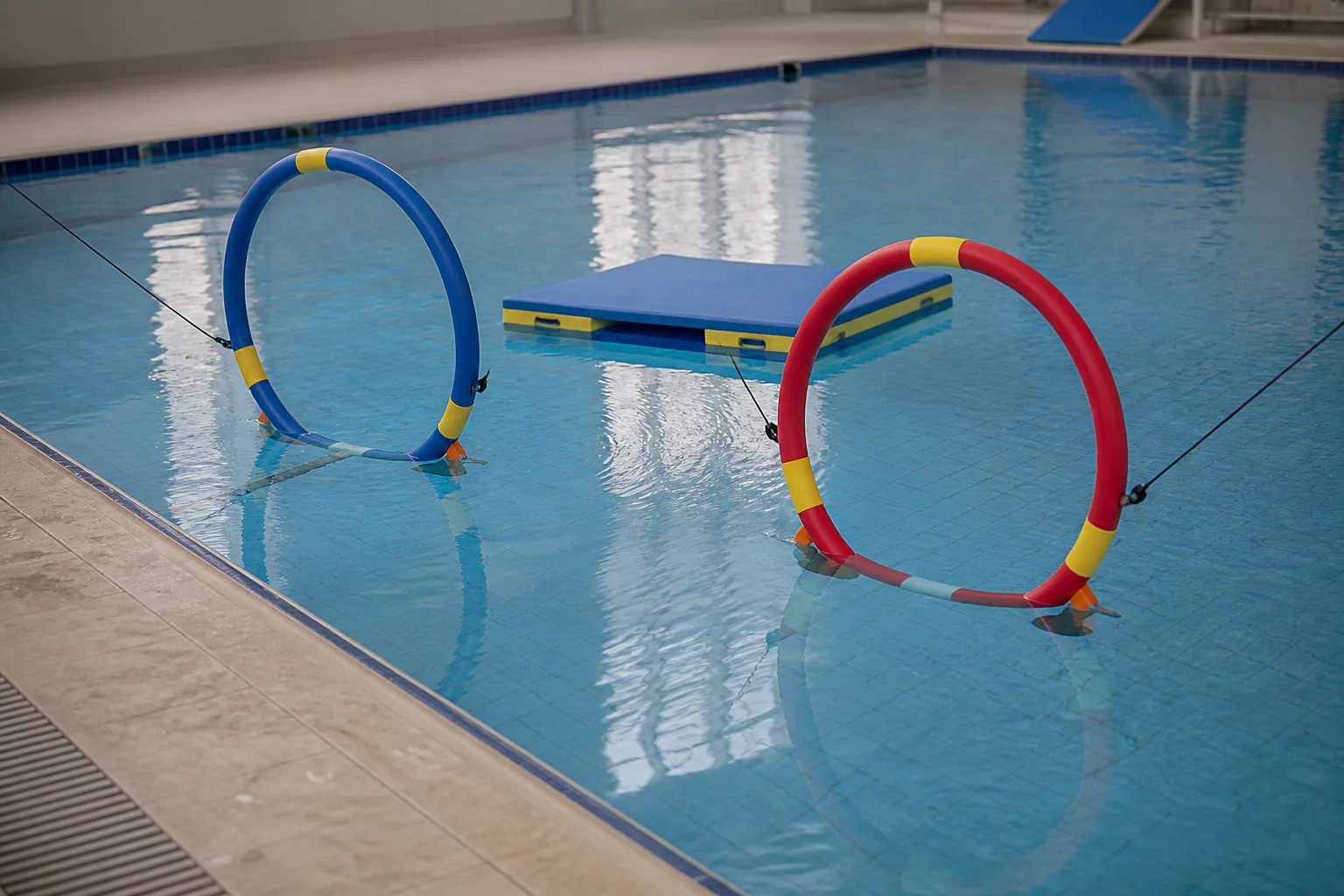
Water Agility (also called Aqua Agility or Water Hoopers) is a course of half-submerged hoops and other obstacles set up in a pool. The dog swims through them on the handler's cues, given by voice and by arm.
The idea comes from Hoopers, the version of agility without high jumps, where the dog goes through hoops and gates. What changes here is the setting: everything happens in water, and the dog swims instead of running.
There are no competitions. No federation, no published rules, no classes and no titles. It's run as sessions by private centres, and some of those are rehab clinics. Expect a programme lasting a few weeks. You won't find a competition calendar.
It came about for physical reasons more than sporting ones. Water pushes back against every movement, so the muscles work hard while the joints take no impact at all. That's why it gets used a lot with dogs in recovery, older dogs and dogs that can't jump any more.
The handler usually gets in the water next to the dog, especially early on. A dog swimming through a hoop for the first time needs someone right beside it. Shouting commands from the poolside won't help.
How it works in practice
Not for dogs that go into water reluctantly. Brachycephalic breeds swim badly because of how they're built: the heavy head and short muzzle keep the mouth very close to the surface. For them the activity calls for caution and a vest, if it's done at all.
Frequently asked questions
No. It has no federation, rules, classes or titles, and for now it's only run as sessions by private centres. The name says “agility”, but none of agility's competition structure carries over.
Yes, and swim calmly. A dog that panics in the water can't focus on an obstacle. If it's an unsure swimmer, work on the swimming first, with a vest, and only then bring in the first hoop.
Water pushes back against every movement, so the muscles work while the joints take no impact. It's the same principle as hydrotherapy, just turned into a game. One condition: if your dog has a medical problem, see the vet first.
Not long, and that catches most people out. Swimming is far more tiring than running, and an unfit dog is worn out within a few minutes. Several short bouts with breaks work better than one long session.
From the same category
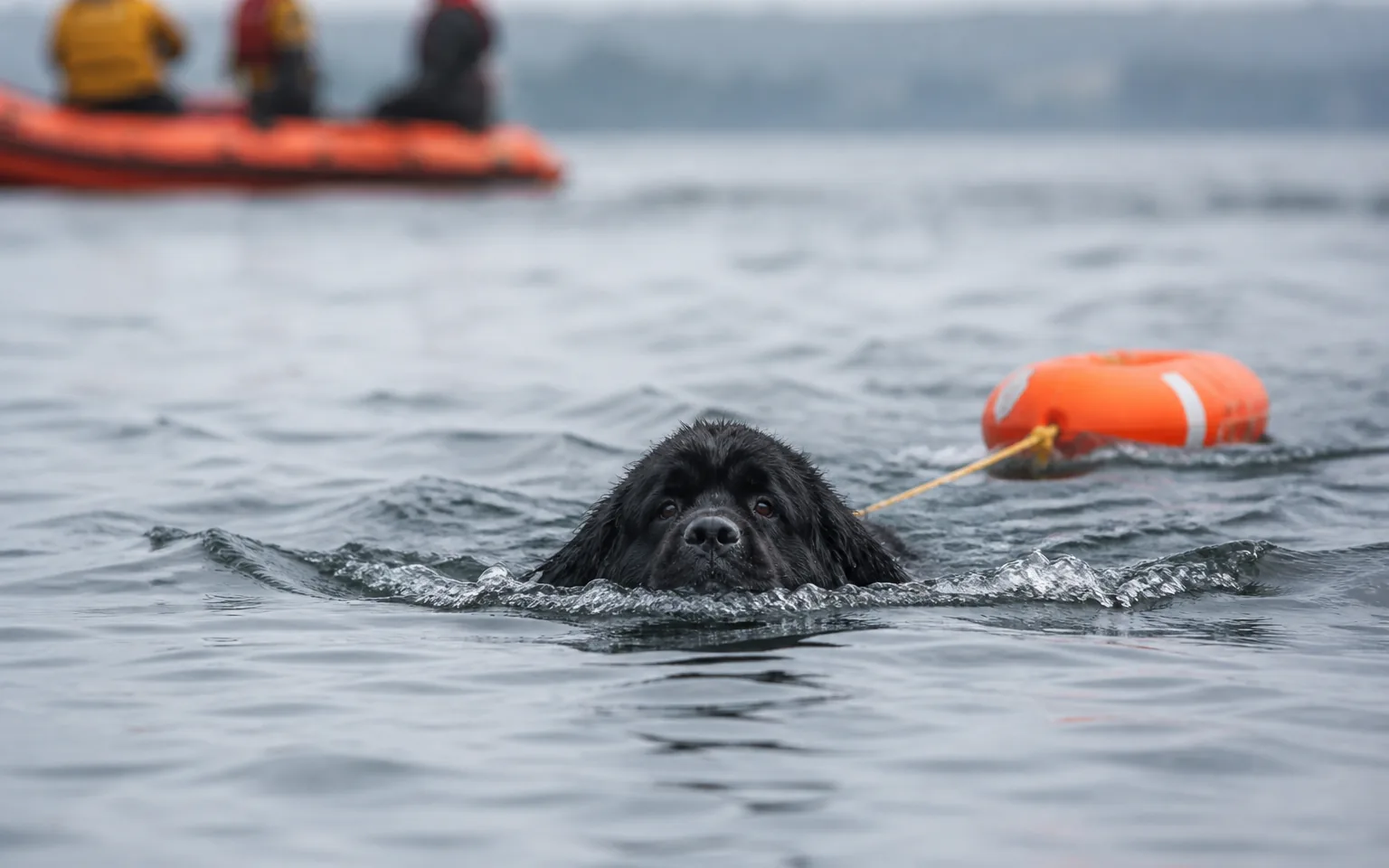
The dog rescues people from water and tows people or objects.
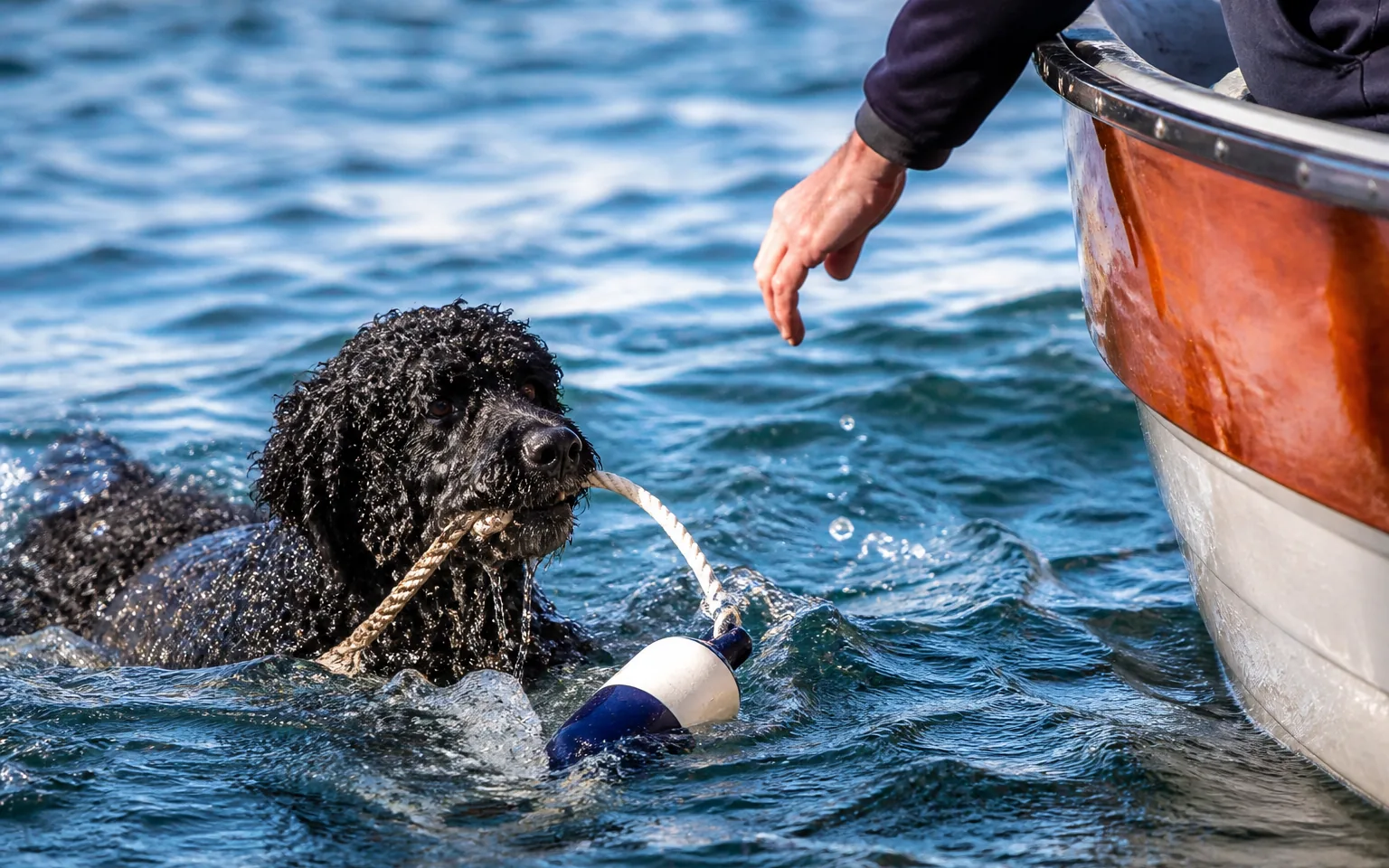
Retrieving, towing and other work exercises in water.
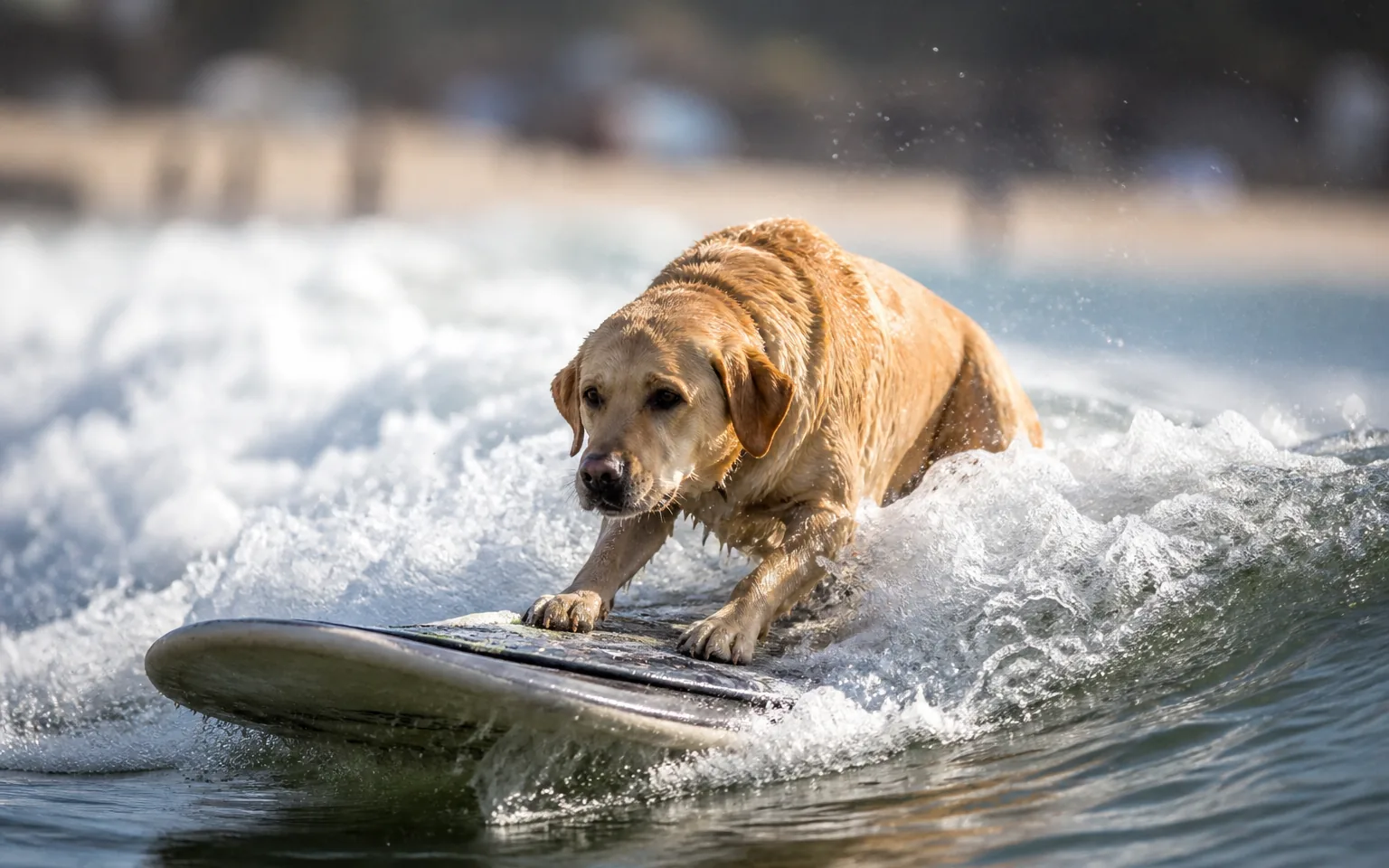
The dog balances on a surfboard and rides the wave.
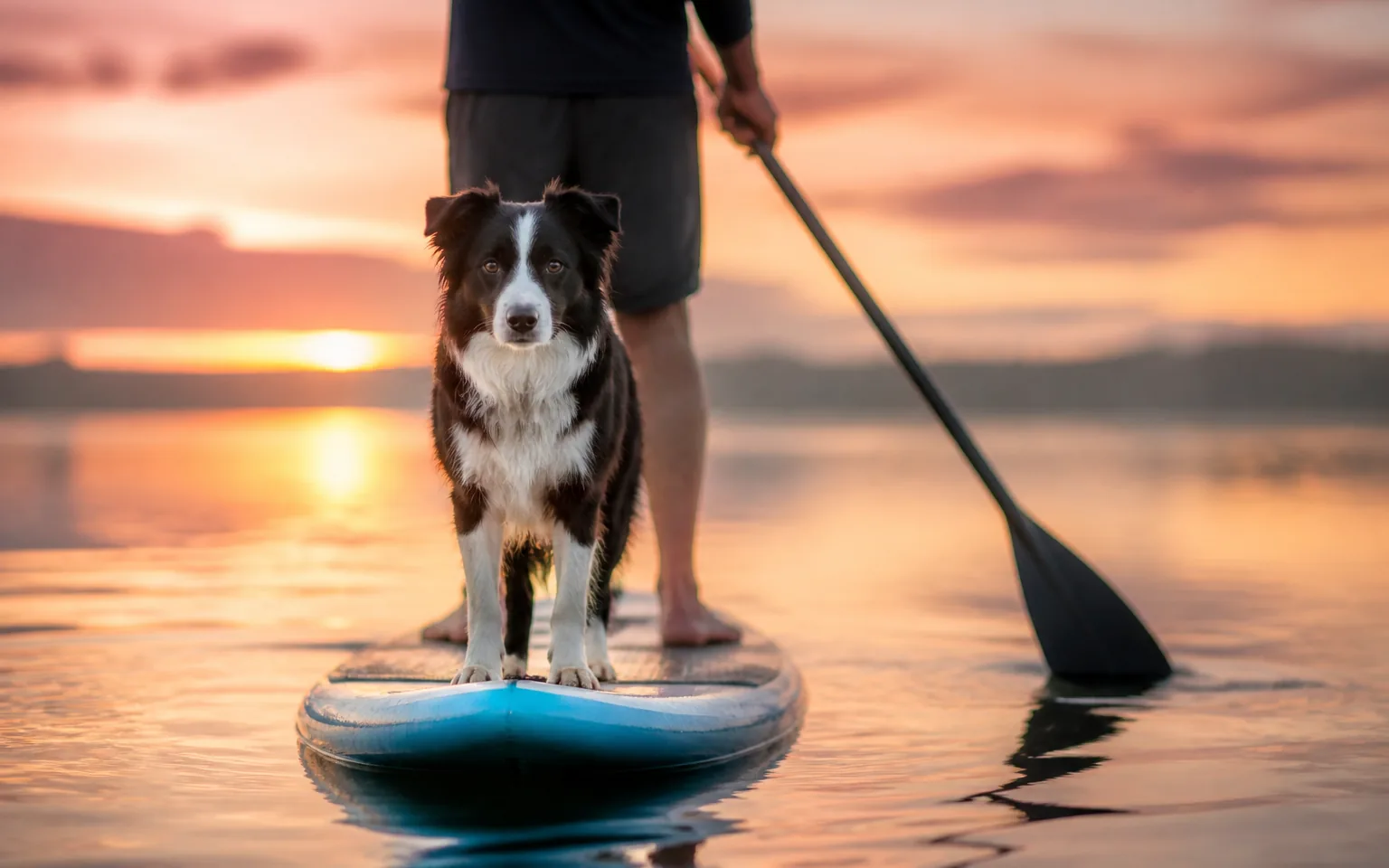
Paddleboarding with your dog, just for fun or in races.

This page is informational. We work in mantrailing, search and rescue and preparation for the TSAC and BH exams - but if you want an honest opinion on what would suit your dog, write to us anytime.