Does the dog need to know how to swim?
Ideally yes, but with a life jacket even dogs that swim poorly can go out. The jacket stays compulsory regardless of ability.

Water sports
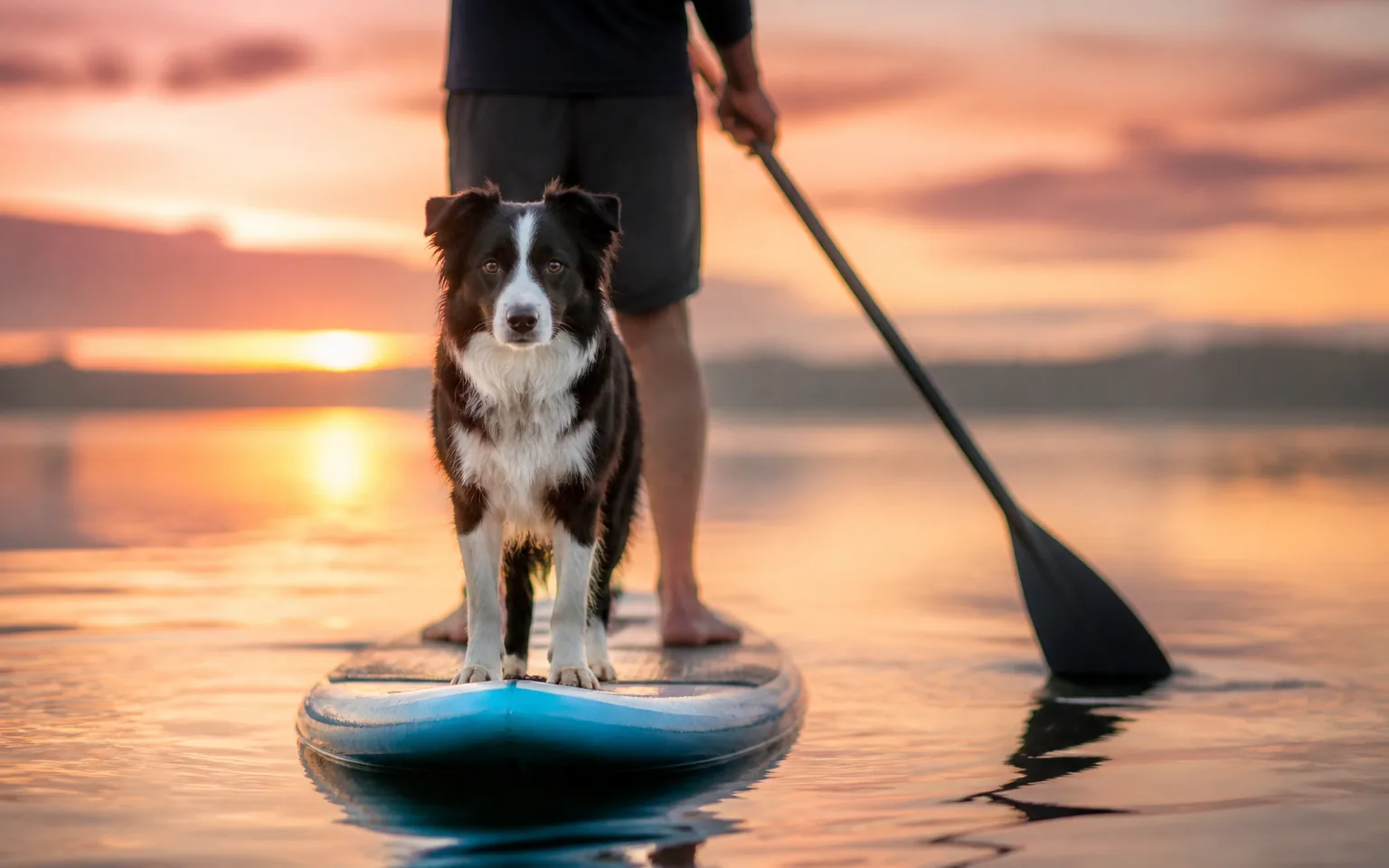
The quietest water activity on the list: flat water, a paddleboard and a dog sitting up front. No waves needed, no particular fitness - just patience while learning.
About the discipline
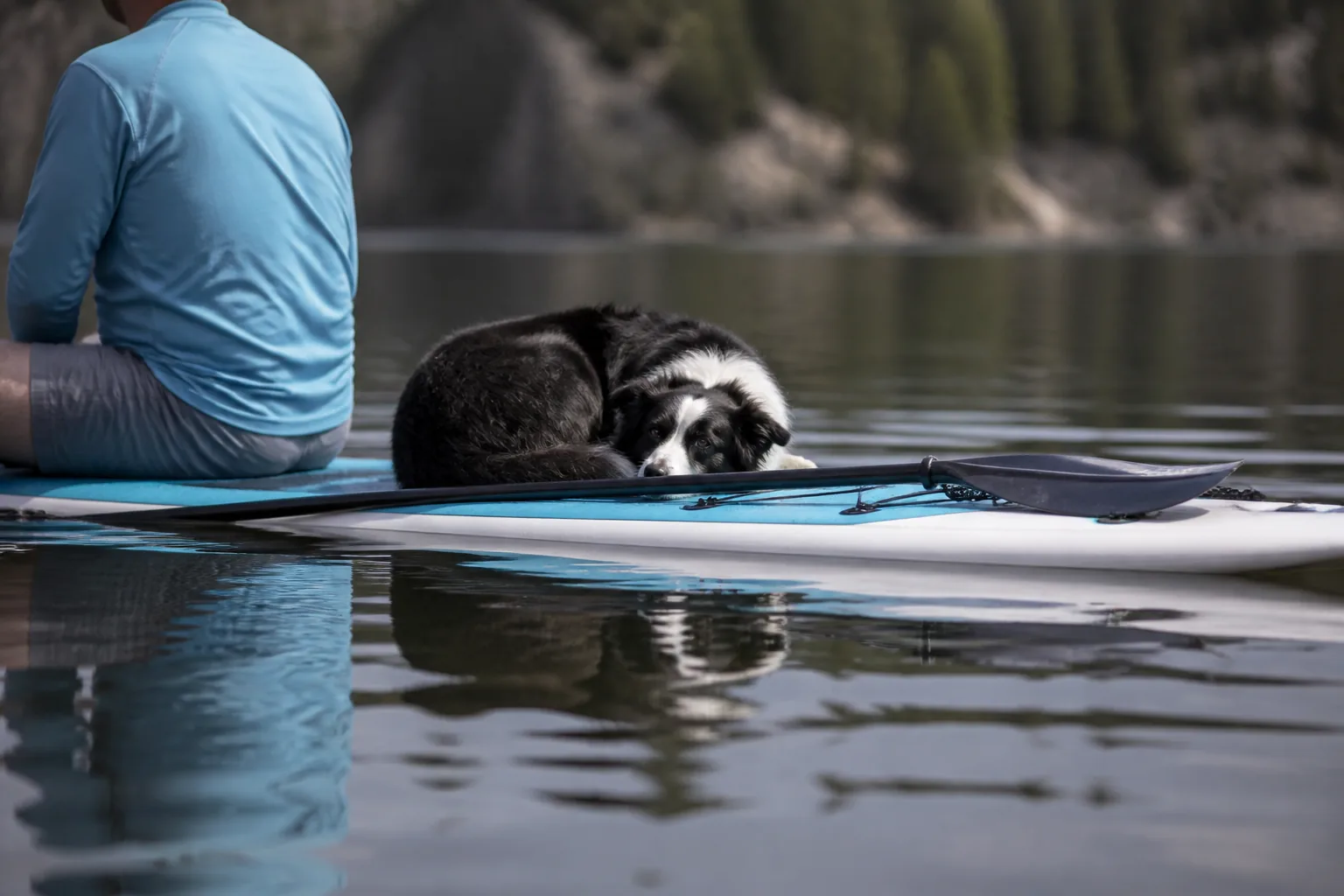
Stand-up paddle with your dog means exactly what it sounds like: you paddle standing, the dog sits or lies on the board in front of you. It is done on lakes and quiet rivers.
It has no established competition format, although recreational races are appearing more often. For most people it stays a weekend activity.
The part that takes learning is shared balance: the dog has to understand not to move suddenly on the board, and you have to get used to a centre of gravity that moves on its own.
How it works in practice
Frequently asked questions
Ideally yes, but with a life jacket even dogs that swim poorly can go out. The jacket stays compulsory regardless of ability.
You let it swim to shore or help it climb back on, calmly. That is why the first outings are on shallow water, close to the bank.
Rushing. The board has to become a pleasant place on land, with rewards, before it ever touches water.
There is no strict limit, because the physical effort is minimal. Balance and the ability to stay still for a few minutes matter more, and a very young puppy lacks both. In practice, you can start once the dog will hold a stay on land.
From the same category
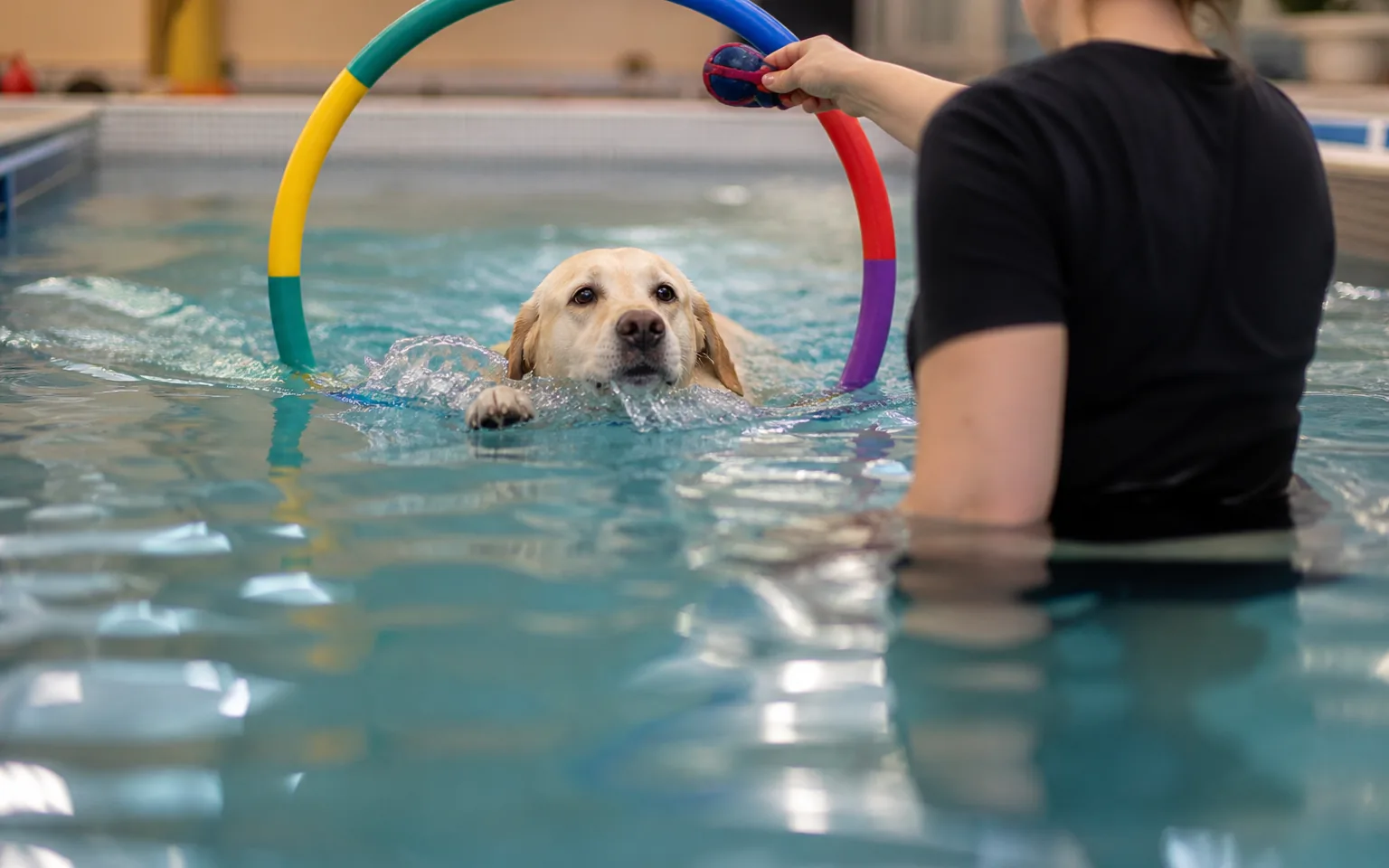
A course of hoops and floating obstacles, swum rather than run.
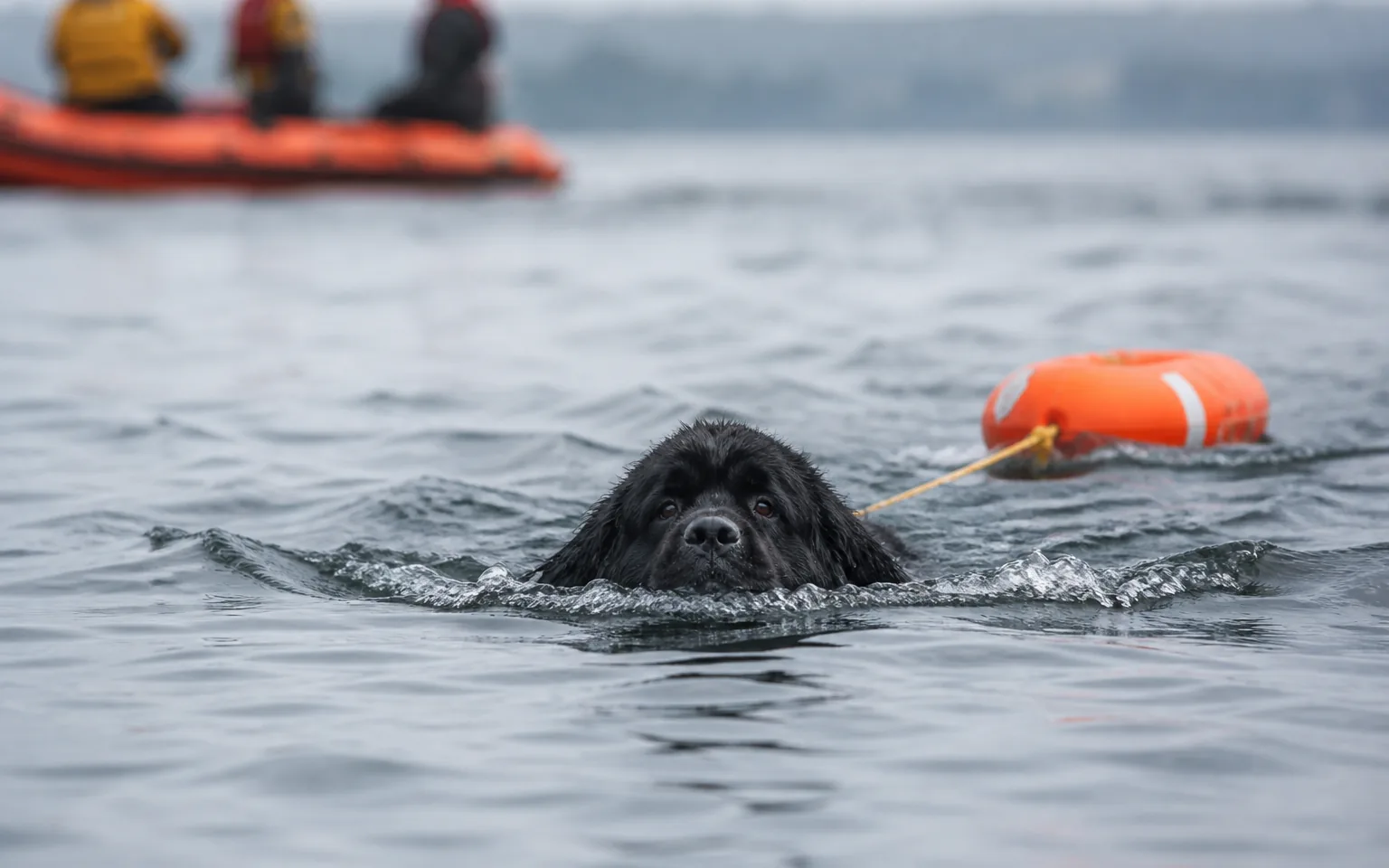
Aquatic rescue and towing of people or objects.
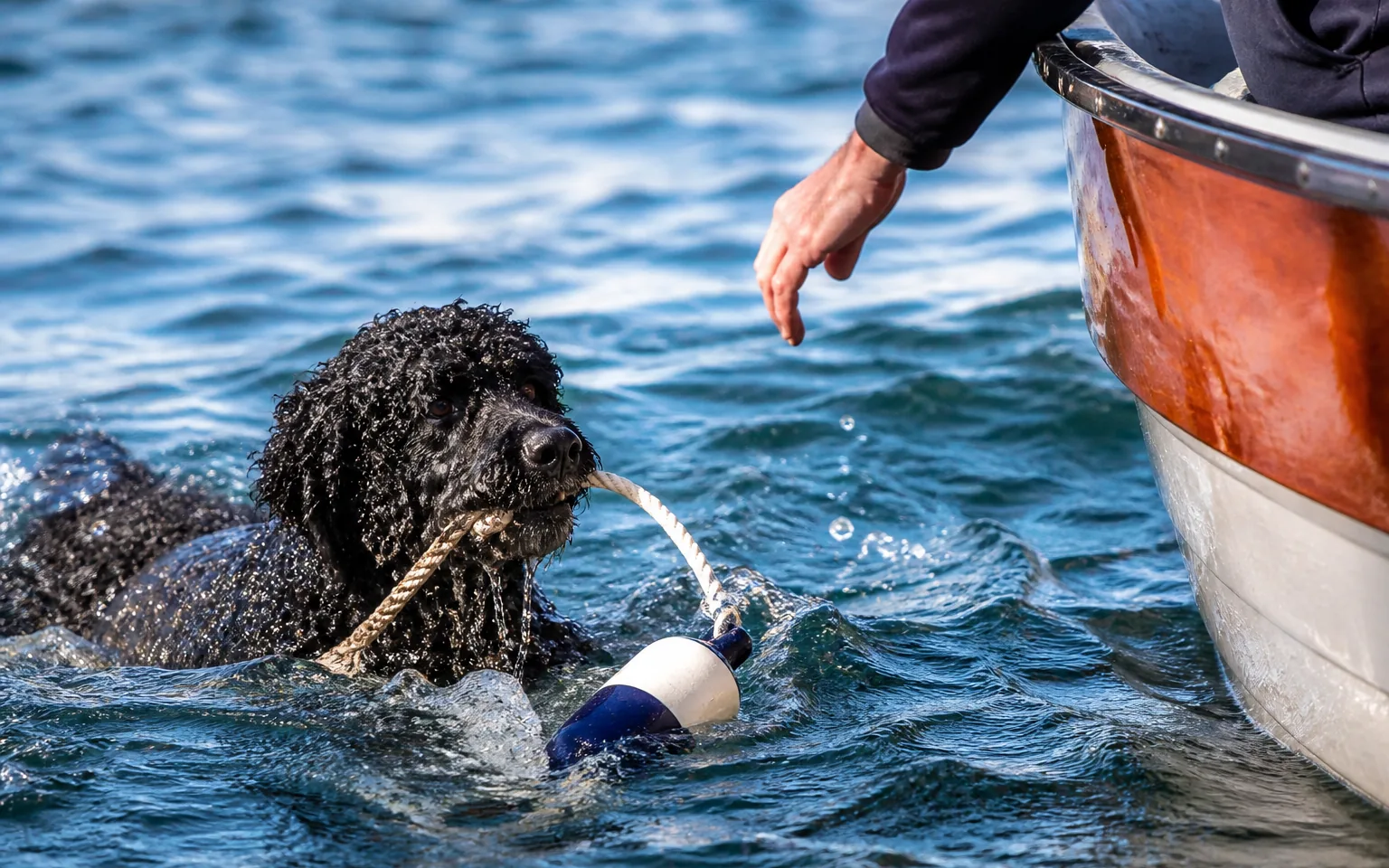
Retrieving, towing and working exercises in water.
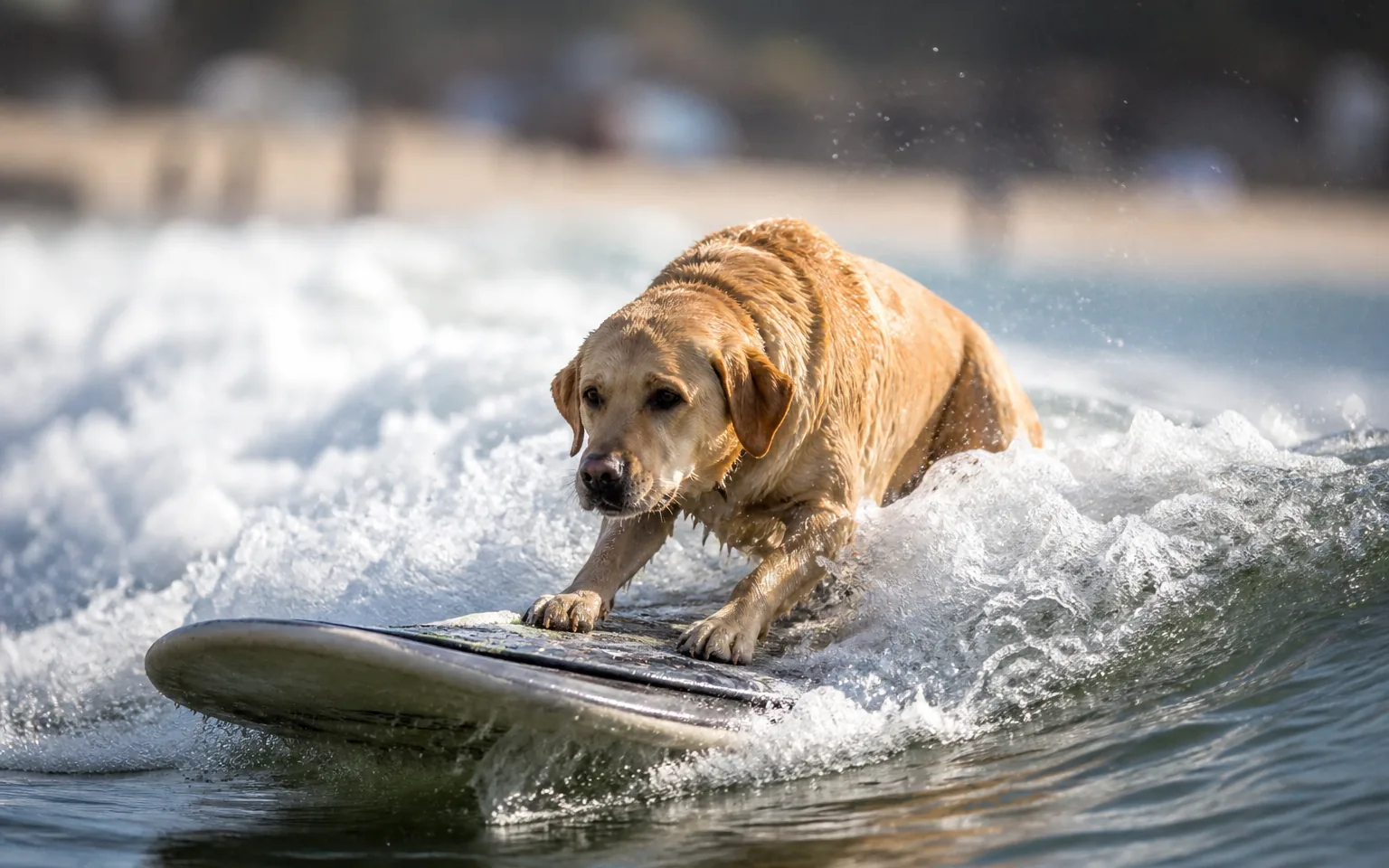
The dog keeps its balance on a surfboard.

This page is informational. We work in mantrailing, search and rescue and preparation for the TSAC and BH exams - but if you want an honest opinion on what would suit your dog, write to us anytime.