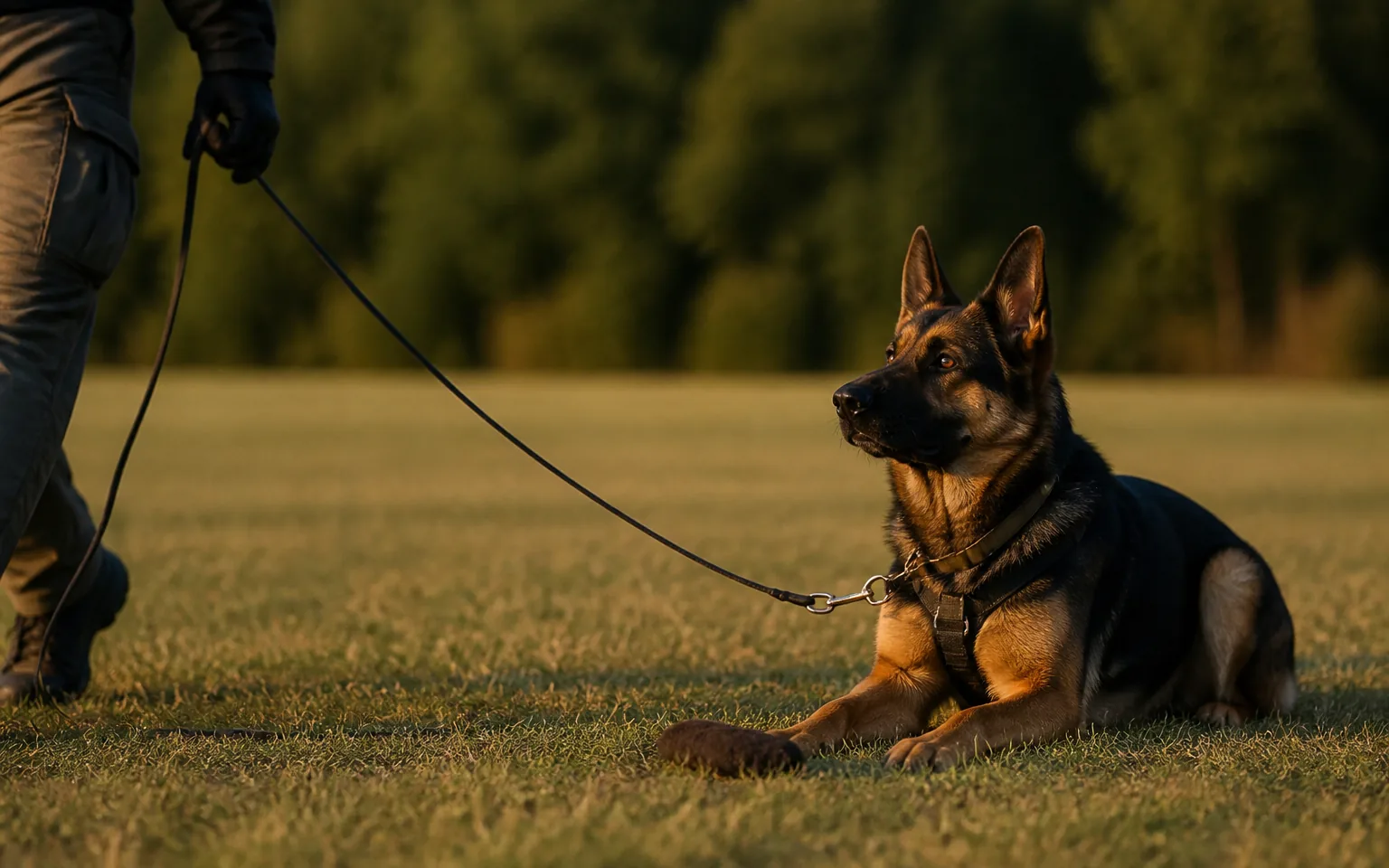
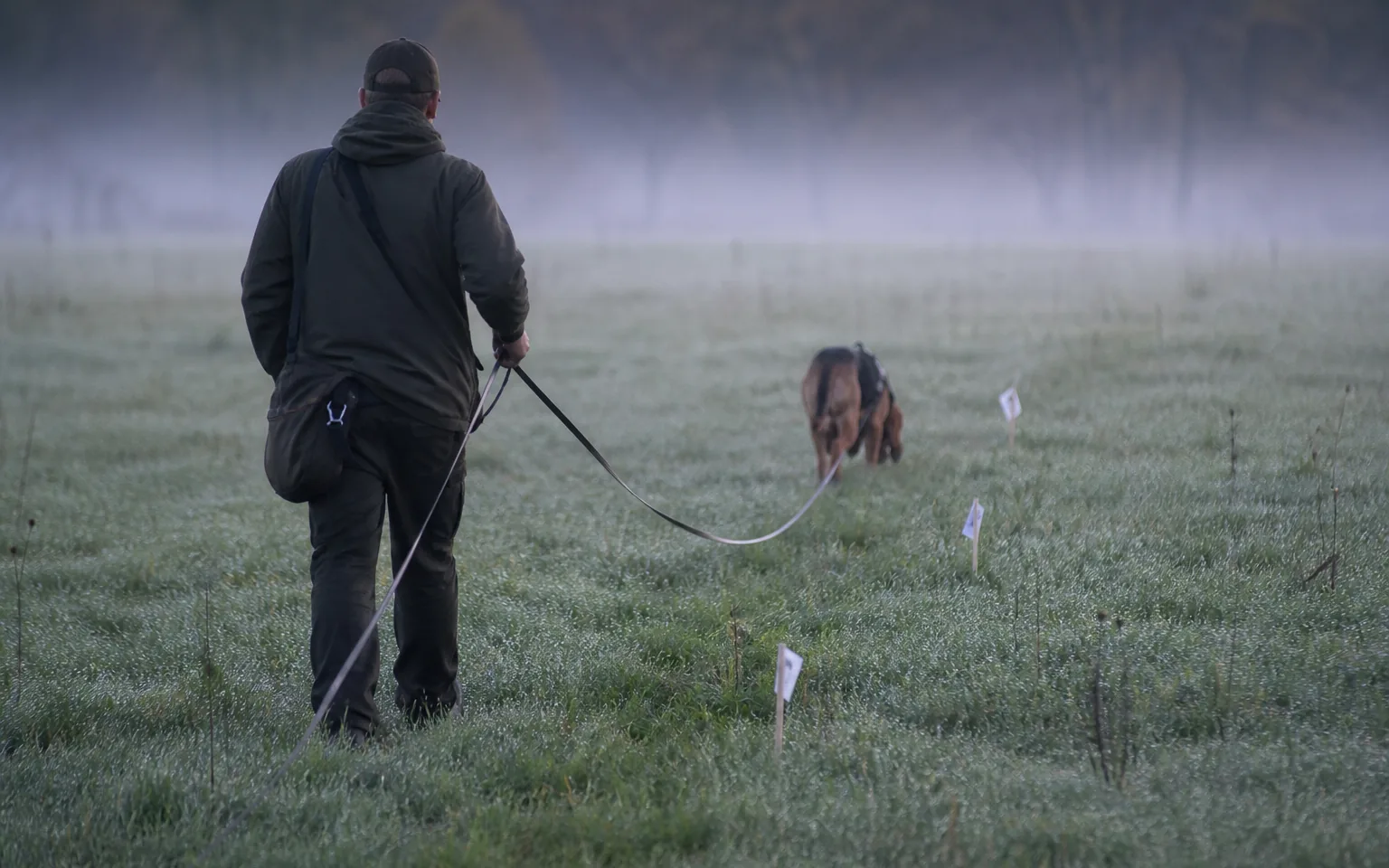
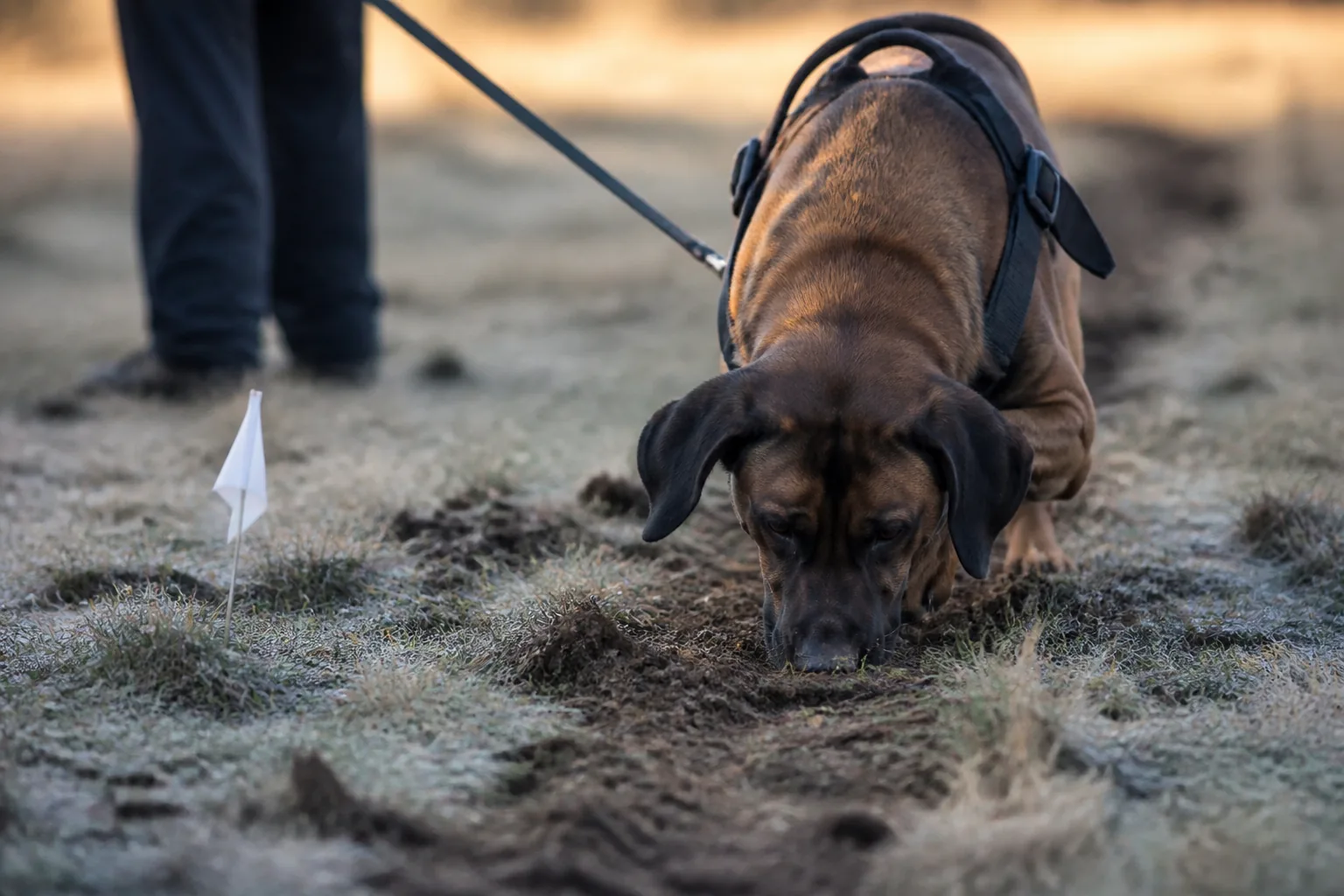
Handler following a dog working a flagged track on a long line through morning mist

Scent sports

Tracking

The dog moves with its nose glued to the ground and retraces a person's route exactly, step by step. It is the most methodical of the scent disciplines - and the one most often confused with mantrailing.

About the discipline

What tracking is

In tracking, the dog does not follow the person's scent but the disturbance left by their footsteps: crushed earth, bruised grass, broken vegetation. That is why it works with its nose down and follows the track step by step.

A training track is laid across the ground, left to mature for a time and only then worked. Small articles are placed along the route, which the dog must indicate with a position.

The difference from mantrailing is fundamental: there the dog seeks the individual scent of a specific person and may work off to the side, where the wind has carried it. Here it follows the physical track, exactly where the foot fell.

Hound working a flagged track nose-down over frost-covered grass at dawn

How it works in practice

How a track is worked

  • the track is laid and the start point marked
  • the track is left to mature, from minutes to hours
  • small scent-carrying articles are dropped along it
  • the dog starts from the marked point, in harness and long line
  • it follows the route nose-down, at a steady pace
  • it indicates each article found by lying down or sitting
  • the handler stays behind, at the end of the line

Which dogs it suits

  • any healthy dog, regardless of breed
  • methodical dogs that enjoy slow work
  • teams with access to open, undisturbed ground

What you need

  • a tracking harness and a ten-metre line
  • markers for the start point
  • small articles to indicate
  • farmland or meadow, with the owner's permission

Frequently asked questions

Common questions about Tracking

What is the difference between tracking and mantrailing?

In tracking the dog follows the disturbance left by footsteps, nose down, exactly on the route. In mantrailing it follows the individual scent of a specific person and may work off to the side, where the wind carried it. Tracking follows the track; mantrailing follows the human.
How old can a track be?

Fresh tracks of a few minutes are used at first. With training, advanced teams work tracks several hours old, which are considerably harder.

Do I need a breed with a special nose?

No. Every dog has a nose incomparably better than ours. Method, patience and consistency of training matter far more than breed.

The rule figures on this page come from FCI - International Utility Dog Regulations (IGP), 2025. Rules change and federations differ - always check the rulebook of the competition you are entering.

From the same category

Related sports

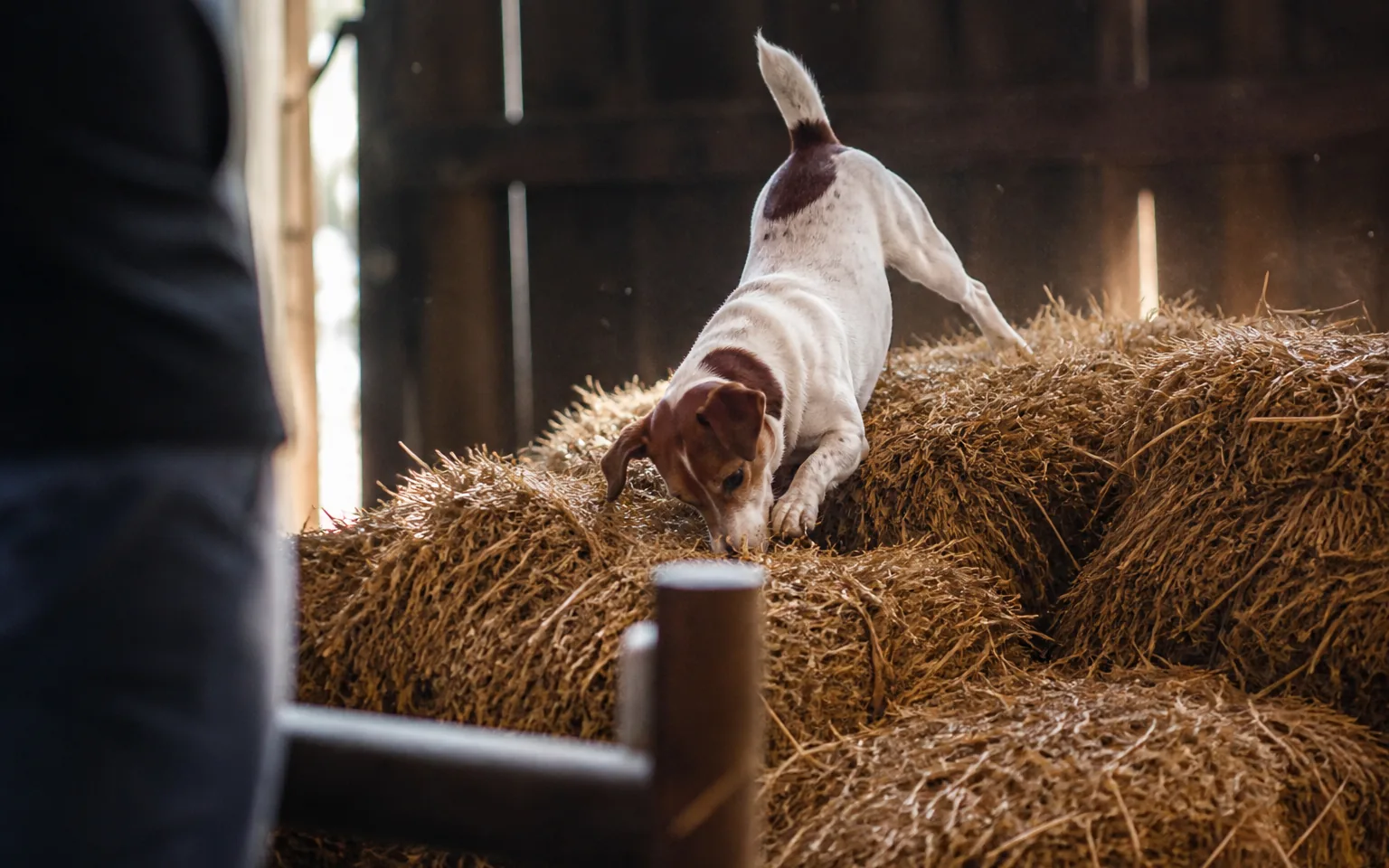
Jack Russell Terrier scrambling over stacked straw bales inside a barn

Barn Hunt

Locating a protected rat in a course built of straw bales.

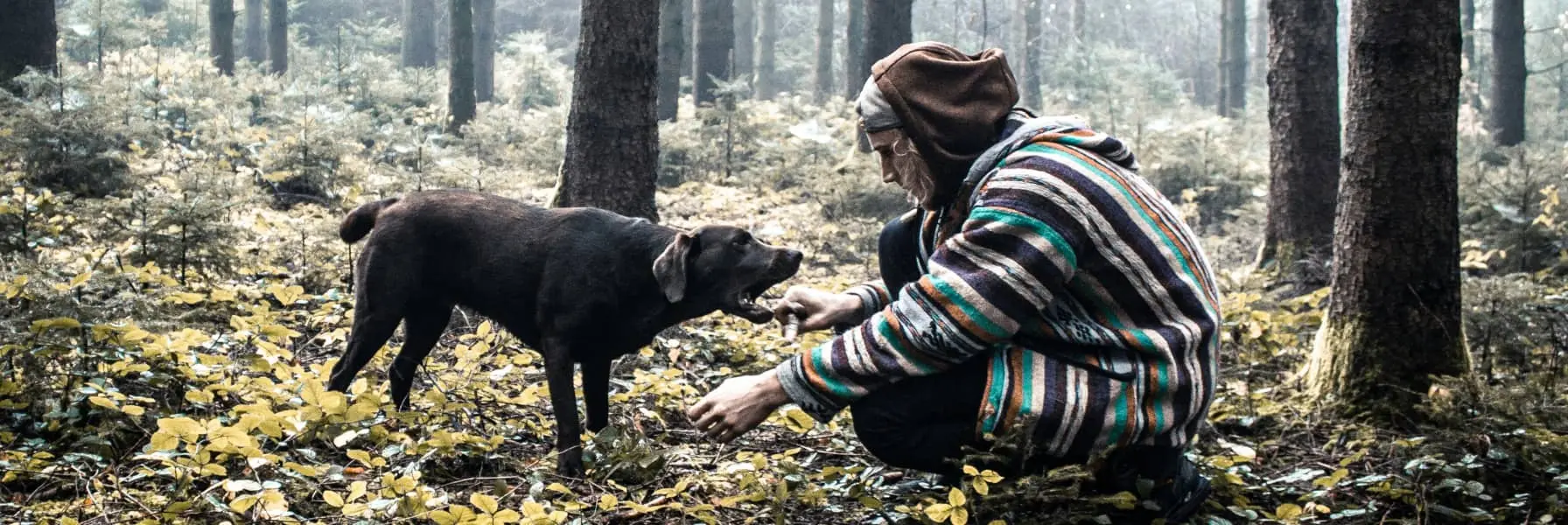
Dog and handler working together outdoors

We do not run Tracking

This page is informational. We work in mantrailing, search and rescue and preparation for the TSAC and BH exams - but if you want an honest opinion on what would suit your dog, write to us anytime.