How does it differ from the pointing breeds?
A pointing dog searches wide and freezes at the find. A spaniel searches close and flushes the game, then stops. They are two completely different hunting styles.

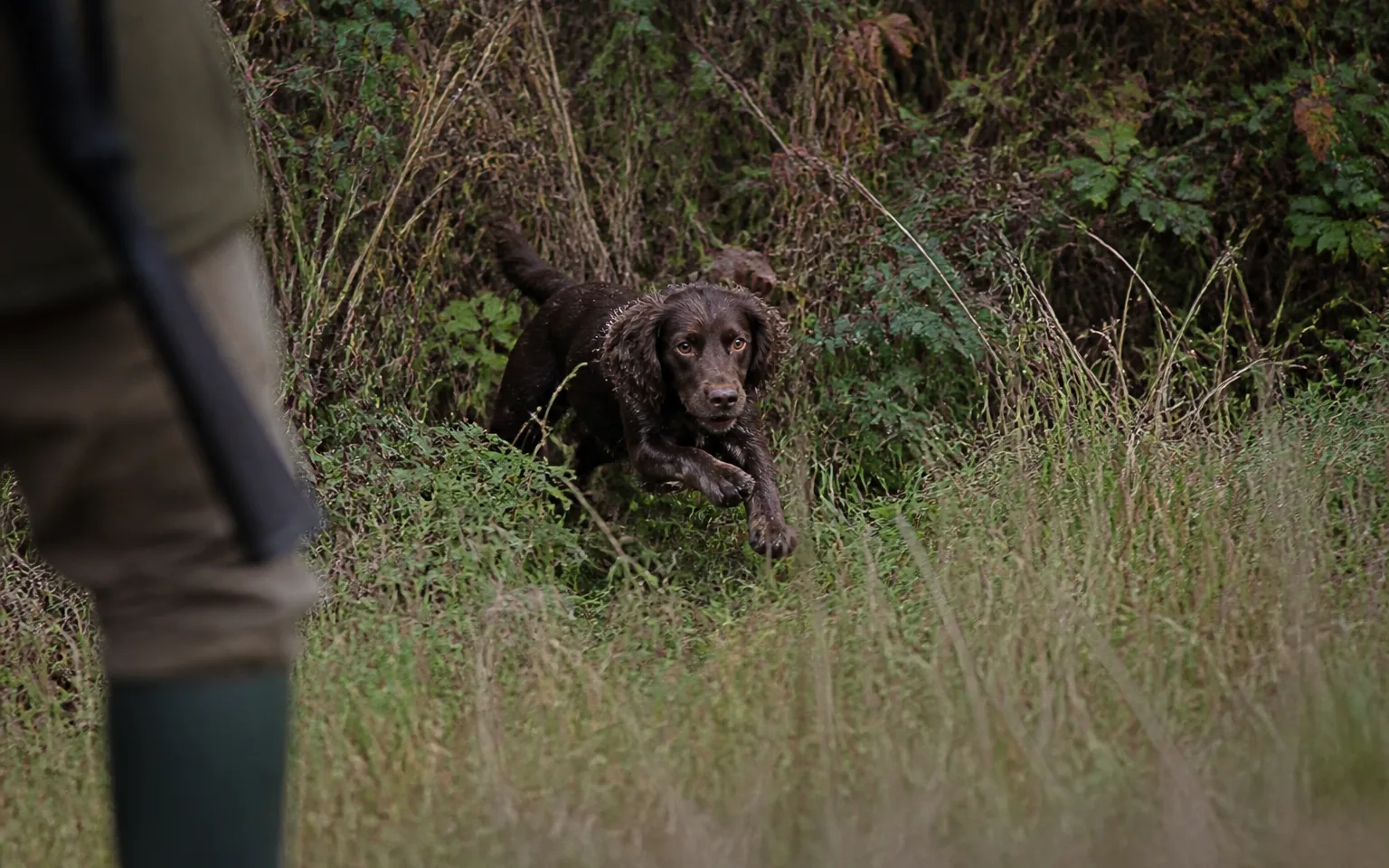
Hunting dogs
Spaniels do not point game, they flush it. They quarter close to the gun through the thickest cover, put the game up, stop - and then retrieve on command.
About the discipline
Spaniels work differently from pointing dogs. They do not range wide and do not freeze; they beat the cover in a zigzag, close to the gun, in order to put game out of hiding.
The key moment comes immediately after the flush: the dog must stop on the spot rather than chase. Only after the shot, and on command, does it go for the retrieve.
Trials assess the pattern of the quartering, the distance kept from the gun, the discipline at the flush and the quality of the retrieve - including through water and brambles.
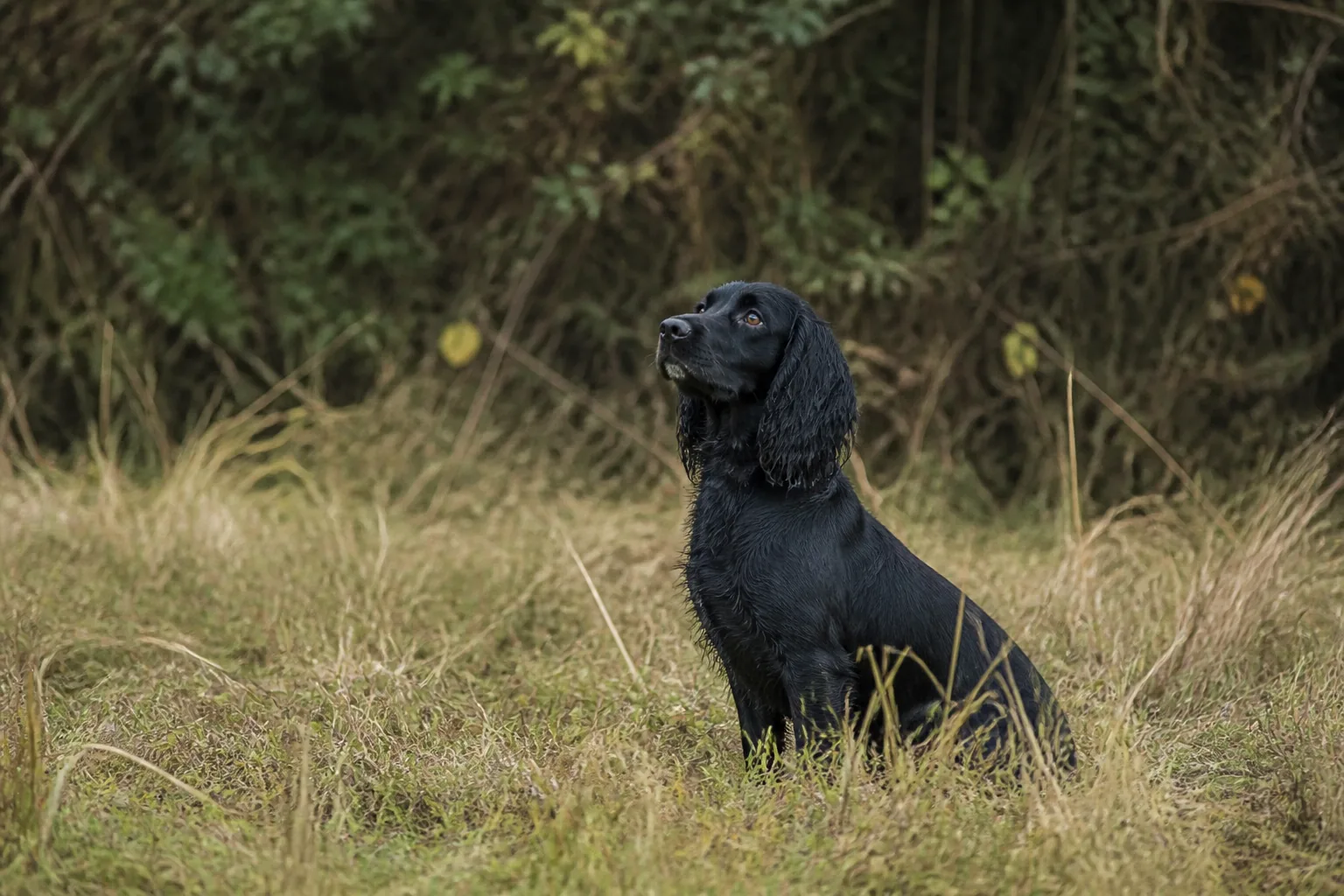
How it works in practice
Frequently asked questions
A pointing dog searches wide and freezes at the find. A spaniel searches close and flushes the game, then stops. They are two completely different hunting styles.
When the game gets up, the dog must stop instantly and not chase it. It is the hardest exercise in the discipline, because it works against instinct.
The components - quartering, the stop, the retrieve - can be worked with dummies. The full trial does require game.
Gradually and away from hunting. Start with a stop on the whistle during play, then during free running, then with a light distraction. Only when the stop is reliable in ordinary conditions do you work with game. Skipping these stages produces a dog that runs after anything that moves.
The rule figures on this page come from FCI - Official Rules for International Field Trials and Working Tests. Rules change and federations differ - always check the rulebook of the competition you are entering.
From the same category
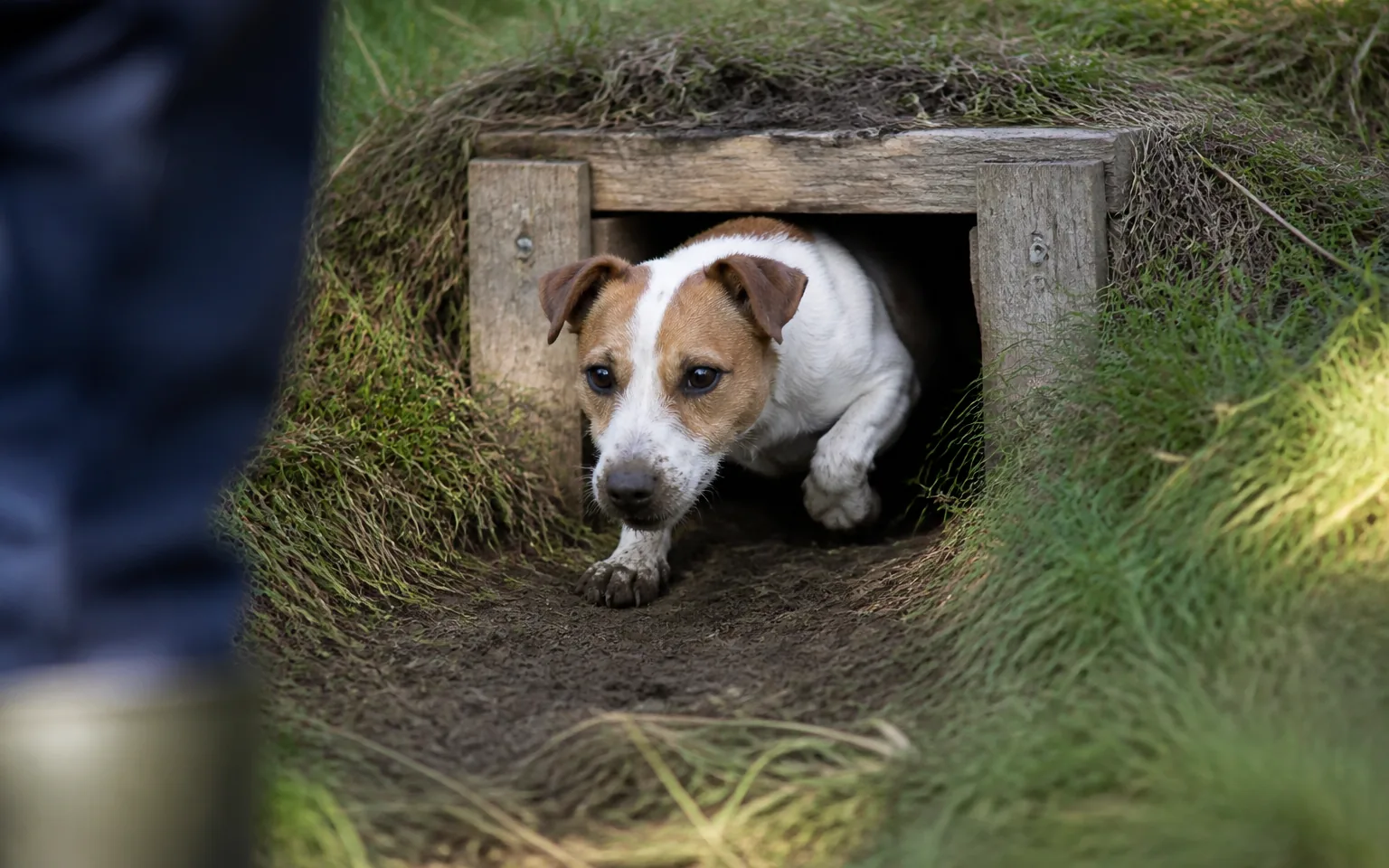
Trials in artificial tunnels for terriers and dachshunds.
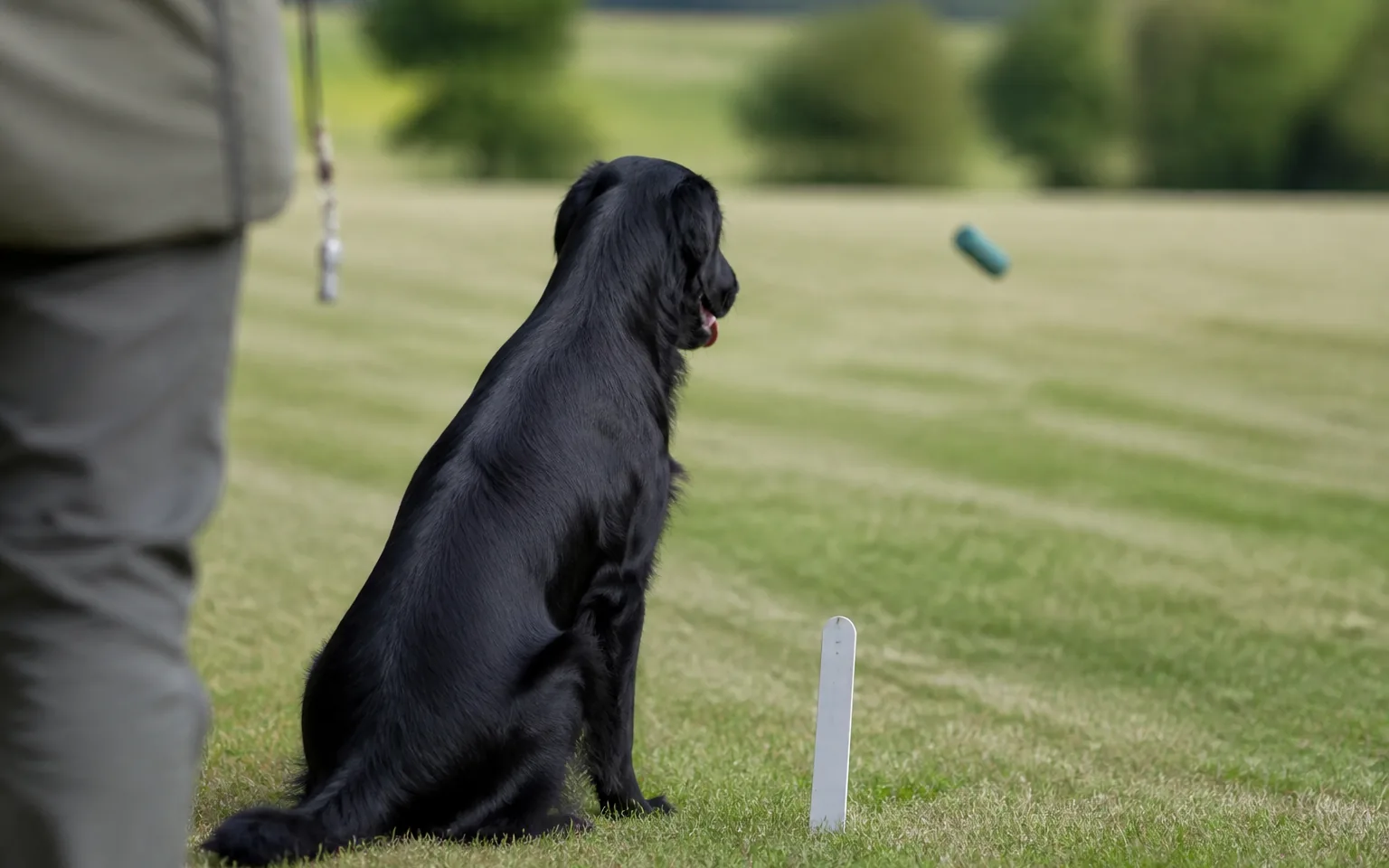
Retrieving trials without live game.
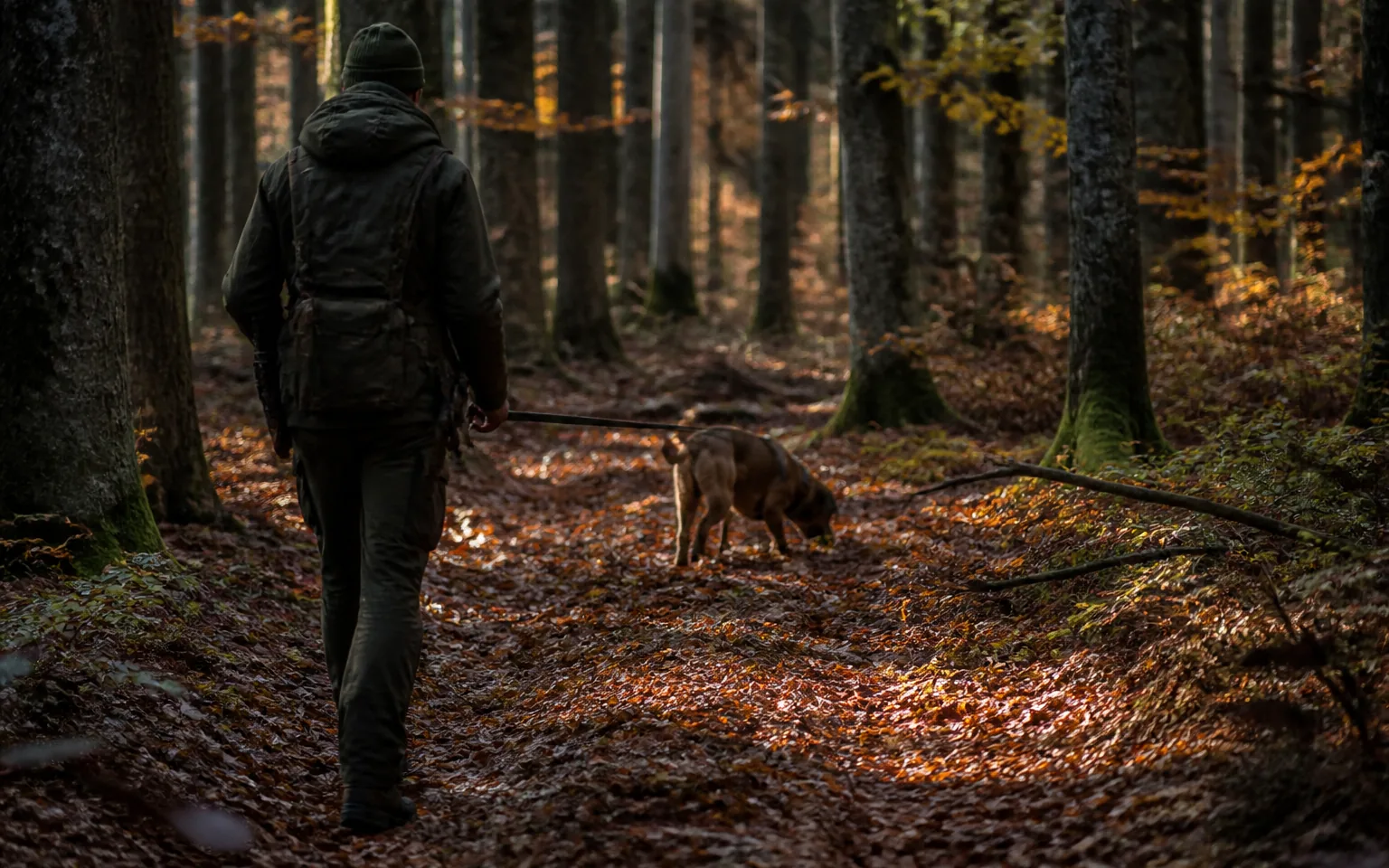
Following a simulated blood trail.
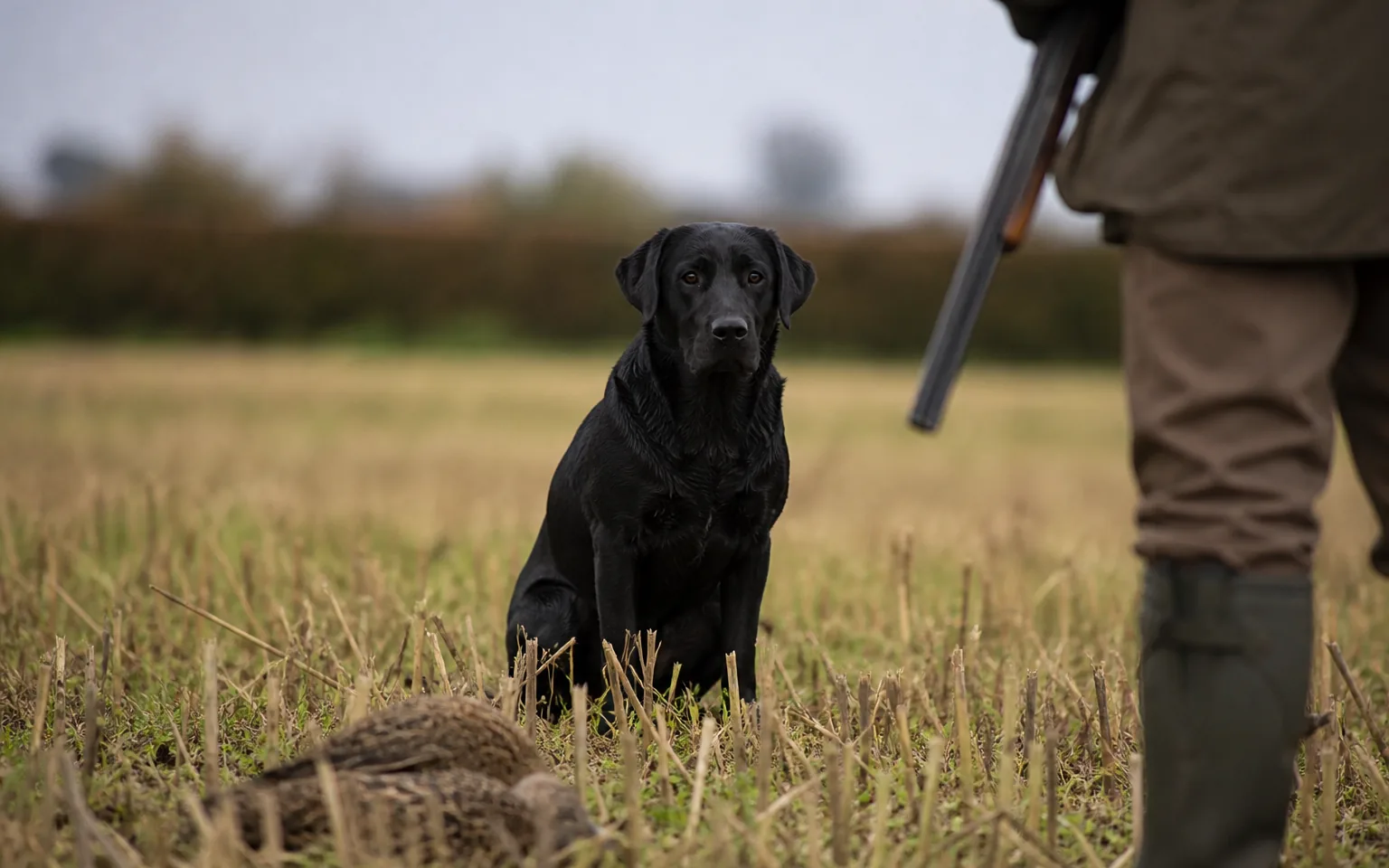
Assessing hunting dogs in the field.
This page is informational. We work in mantrailing, search and rescue and preparation for the TSAC and BH exams - but if you want an honest opinion on what would suit your dog, write to us anytime.