How does it differ from dog dancing?
In HTM the dog stays in the heel positions, close to the handler. In freestyle it can also work at a distance, with tricks and free movement. HTM is more technical; freestyle is the showier one.

Dance and presentation
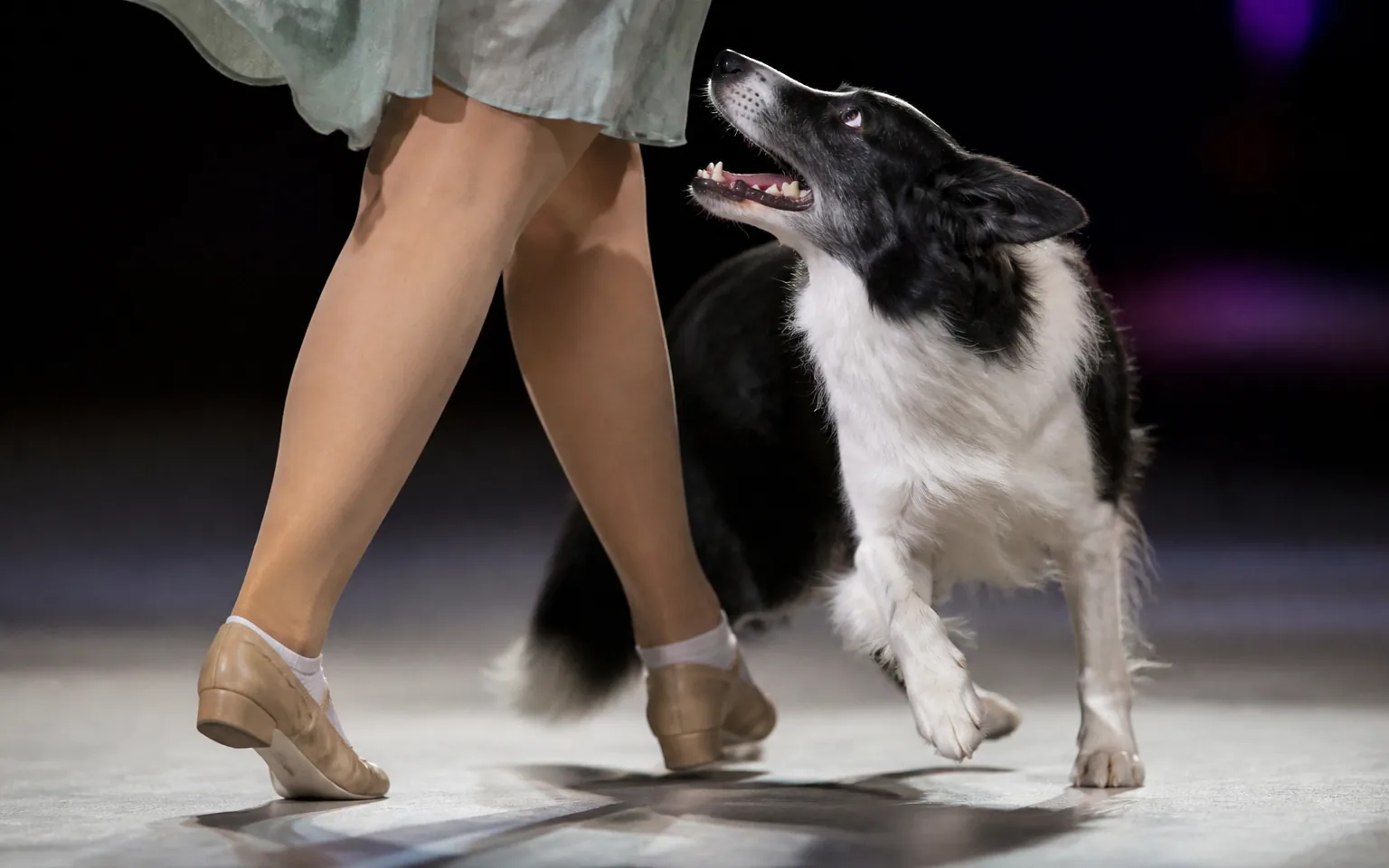
Dog dancing's stricter cousin. The dog stays in the heel positions (left, right, front, behind) and works the whole choreography glued to the handler.
About the discipline
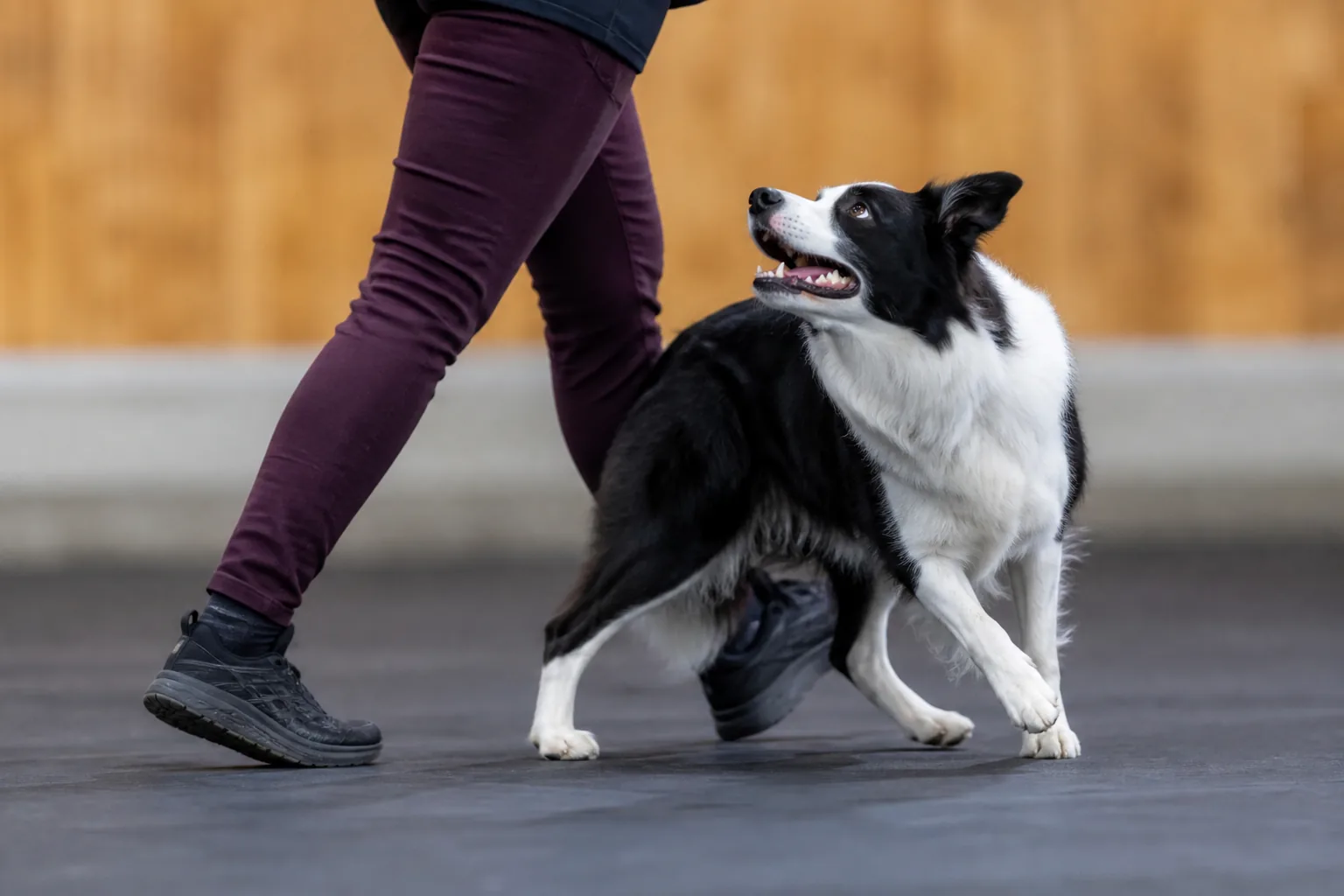
Heelwork to music, HTM for short, is a freestyle variant with one core rule: stay close. For the whole routine the dog has to hold one of the heel positions relative to you.
Eight positions are recognised: left, right, front, behind and their variants. The routine is built out of transitions between them.
Of the two disciplines, HTM counts as the more technical one. It looks less flashy from the sidelines, but it's much tougher to score well in, because any drift out of position shows straight away.
How it works in practice
Frequently asked questions
In HTM the dog stays in the heel positions, close to the handler. In freestyle it can also work at a distance, with tricks and free movement. HTM is more technical; freestyle is the showier one.
Eight positions relative to the handler are recognised. The routine is built from the transitions between them.
Yes. Lots of teams bring a routine in each category to the same competition, since the technical groundwork is the same.
It depends on the level. In beginner classes, two or three solid positions with clean transitions between them will do. Advanced classes expect most of the eight recognised positions, plus backing up and side-stepping. Teach them one at a time, never all at once.
The rule figures on this page come from The Kennel Club - Heelwork to Music. Rules change and federations differ - always check the rulebook of the competition you are entering.
From the same category

Tricks taught in levels, from easy to hard.
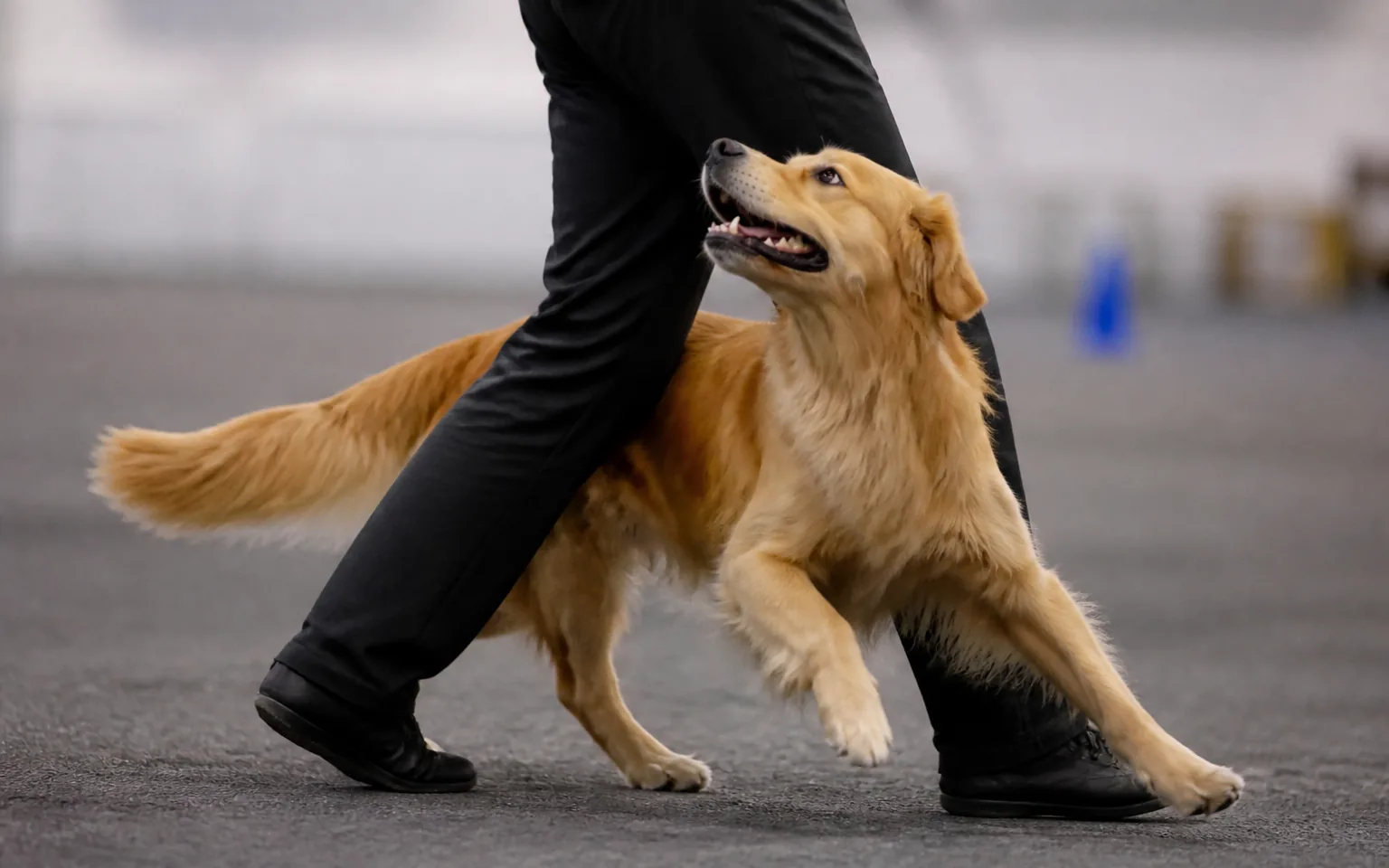
Obedience exercises linked freely, the way the team wants.
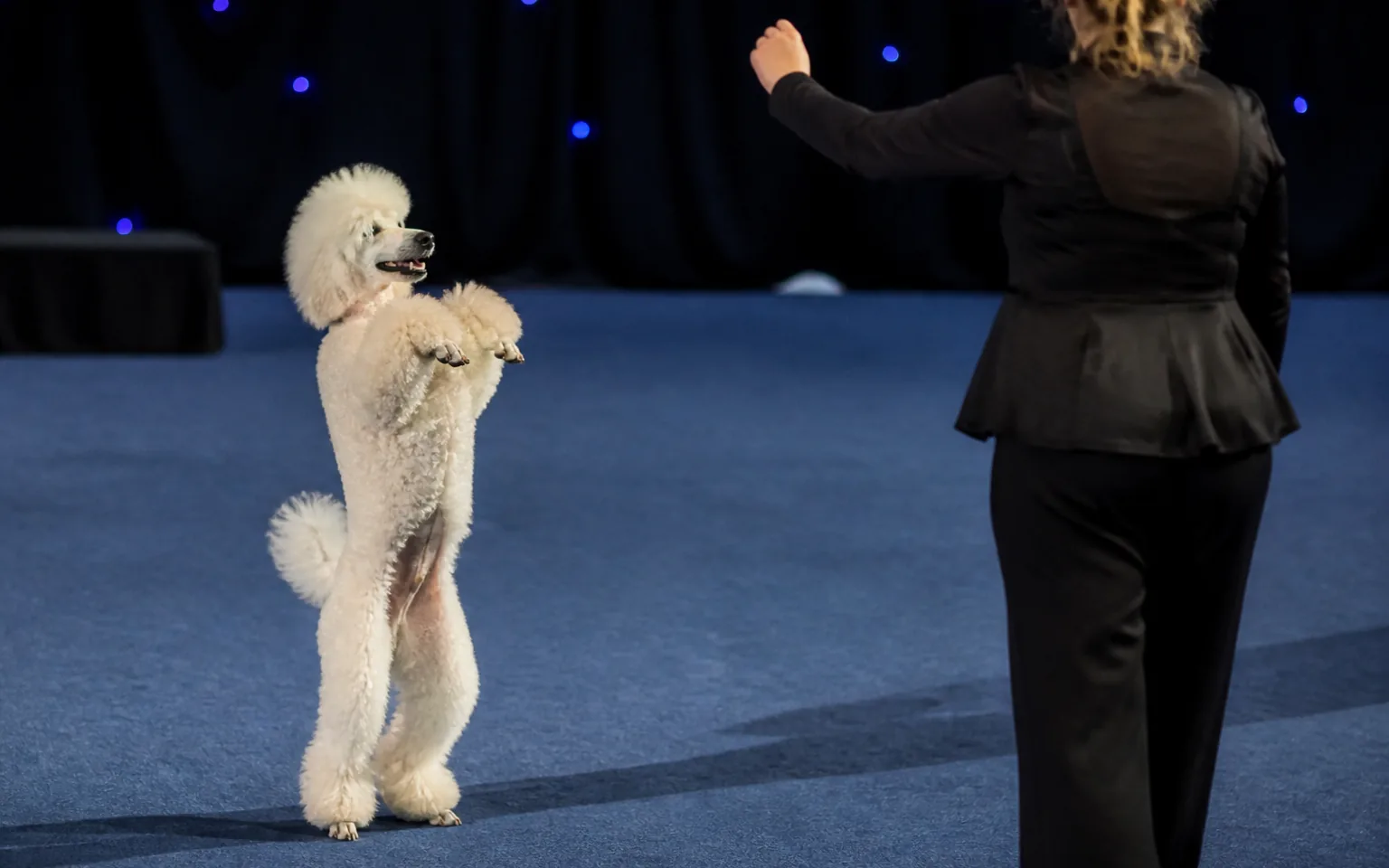
A choreographed routine set to music, with moves and tricks strung together.

This page is informational. We work in mantrailing, search and rescue and preparation for the TSAC and BH exams - but if you want an honest opinion on what would suit your dog, write to us anytime.