Do I need special equipment?
No. You need a harness, a lead and an eye for what is safe around you. The obstacles are whatever the environment offers: benches, logs, kerbs, rocks.

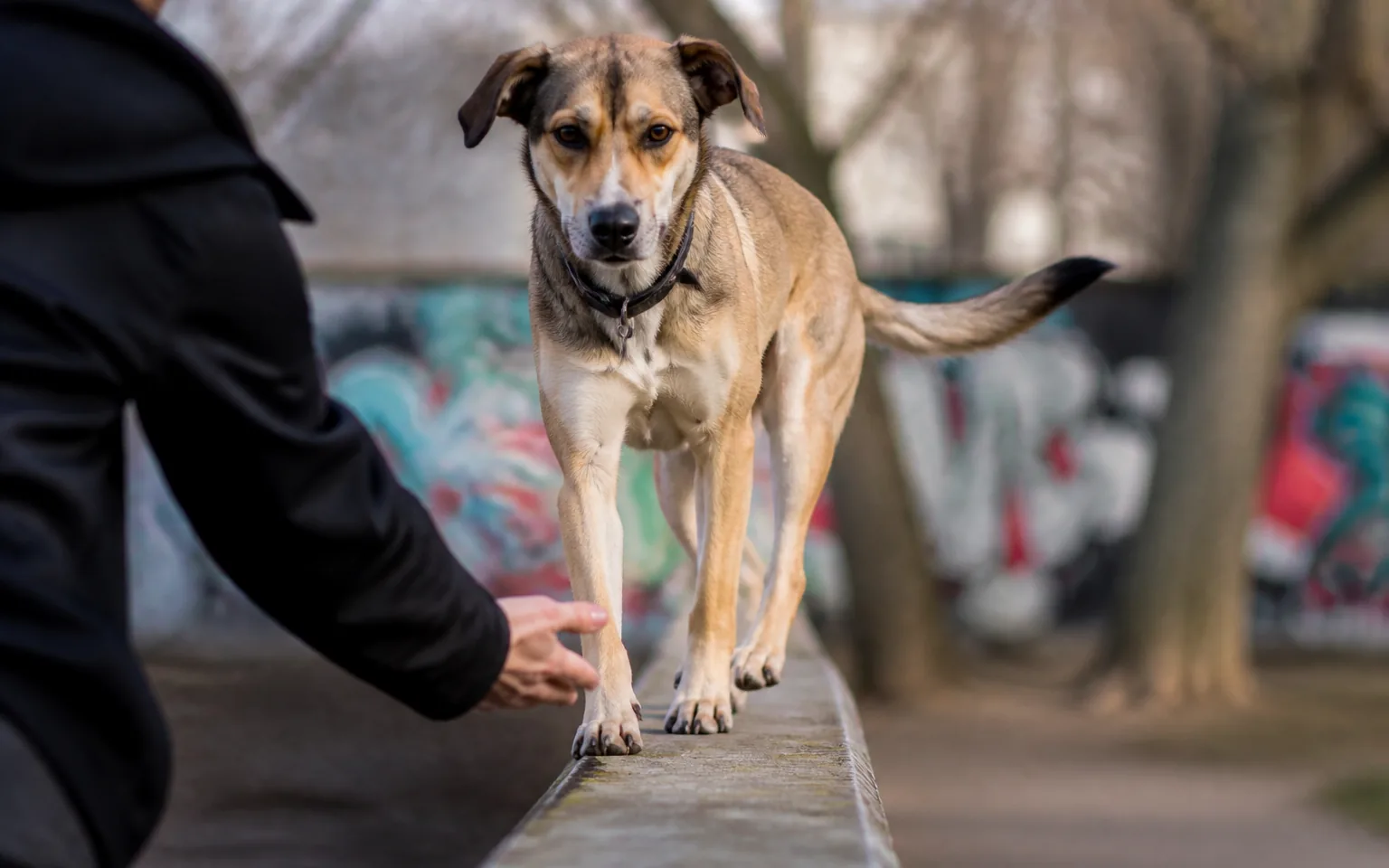
Agility and obstacles
The city becomes a playground: a bench, a boulder, a fallen log. The dog learns to climb, cross and balance in a controlled way on whatever is around - without speed and without showing off.
About the discipline
Dog parkour, also known as urban agility, takes the principle of human parkour and adapts it to dogs: controlled interaction with the obstacles in the surrounding environment.
It needs no purpose-built ground. A walk in the park becomes training: get on the bench, go under the table, walk the kerb, put two paws on the log.
The emphasis falls on control and body awareness, not on speed or height. A well-executed exercise is a slow one, in which the dog thinks about every paw.
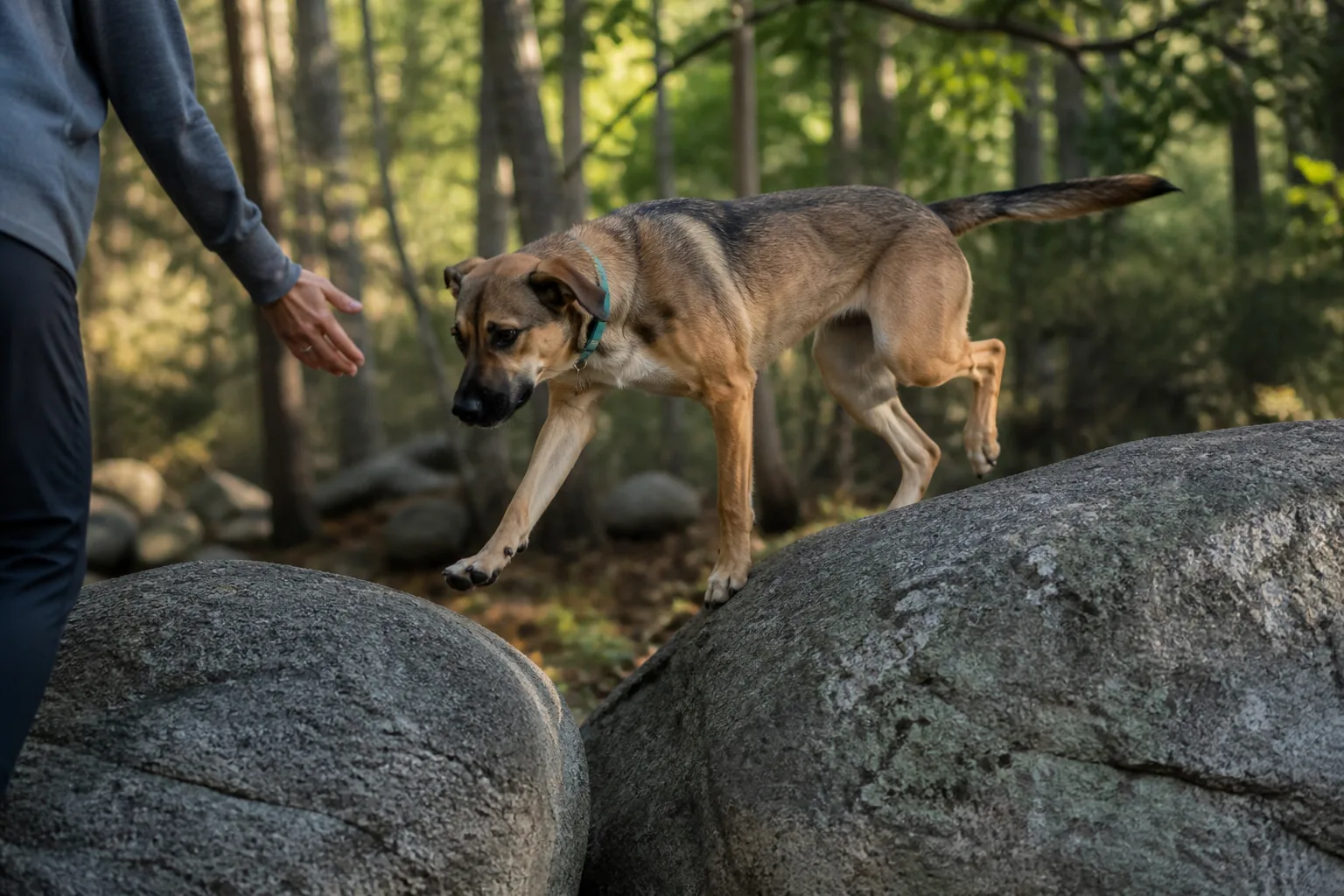
How it works in practice
The golden rule: check the obstacle is stable first, and keep the height low. This is not a sport of spectacular leaps.
Frequently asked questions
No. You need a harness, a lead and an eye for what is safe around you. The obstacles are whatever the environment offers: benches, logs, kerbs, rocks.
Not if you follow two rules: the obstacle must be stable and the height low. Canine parkour does not involve jumping from height, but slow, controlled movement.
Yes. It improves balance, coordination and body awareness, and in insecure dogs confidence grows visibly. It is also used as a rehabilitation activity, under guidance.
From the same category
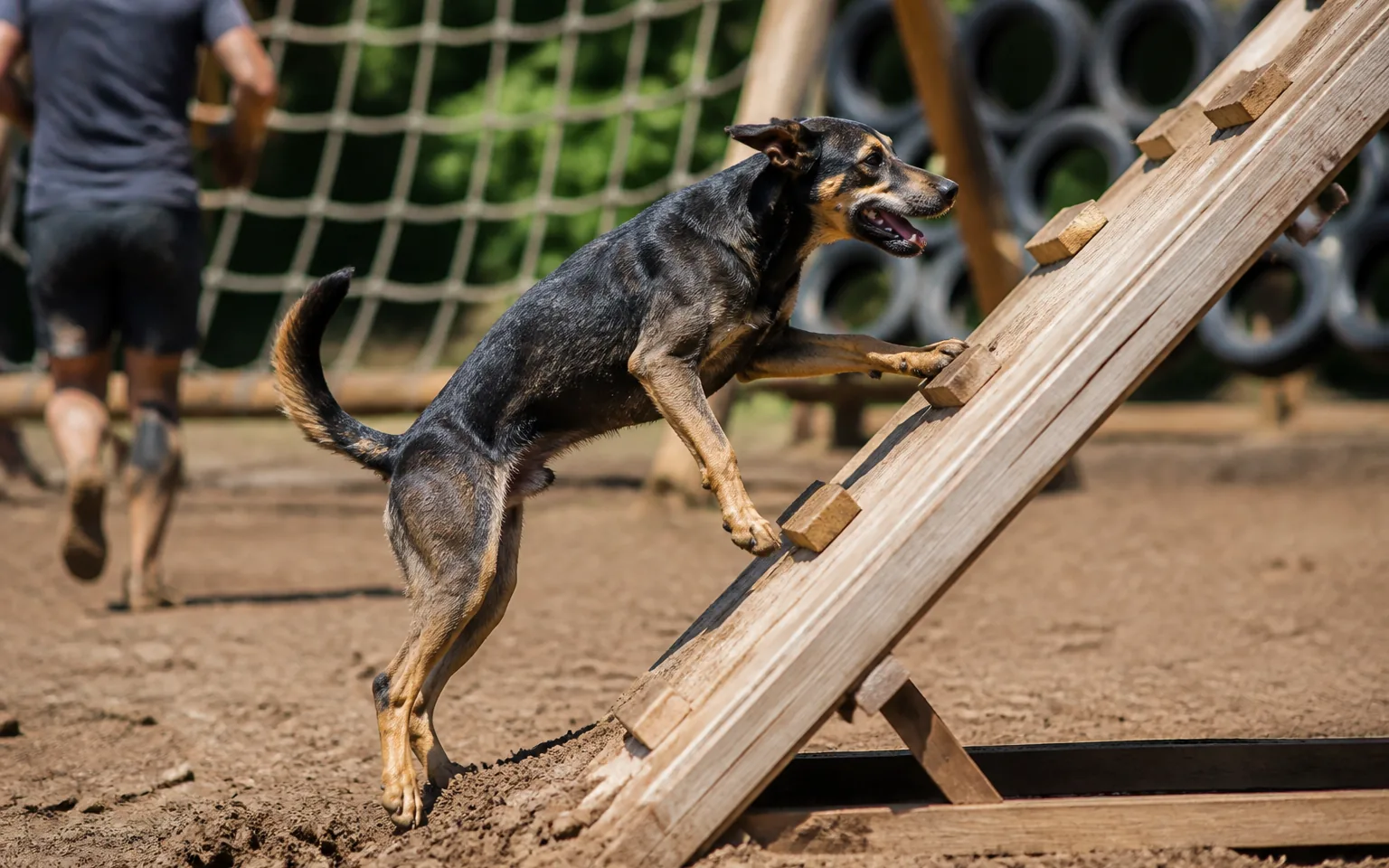
Varied courses testing balance, strength and coordination.
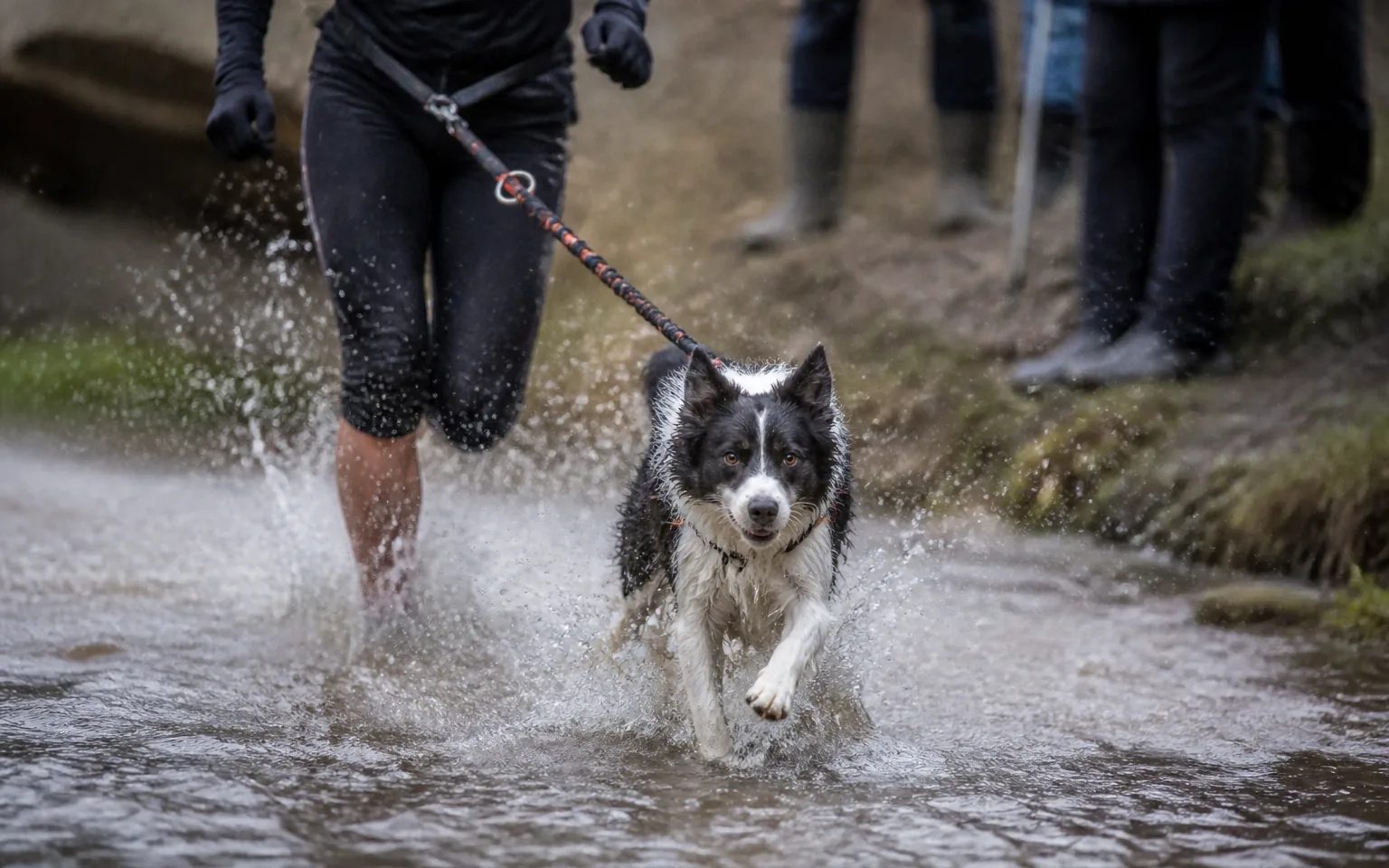
Running with your dog on courses that include obstacles.
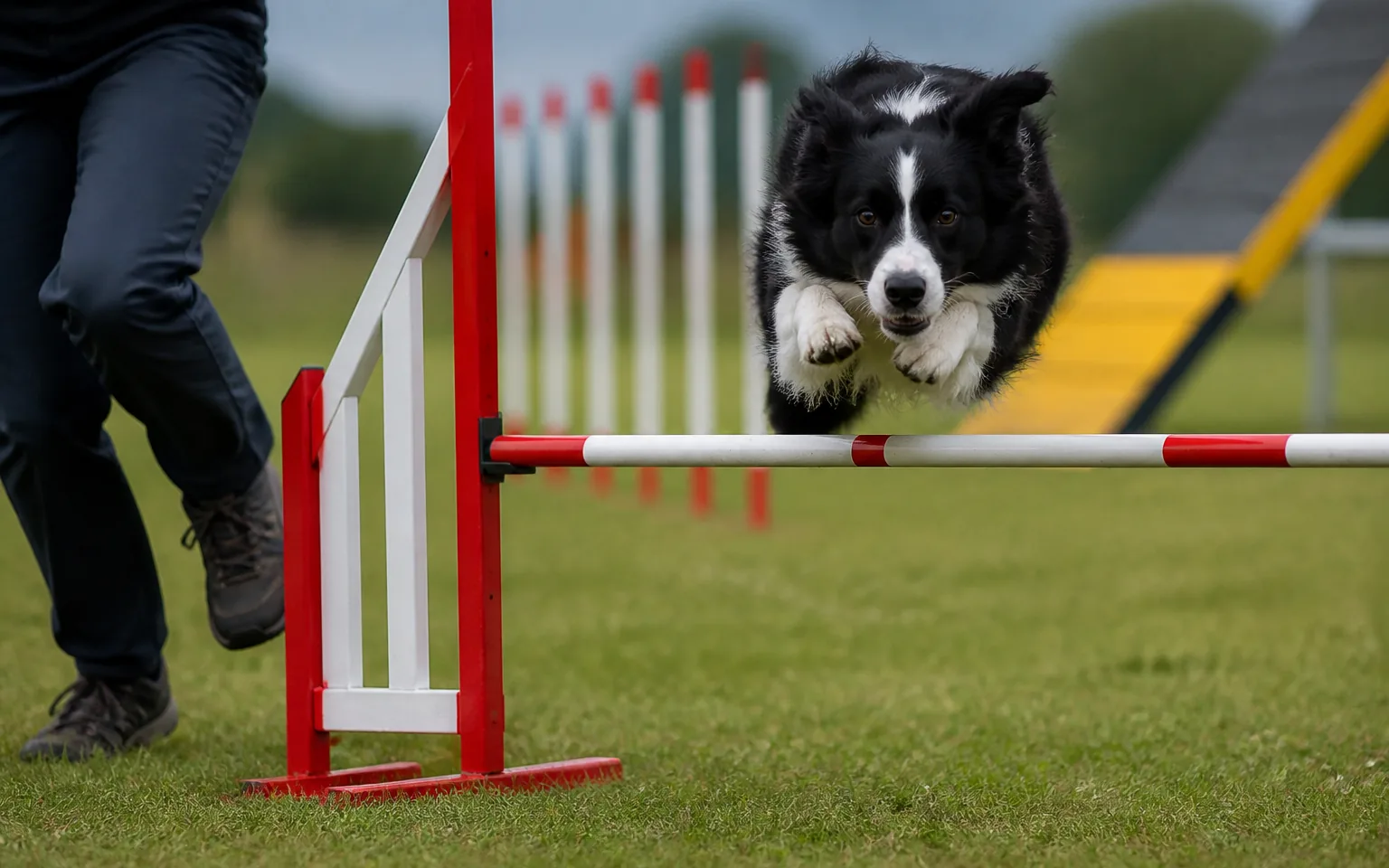
A course of jumps, tunnels, weaves and contact obstacles.
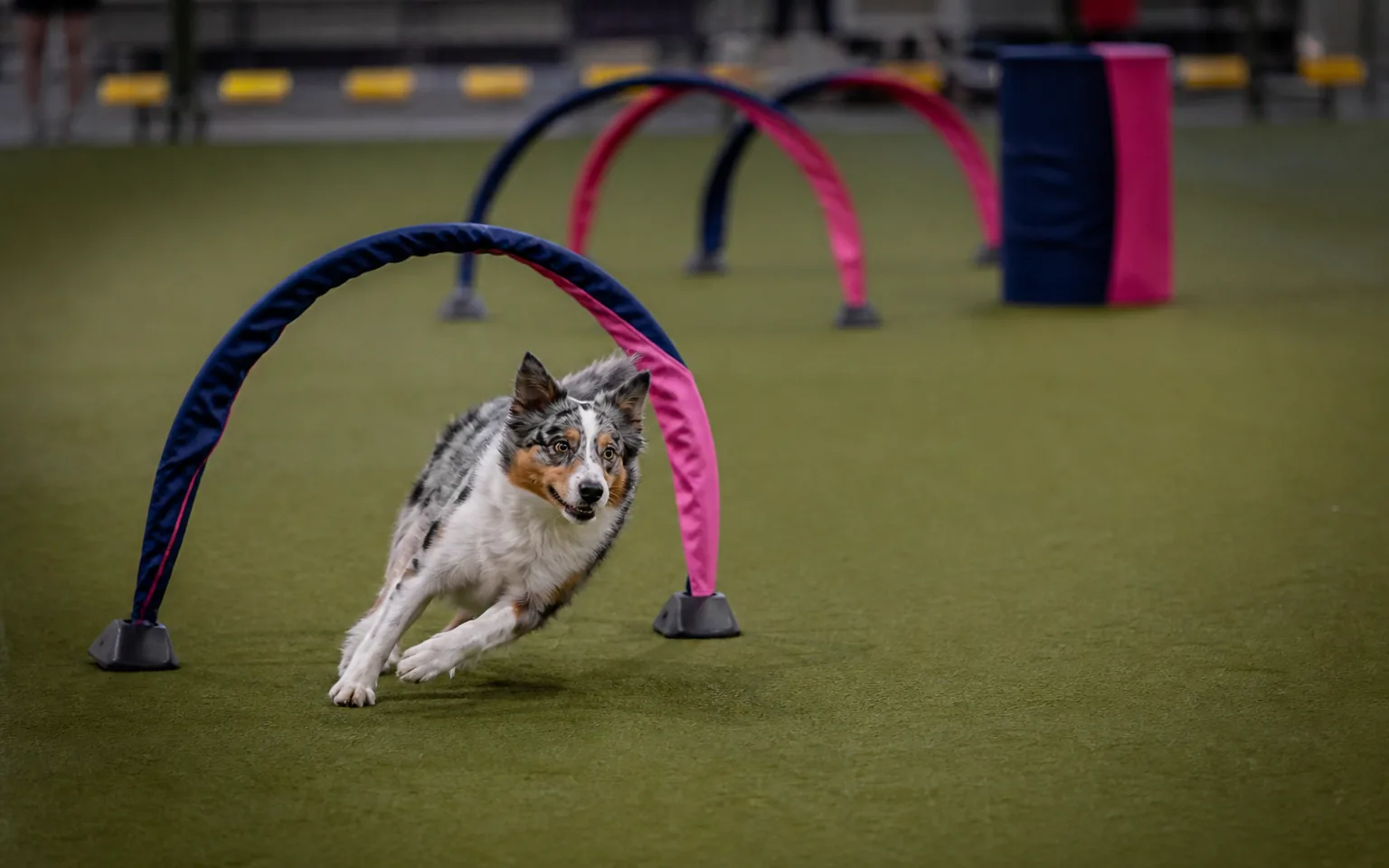
A course of hoops, tunnels and gates, with no high jumps.
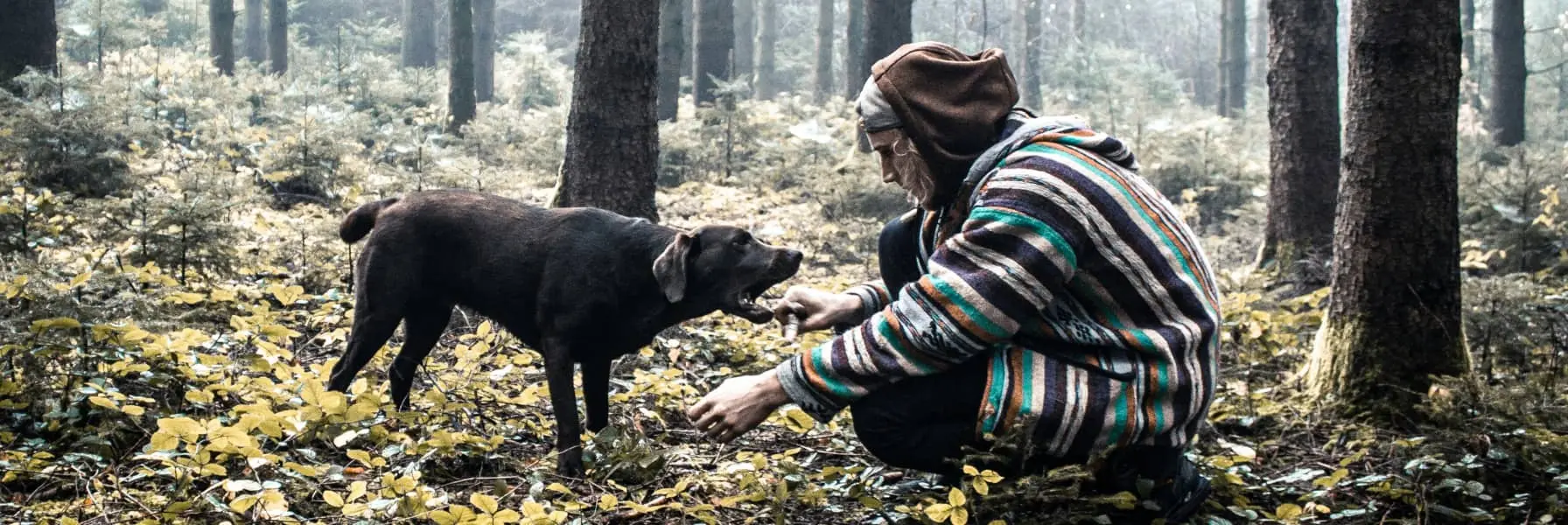
This page is informational. We work in mantrailing, search and rescue and preparation for the TSAC and BH exams - but if you want an honest opinion on what would suit your dog, write to us anytime.