My dog is small. Can it do agility?
Yes. Competition is by height category and jump heights are adjusted. Small dogs are often extremely fast and technical.

Agility and obstacles
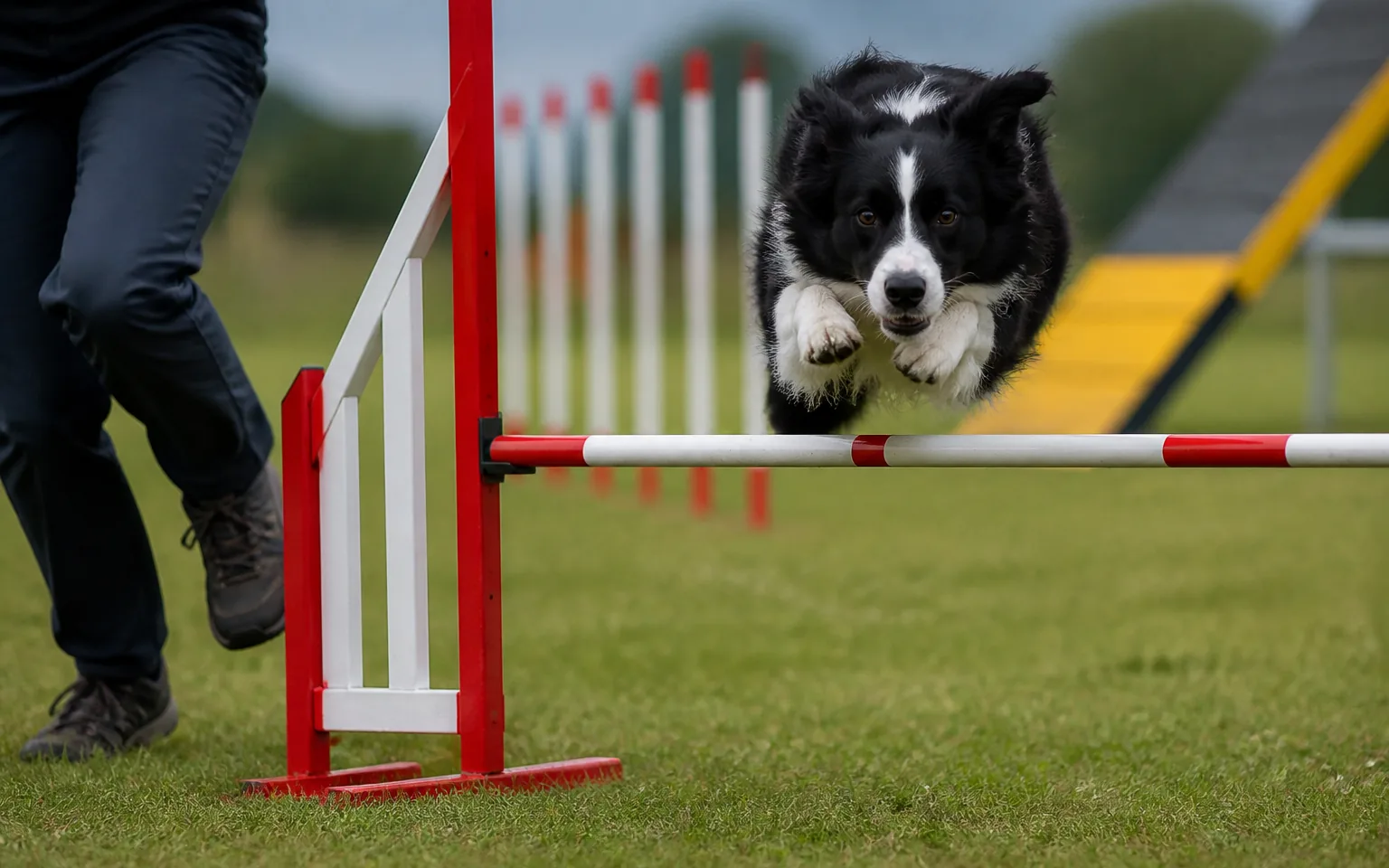
The best-known dog sport in the world. A timed obstacle course in which you may touch neither the dog nor the equipment - only guide with your body position and your voice.
About the discipline
Agility began in the 1970s as an entertainment act at a dog show and has become the most widely practised dog sport on the planet.
The course is designed by the judge and changes at every trial. The team gets a few minutes to walk it without the dog, then has to run it correctly and fast.
The handler runs alongside but may touch neither dog nor obstacles. All they have is voice, shoulder position and the direction of their gaze. Which is why people say that in agility it is almost always the human who makes the mistake.
How it works in practice
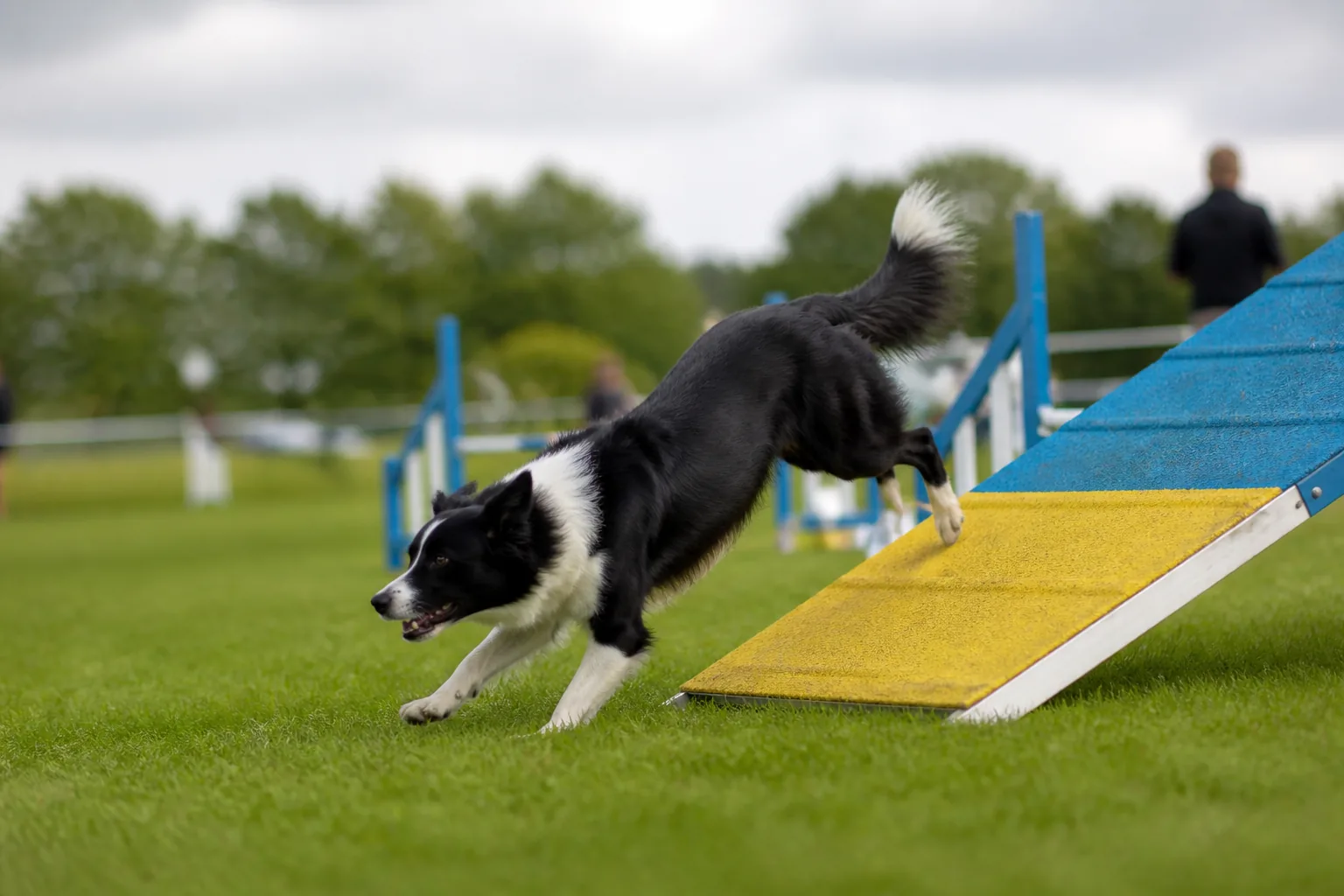
Faults are given for knocking a bar, missing a contact zone, refusals and taking the wrong course. The team with fewest faults wins, then the fastest.
Full-height jumping is not worked with dogs under a year old, still growing. Until then only tunnels, targets and flatwork.
From the FCI regulations
The FCI Agility Regulations (approved May 2025, effective 1 July 2025, amended February 2026) divide dogs into four categories by height at the withers: S under 35 cm, M 35-43 cm, I (Intermediate) 43-48 cm and L from 48 cm. A dog competes in one category only.
FCI international competitions are open to dogs over 24 months with an FCI-recognised pedigree; national competitions to dogs over 18 months, with or without pedigree. All dogs must be identifiable by microchip or tattoo and the owner must belong to an A.Ch.R.-affiliated club. Bitches in heat may compete; pregnant bitches may not.
| Obstacle | S (< 35 cm) | M (35-43 cm) | I (43-48 cm) | L (≥ 48 cm) |
|---|---|---|---|---|
| Height of single/spread hurdles and wall | 25-30 cm | 35-40 cm | 45-50 cm | 55-60 cm |
| Tyre: centre of the aperture above ground | 55 cm | 55 cm | 70 cm | 80 cm |
| Long jump | 40-50 cm (2 units) | 70-90 cm (3) | 90-110 cm (3-4) | 120-150 cm (4) |
Source: FCI Agility Regulations 2025, chapter 5 "Obstacles". The category is set by the height at the withers; a dog competes in one category only. The dog-walk is 120-130 cm high and the see-saw 60 cm at the pivot, for all categories.
Every fault is worth 5 points: a knocked pole, a refusal (stopping, running by, backing out of a tunnel), a missed contact zone, the handler touching the dog or an obstacle. Exceeding the standard course time adds one point per second. Refusals must be corrected, otherwise the dog is eliminated.
Elimination follows three refusals, exceeding the maximum course time, taking an obstacle out of sequence or in the wrong direction, the handler jumping over or going under an obstacle or holding something in the hand, a dog wearing a collar in the ring, fouling the ring or harsh handling. Ranking is by total faults (course + time), ties broken by time.
Frequently asked questions
Yes. Competition is by height category and jump heights are adjusted. Small dogs are often extremely fast and technical.
Foundations - tunnels, targets, focus, flatwork - can be taught early. Regulation jump heights come only after the growth plates have closed, generally after 12 to 18 months depending on size.
It helps, but it is not essential. There are distance handling techniques, and many handlers make up for speed with smart positioning and early cues.
The rule figures on this page come from FCI - Agility Regulations. Rules change and federations differ - always check the rulebook of the competition you are entering.
From the same category
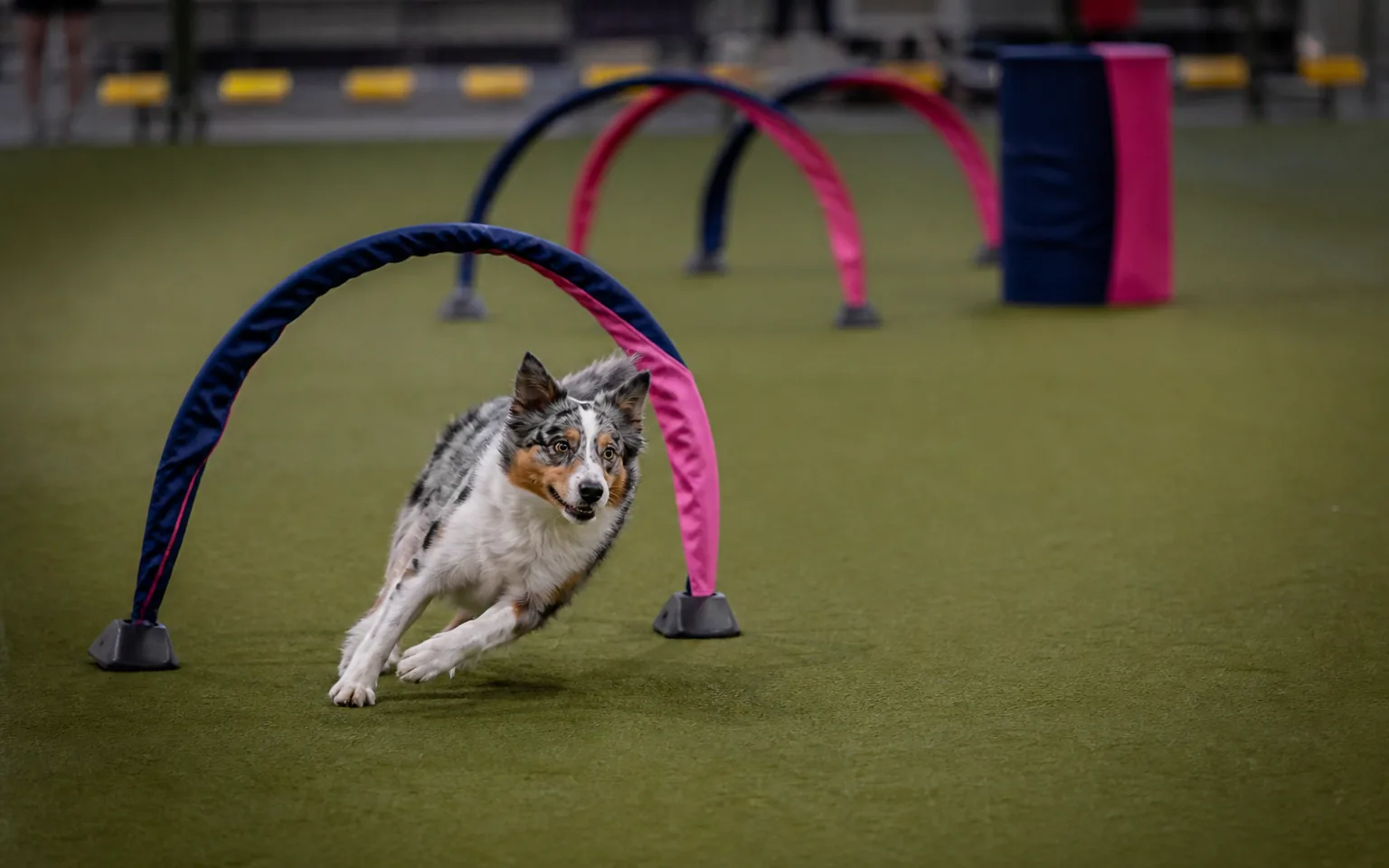
A course of hoops, tunnels and gates, with no high jumps.
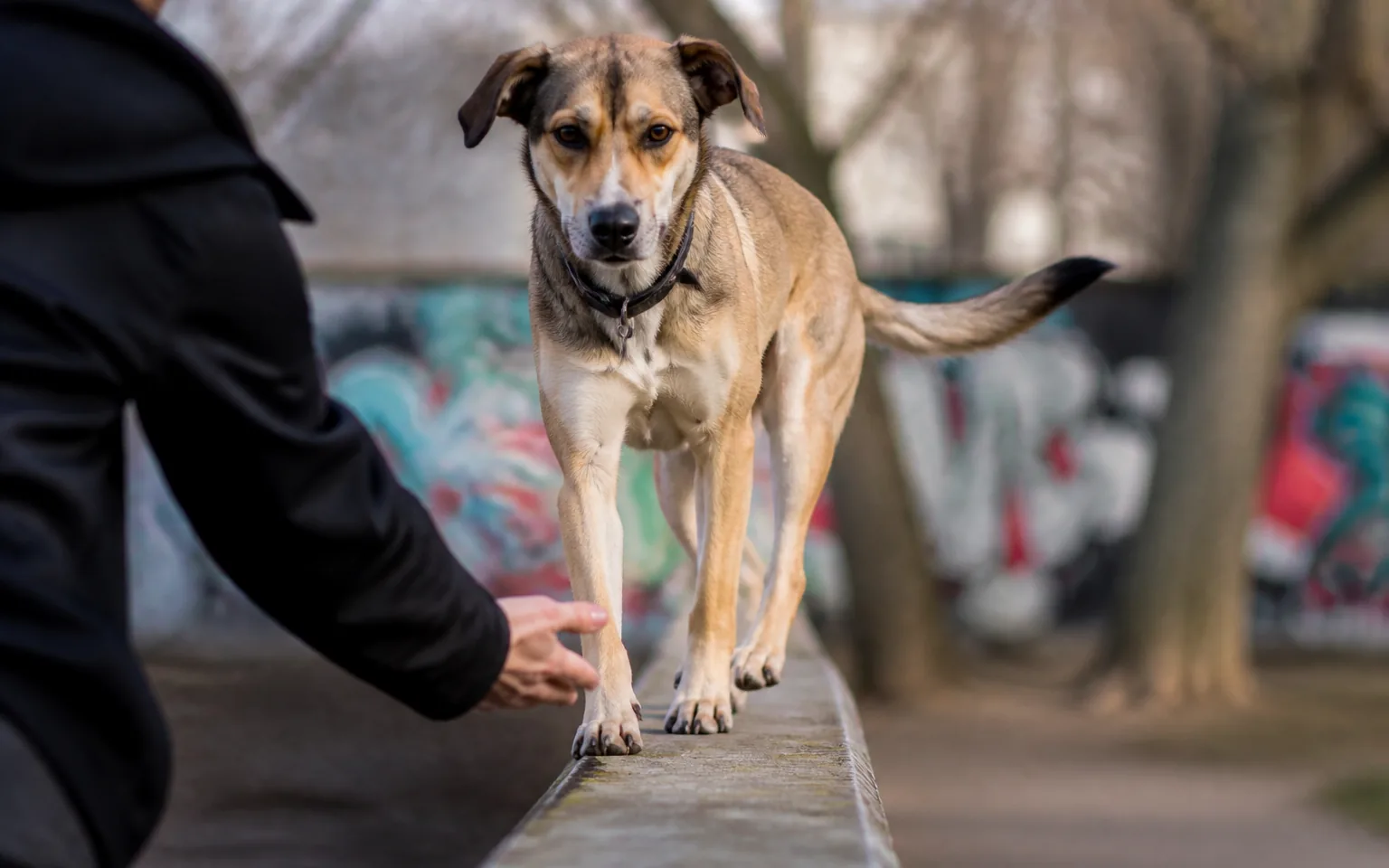
Controlled negotiation of obstacles in urban or natural settings.
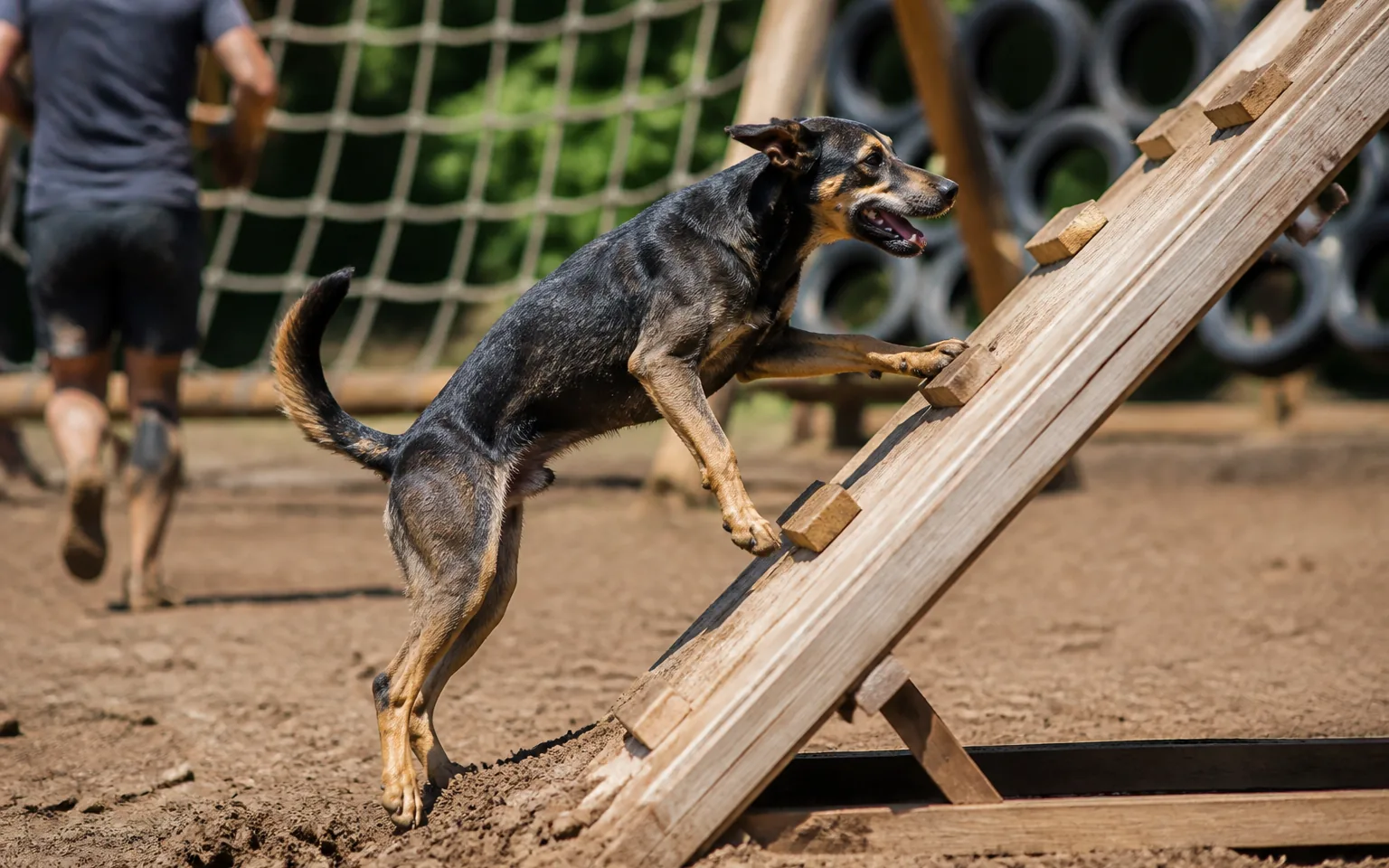
Varied courses testing balance, strength and coordination.
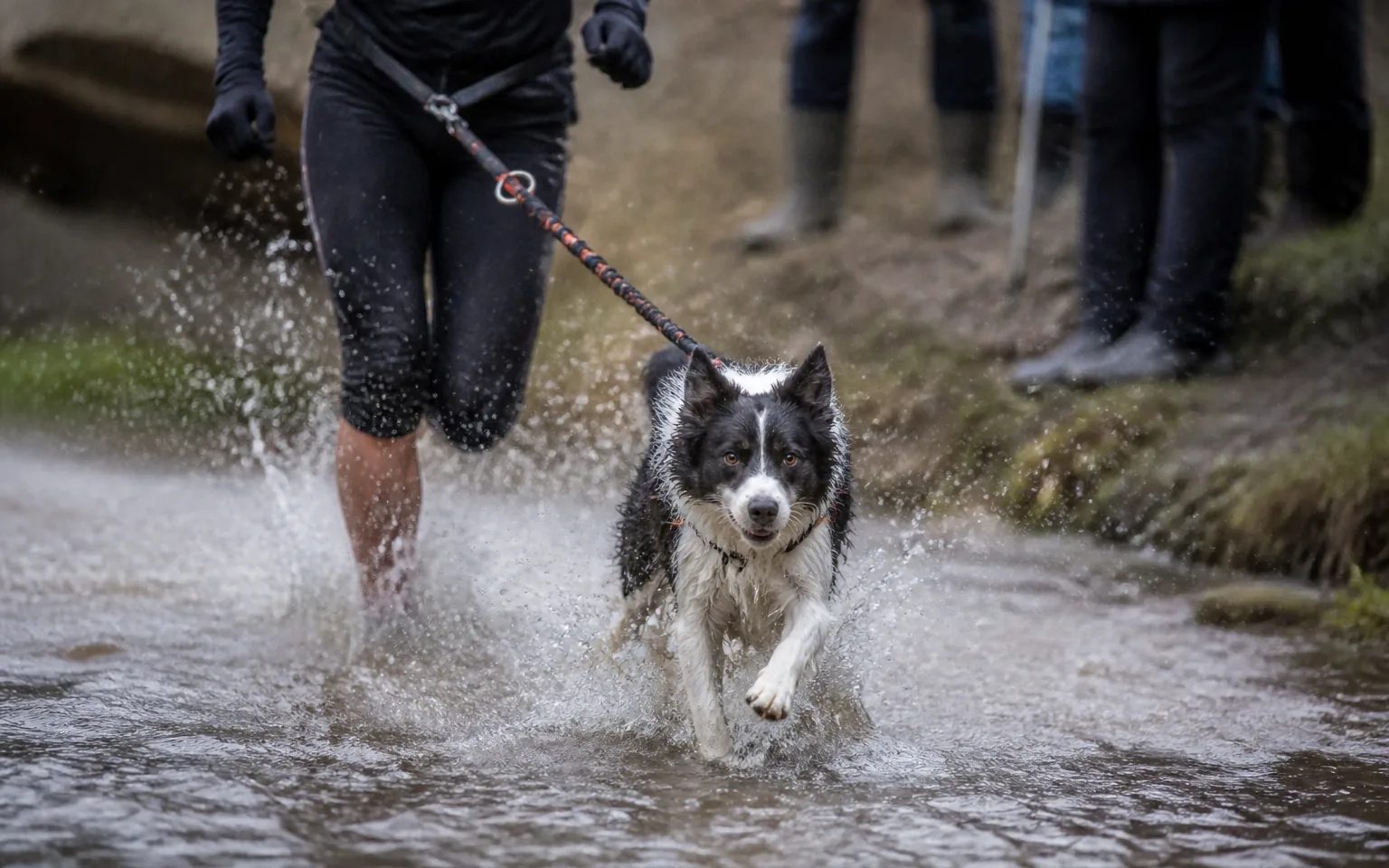
Running with your dog on courses that include obstacles.

This page is informational. We work in mantrailing, search and rescue and preparation for the TSAC and BH exams - but if you want an honest opinion on what would suit your dog, write to us anytime.