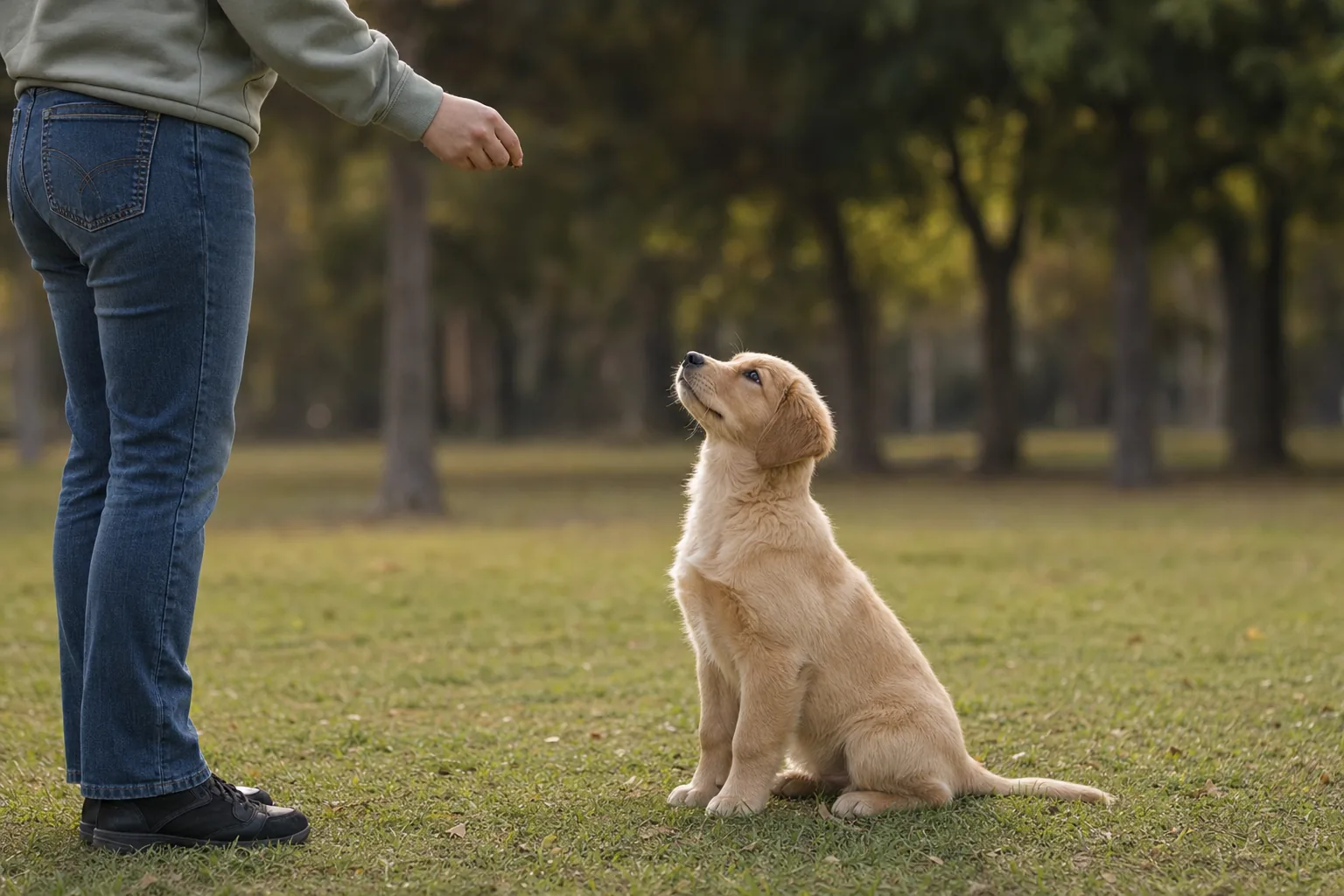
Your cat is seven and the sofa has been hers for as long as anyone can remember. Now a puppy is coming home. Or you have an adult dog and have fallen for a cat at the rescue. Or you have already put them together, and ever since, the dog chases the cat round the house every time he sees her, she has moved onto the wardrobe and started weeing next to the litter tray. Dogs and cats can live together happily, sometimes very happily. The first introduction, though, happens in stages over a few weeks, and the pace is set by whichever of them is more frightened. Usually that is the cat.
How to get your dog used to a cat, step by step
The goal is modest and you get there in a few weeks. The dog sees the cat cross the room, watches her with calm interest and then looks back at you. The cat walks across the floor without rushing.
0. Prepare the house first
- The cat's room. A room with a door that the dog never goes into, with her litter tray, food, water and a bed.
- High routes. Shelves, cupboards she can climb, a tall cat tree, so she can get from room to room without coming down to the floor. A cat with escape routes is far more relaxed.
- A baby gate in the doorway of one or two rooms. The cat goes under or over it; the dog stays on his side.
- The cat's food and litter tray where the dog cannot reach them. Dogs will happily eat cat food and whatever they find in the litter tray.
- The dog's lead and harness for the first meetings in the same room.
1. Days 1–3: scent only
Each animal stays in their own space. A few times a day you swap their bedding. Rub a soft cloth on the cat's cheeks and leave it by the dog's bowl, then the other way round. Let each of them explore the other's room in turn, while the other is shut away elsewhere. A dog who sniffs the cat's blanket and goes back to his toy without scratching at the door is a good sign.
2. Days 3–7: seeing each other through the gate
The dog is on lead a few metres from the gate. You are next to him with a pocket full of good treats. The cat is on the other side and free to come and go as she pleases.
- He sees the cat and stays calm: praise him softly and give him a treat.
- He looks away from the cat on his own and looks at you: three treats, one after the other, and some heartfelt praise. This is the moment the whole exercise is for.
- He goes stiff, stares, whines, trembles or pulls towards the gate: you were too close. Move back two metres, wait for him to soften and carry on from there.
Keep sessions short, five minutes each, several times a day. The cat gets something nice on her side too, a lick of wet food or a treat, when she sits calmly and looks at the dog.
3. Week two: same room, dog on lead
The dog is in harness and on lead, you are on a chair, and the cat is loose in the room with access to her high spots. Same game. The cat is in the room and the dog is calm? He gets something good. He looks at you? He gets more. The cat decides how close she comes. If she comes over to sniff him, praise the dog softly for keeping still. If she leaves, let her go.
Now is the time to teach him a word for "leave her". When the cat walks past, say "leave" and give him a treat if he turns to you. Practise it on boring things first, then on the cat.
4. Weeks 3–4: lead trailing on the floor
The lead stays clipped on but you let it trail on the floor. If he launches at the cat, step on it. Sessions get longer, you stay in the room, and the cat always has somewhere high to go.
5. Freedom, while you watch
The lead comes off and you stay in the room. When you go out, the dog and cat are kept apart for many months yet, and with some dogs for good. The cat's litter tray and food stay permanently out of the dog's reach.
What to watch in the dog
| What you see |
What it means |
What you do |
| Looks, sniffs, then turns back to you |
Normal interest |
Praise him, give him something good |
| Soft body, tail low or half-mast, wagging loosely |
Relaxed |
Carry on |
| Goes stiff, fixed stare, not blinking, stops taking food |
Hunting interest |
More distance, straight away |
| Drops low, creeps, ears forward |
Stalking |
End the session, start again from further away |
| Whines, trembles, pulls on the lead |
Too wound up |
More distance, shorter sessions |
| Lunges at her, barks |
Too close |
Back off and go back a step |
What changes with the dog's age
Puppies. The easiest to get used to a cat, because this is when they learn what is normal. The trouble is that a puppy wants to play with anything that moves, and for a cat a puppy bouncing on her is as wearing as a dog hunting her. Plenty of adult cats sort a puppy out with a paw across the nose. That is a useful lesson, just not the only one he should get. Go through the same steps, only faster. Play with him a lot so he does not go looking for games with the cat.
Adolescents (6–18 months). Bags of energy, little patience, and a stronger chase instinct than in puppyhood. Daily exercise and nose games before the cat sessions make a real difference. A tired dog looks at a cat differently from one who has been stuck indoors all day.
Adults. What he has lived through so far matters. A dog raised with cats often adapts quickly. One who has been chasing cats out of the garden for years already has a habit. Some breeds have a very strong chase instinct: sighthounds, terriers, some gundogs and herding dogs. If you are adopting, ask the rescue whether he has been tested with cats and how.
Seniors. An old dog in pain may have less tolerance for a young cat jumping on him. Give him a bed the cat cannot easily reach. The reverse applies too: an elderly cat with a puppy in the house needs even more high places and a room of her own.
The mistakes that undo everything
- "Let them sort it out." A first meeting off lead with no escape route can end in a chase that both of them remember for months.
- Holding the cat to show her to the dog. She panics, scratches you, leaps out of your arms and runs, and the dog learns exactly what you did not want him to: cats run.
- Moving on too fast because two days went well. One chase sets you back a week.
- Telling him off or punishing him for looking at the cat. He links the cat with your anger, and the tension between them rises.
- No high places for the cat. With nowhere to escape to, she runs along the floor, and a running cat sets a dog off more easily than anything else.
- Letting the dog chase the cat "in play". She does not experience it as play. Chased often enough, she can get so stressed that she stops eating, stops using her litter tray or falls ill.
- Leaving them alone together too soon. Even after months of peace, separate them when you go out.
- Forgetting the cat. All the attention goes to the dog while the cat hides for days. Keep an eye on her too: is she eating, using the tray, sleeping in her usual spots?
How long it takes and how you know it is working
For a puppy and a confident cat, two or three weeks can be enough. For an adult dog with a strong chase instinct, two or three months or more. With some dogs, especially those that have already killed cats, living together freely is never safe, however much work you put in.
Progress comes in fits and starts. You will have good days and days that feel like you are back at the beginning. The signs that it is working usually arrive in this order:
- the dog sees the cat and looks at you without being asked;
- he can eat treats with the cat two metres away;
- the cat comes down off the wardrobe and walks across the room without constantly looking back;
- the dog lies down and falls asleep in the same room as the cat;
- the cat starts seeking him out: rubbing against him, sleeping next to him.
Keep a short diary of how many sessions, at what distance and how each of them reacted. After two weeks you will see progress on paper that you miss from one day to the next.
When to call a trainer
- the dog still goes stiff and stalks the cat after two weeks of work at a good distance;
- he has caught the cat once, even without hurting her;
- the cat has stopped eating, stopped using the litter tray or hides for days;
- the dog growls at the cat over food, toys or his bed;
- you already have a cat and have adopted a dog whose history you know nothing about.
A trainer who comes to your home sees things you no longer notice. They will tell you honestly whether the two can live together freely or only apart, with supervised time together. If the cat is showing signs of stress, talk to her vet as well.