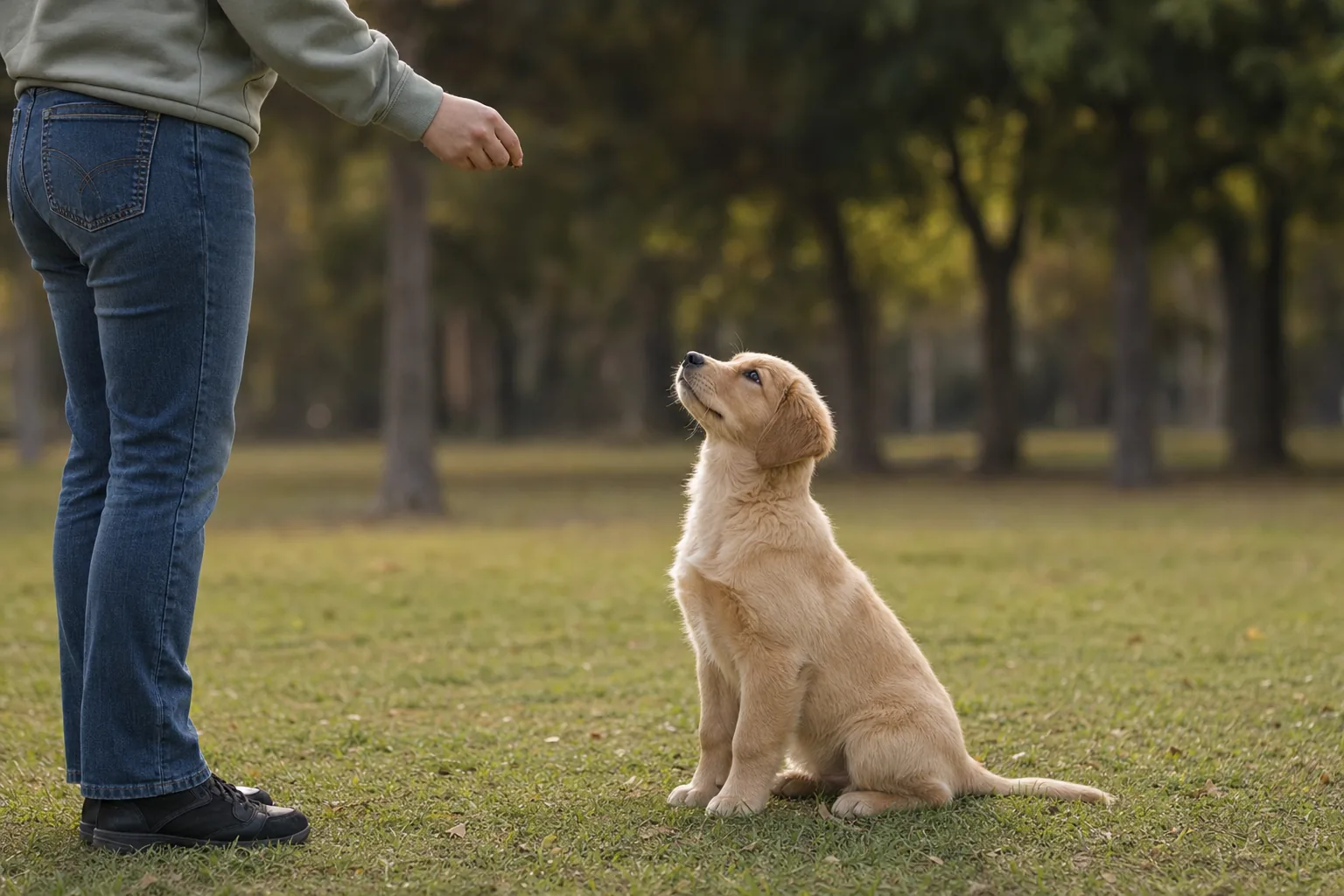
The puppy arrives on Saturday. Your four-year-old has no idea; he is asleep on the sofa, and you are looking at him wondering how he will take a two-month-old stranger walking through the door and sniffing his bowl. Or you are a week past that point: the second dog is in, the first one has taken himself off to a corner and will not look at you, and you are starting to think you have broken something. We have seen both versions many times. Nearly everything that goes wrong in the first weeks with two dogs comes down to the same handful of mistakes: the meeting happened indoors, the food went down in the same spot, and the resident dog never got a moment's peace. All of it can be avoided with a plan before the second dog arrives, and all of it can be patched up, with patience, if he is already home.
What to do, step by step
Start with the dog you already have
You pick a second dog by looking hard at the first. What does your dog do when he meets other dogs in the street or in the park? Does he play easily, tolerate them from a distance, or steer round them? A dog who barely puts up with other dogs does not turn sociable because you have landed a sibling on him. He turns into a dog with nowhere left to escape to.
Age and energy. A three-month-old puppy next to an arthritic senior is misery for the senior. A young, lively dog next to a settled adult can work, provided the adult has somewhere to retreat when he has had enough.
Size. A very large dog playing roughly with a very small one can hurt him without meaning to, in a single pounce.
Sex. Male-female pairs generally have the fewest conflicts. Two adult bitches, according to some studies, have the most serious problems, and two young entire males can start competing as they mature. Those are tendencies. The two dogs' temperaments weigh far more than any statistic.
Your first dog's problems. If your first dog howls when left alone, barks at every dog in the street or chews the furniture out of boredom, a second dog will not cure him. More often than not you end up with two dogs doing the same thing.
If you possibly can, arrange a trial meeting before you decide: outside, on neutral ground, both dogs on lead. Ten minutes of walking tells you more than any description in a rehoming advert.
Step 1: the house, before he arrives
- your first dog's favourite toys, bones, chews and bowls come off the floor; for the first weeks, nothing lies around that would be worth an argument;
- two feeding spots, in different rooms or as far apart as you can manage;
- two beds, one each;
- a baby gate, or two, so you can split the house into zones without shutting doors;
- on the day itself, your first dog gets a long walk with plenty of sniffing, so he comes home tired and content.
Step 2: the first meeting, outdoors
Not in the house and not in your first dog's garden. You want a place neither dog thinks of as his: a quiet street, an empty park first thing in the morning. And two people, one per dog, with loose leads.
The parallel walk. Head in the same direction, on opposite pavements or 10 to 15 metres apart. The dogs can see and smell each other at a distance without ending up nose to nose. Every time one glances at the other with a soft body, praise him and give him a treat. About ten minutes of that.
Closing in. If both look relaxed, soft bodies, tails at their usual height, noses in the grass, narrow the gap a little at a time, still walking. A stiff dog with a hard stare means you have rushed it. Go back to the previous distance.
The short sniff. Let them come together on slack leads and sniff for about three seconds, then call them away cheerfully and walk on a few steps. Repeat a few times. Three seconds sounds like nothing; it is exactly long enough for them not to tense up.
What to look for. Good signs: soft bodies, curved approaches, a play bow with the chest down and the rear in the air, dogs who turn away by themselves to sniff the ground. Signs to stop: a stiff body, a hard stare, hackles up, growling, one dog pulling hard to leave. Then open up the distance and try again later or the next day. An extra day of trying costs nobody anything.
Step 3: coming indoors
After the shared walk you go in together: the first dog first, then the newcomer, both on lead. The first few minutes in a big room with nothing worth guarding on the floor. Let them explore. If everything stays calm, drop the leads but leave them attached and trailing. That way you can separate them in one movement, without reaching for a collar between two tense dogs.
Step 4: the first weeks
Meals apart, every single time. Each dog eats in his own spot, with a gate or a door between them, and the bowls come up the moment they have finished. Most squabbles start at the bowl.
Chews and the toys they really care about only come out when the dogs are separated.
When you are out, or cannot keep an eye on them, they stay in separate zones. It can be several weeks before you leave them alone together. That is normal.
The resident dog needs breaks. Especially with a puppy: the adult needs puppy-free time every day. If he gives a short growl at a puppy climbing on his head, he is teaching a rule any adult dog would teach. If the puppy does not stop, you step in: pick him up and give him something else to do.
Time with the first dog alone, daily, a walk or a game without the newcomer. The resident dog must not be left with the impression that he has lost everything he had.
Train them separately. Each dog learns new exercises alone with you; you only work them together once both know the exercise well.
By age
A puppy joining an adult. The most common combination and one of the best, if the adult is sociable. The idea that an adult dog "forgives a puppy anything" is a story; many adults cannot stand pushy puppies, and they are entitled not to. Protect the adult from the puppy at least as much as you protect the puppy from the adult. The puppy also needs dogs other than the one at home, so he learns to play nicely with anyone.
Two puppies at once. It sounds sensible, because they play together and leave you in peace. In practice, two puppies of the same age, littermates above all, mean twice the work: separate walks, separate training, separate socialisation, so they do not become dependent on each other and stop noticing you altogether. Many trainers recommend waiting until the first dog is at least a year old. So do we.
An adolescent (6 to 18 months) joining an adult. Plenty of energy, few rules. A calm adult tires quickly beside him. Put the emphasis on breaks and separate walks.
Two adults. This is where the step-by-step introduction above matters most. Adult dogs arrive with their own habits and sensitivities, and the first weeks often decide what the relationship will look like for years.
A second dog with a senior. A calm senior can take to a calm adult. A boisterous puppy will exhaust him and may injure him without meaning to. The senior needs a place that is his alone, out of the puppy's reach, and the right to be left in peace there.
The mistakes we see most often
The first meeting indoors. The resident dog guards what is his, and the newcomer is swamped by unfamiliar smells. Outdoors, on neutral ground, the meeting starts on a completely different footing.
Feeding in the same room. Even two dogs who get on well can fight over a bowl or a bone.
Leaving them alone together from day one. Most serious conflicts happen when nobody is home to see how they started.
The resident dog left with no breaks and no attention. Some resident dogs withdraw, go off their food or start growling more and more.
A second dog as the fix for the first dog's problems. It rarely works and sometimes doubles the problem.
Punishing the growl. A growl is a warning, the most honest one a dog has. A dog punished for growling learns to skip the warning and go straight to the bite. Listen to what the growl is telling you and change the situation.
Letting them "sort out the pecking order themselves". Sometimes they do, after serious fights, and the relationship stays tense for years. Far better to prevent it.
How long it takes to settle, and how to tell it is working
For most dogs the first good signs show within days, and a settled relationship takes two or three months. Some pairs take longer. Temperament matters, not just the calendar.
| Period |
What you are looking for |
| Day 1 |
Parallel walk, short meeting, coming indoors on lead. |
| Week 1 |
Food and chews apart; constant supervision; dogs separated whenever you are out. |
| Weeks 2 to 4 |
Longer stretches together, with breaks; short walks together. |
| Months 2 to 3 |
Left alone together briefly, if everything has been calm; the feeding rules stay. |
Signs it is working: they play with pauses they take by themselves, they swap roles (one chases, then the other), they sleep near each other, they greet calmly after time apart, and either one can walk away without being followed.
Signs you need to slow down: hard stares, stiff bodies, one blocking the other's way to the door or to you, growling on approach, a dog who stops eating or hides, play that never pauses and keeps getting rougher.
When to call a trainer
- there has been a fight with injuries, or one you had to break up by hand;
- one dog growls or stiffens every time the other comes near food, toys, his bed or you;
- the resident dog has changed: off his food, hiding, reluctant to go out;
- the tension is building week on week instead of easing;
- you want a second dog and are not sure your first one is cut out for it.
An assessment session before you adopt saves many hard weeks afterwards. And if the second dog is already home and things are creaking, we look at both of them and build a plan for your household, with the dogs you have in front of you rather than the ones in the books.