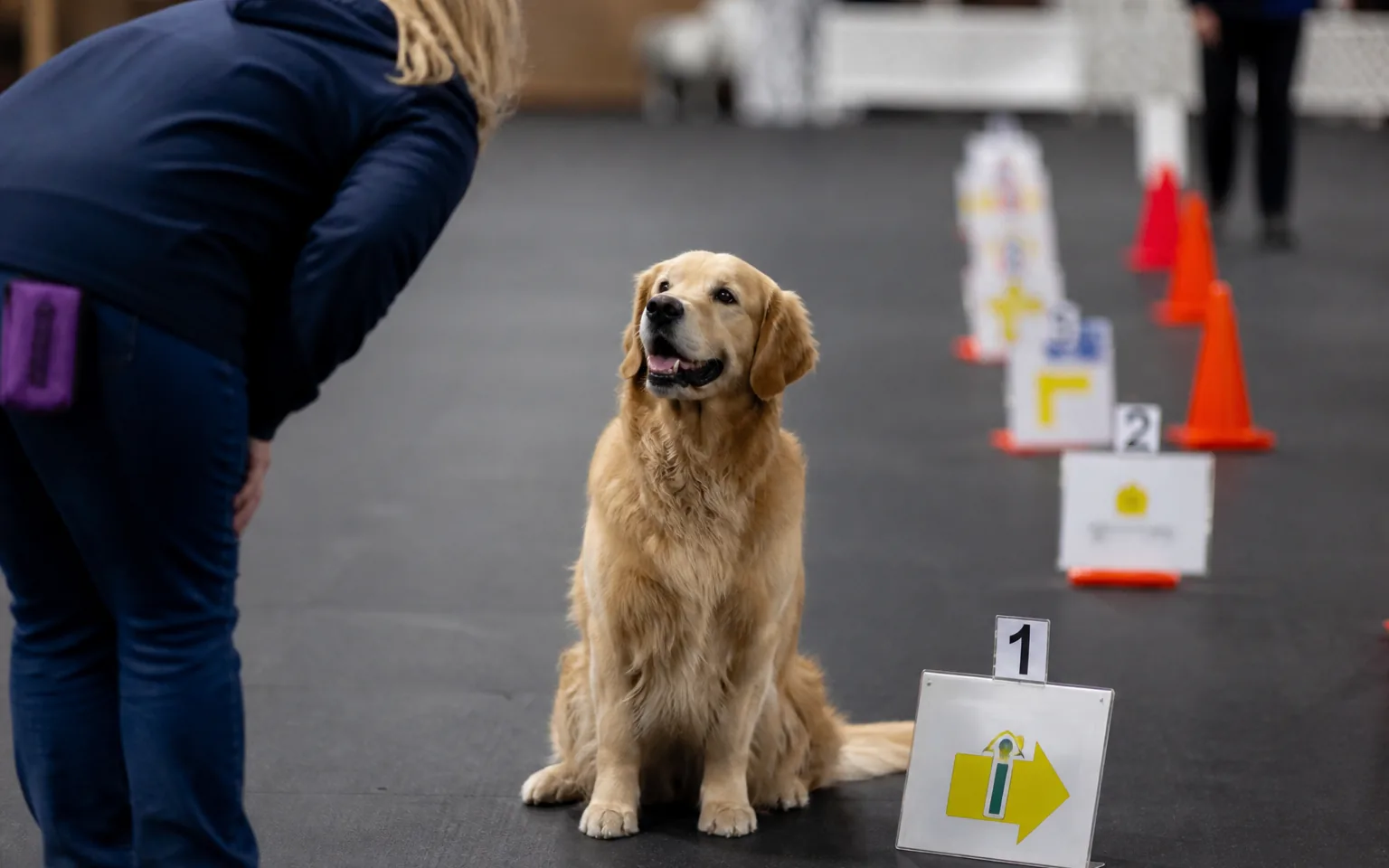
Golden Retriever sitting in front of a numbered station sign on a rally obedience course

Obedience and working disciplines

Rally Obedience

A course of signs, like a slalom of instructions. At each sign you do the exercise printed on it, and unlike classic Obedience, you can talk to your dog the whole way round.

About the discipline

What Rally Obedience is

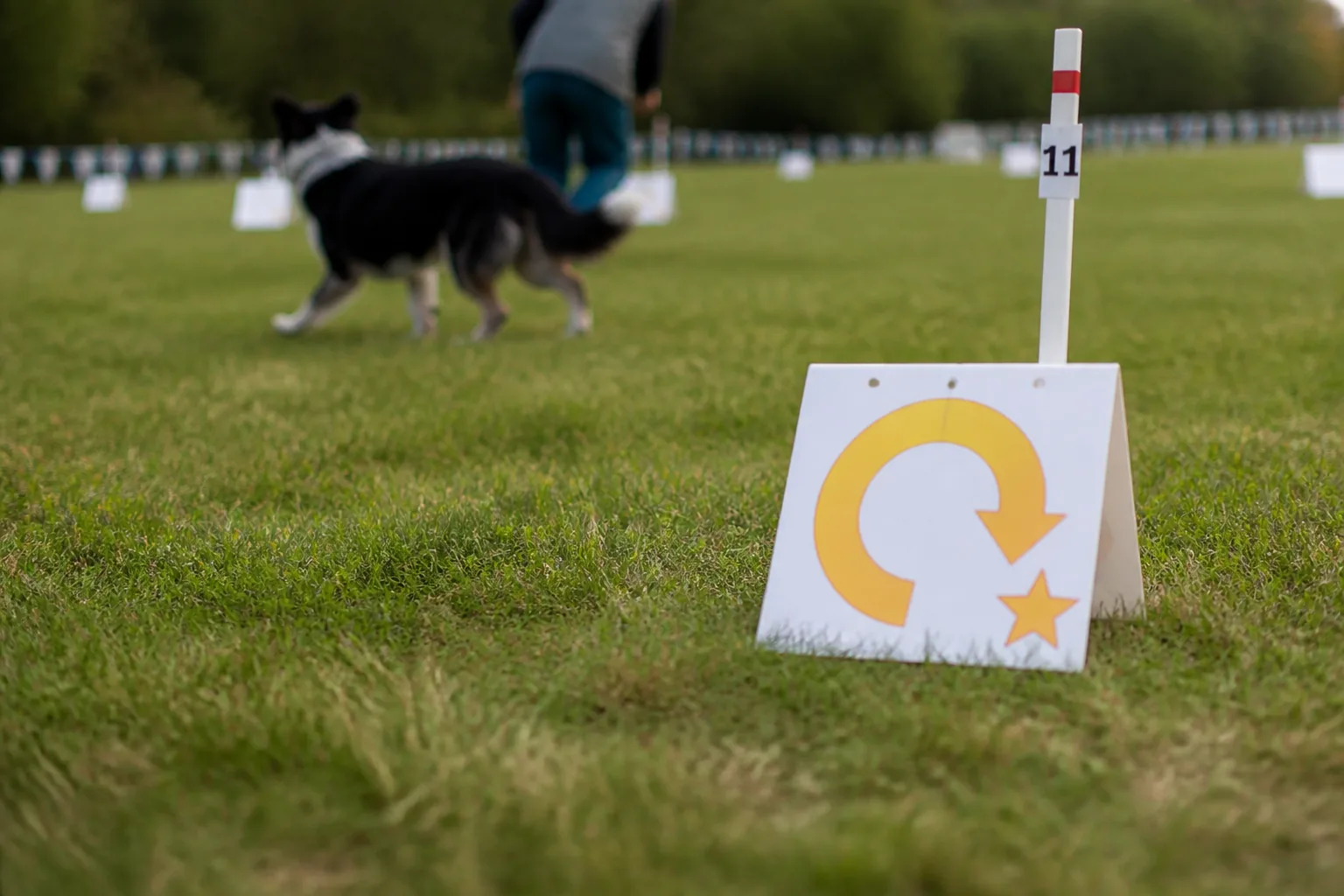
Rally Obedience, or rally-o for short, is the friendlier side of competitive obedience. Numbered signs are set out around the ring, each with an exercise on it: sit, 270-degree turn, slow pace, down from motion.

The team works the signs in number order, at its own pace. You can talk to your dog, cheer it on and repeat a command. In classic Obedience every one of those would cost you points.

That's why people call it the best way into obedience sports. It asks for real discipline, but it lets beginner nerves slide: fluff a cue and you just give it again.

Numbered rally obedience station sign staked in the grass showing the exercise pictogram

How it works in practice

How a rally round works

  • the judge designs the course, with 12 to 20 signs
  • the team walks the course beforehand, without the dog
  • you start on the signal, then you and the dog are on your own
  • at each sign, you do the exercise printed on it
  • the handler can talk and encourage from start to finish
  • the judge scores execution, and also how smoothly you move between signs
  • at the higher classes, part of the course is done off lead

Which dogs it suits

  • people taking their first step into dog sports
  • dogs that lose heart quickly under pressure
  • teams who want to compete without the stiff feel of the classic ring
  • senior dogs, in the classes without jumps

What you need

  • a fixed lead and a collar or comfy harness
  • small rewards to hand out between exercises
  • shoes you can turn on the spot in
  • patience for learning the course by heart

Frequently asked questions

Common questions about Rally Obedience

Is Rally easier than Obedience?

It's more forgiving. Each exercise on its own is simpler, but you have to string them into a smooth course you've memorised beforehand. The big difference is that you can talk to your dog from the first sign to the last.
My dog is easily distracted. Will it work?

Yes, we'd even recommend it. When you can talk and encourage all the way round, a dog that drifts off easily finds it much easier to stay with you.

What happens if I take the wrong route?

You get a penalty, but you carry on. Going off course is the most common beginner mistake, and it's usually the handler forgetting the order rather than the dog.

From the same category

Related sports

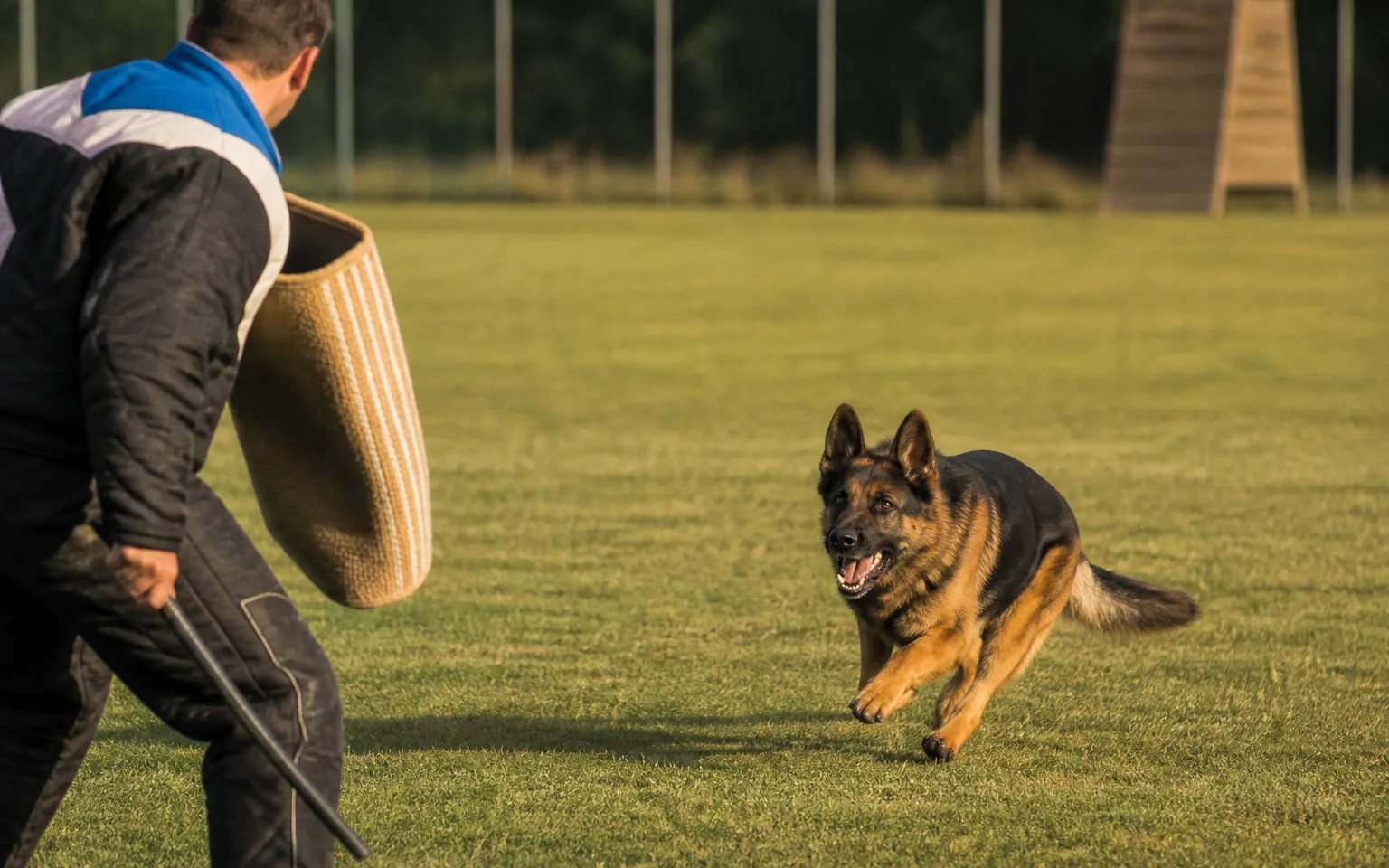
German Shepherd running towards a helper in a padded suit during the protection phase

IGP

Tracking, obedience and protection, worked with the same dog on the same day.

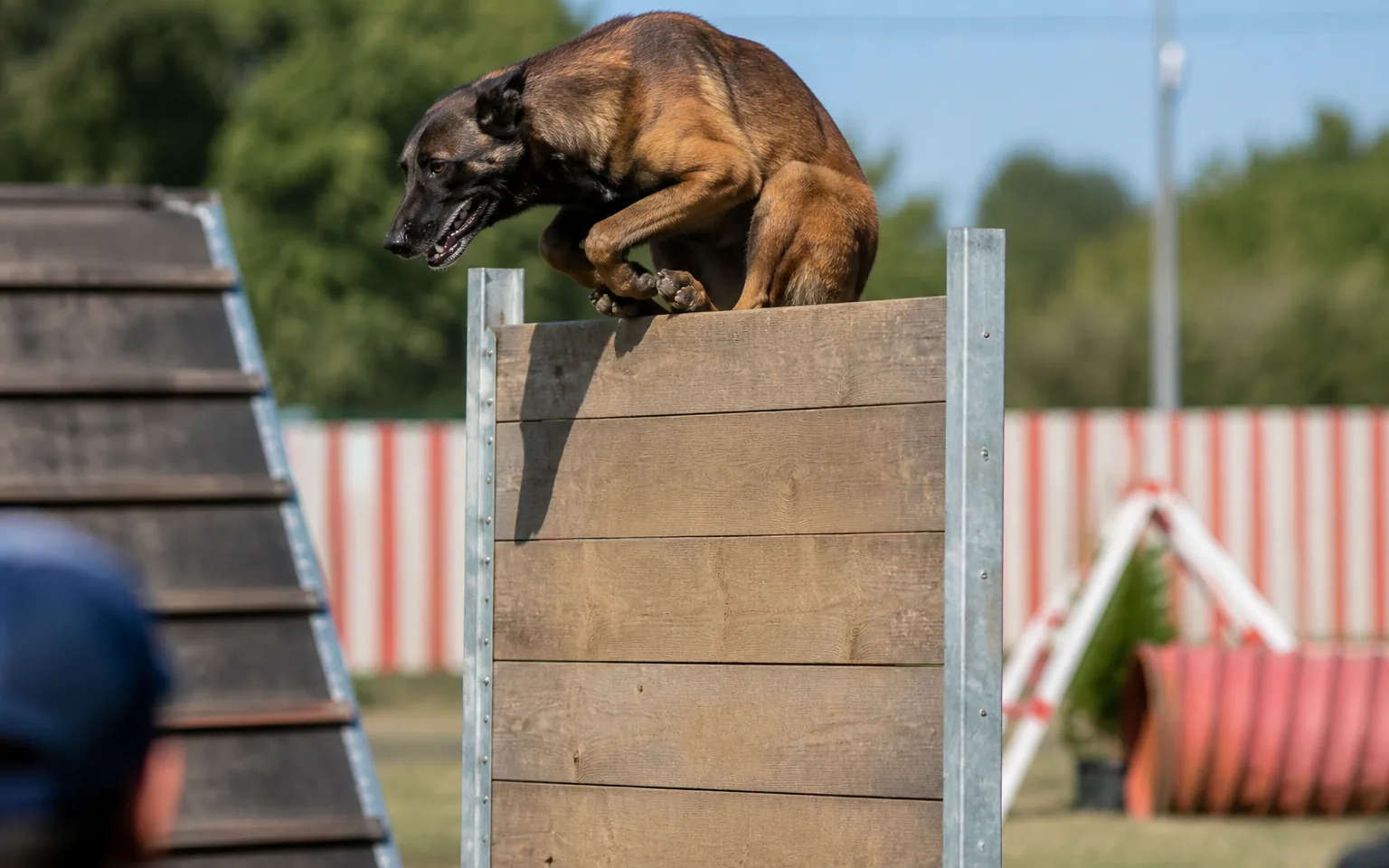
Belgian Malinois clearing the tall wooden palisade on a mondioring field

Mondioring

Obedience, jumps and protection, worked on a field dressed up to a theme.

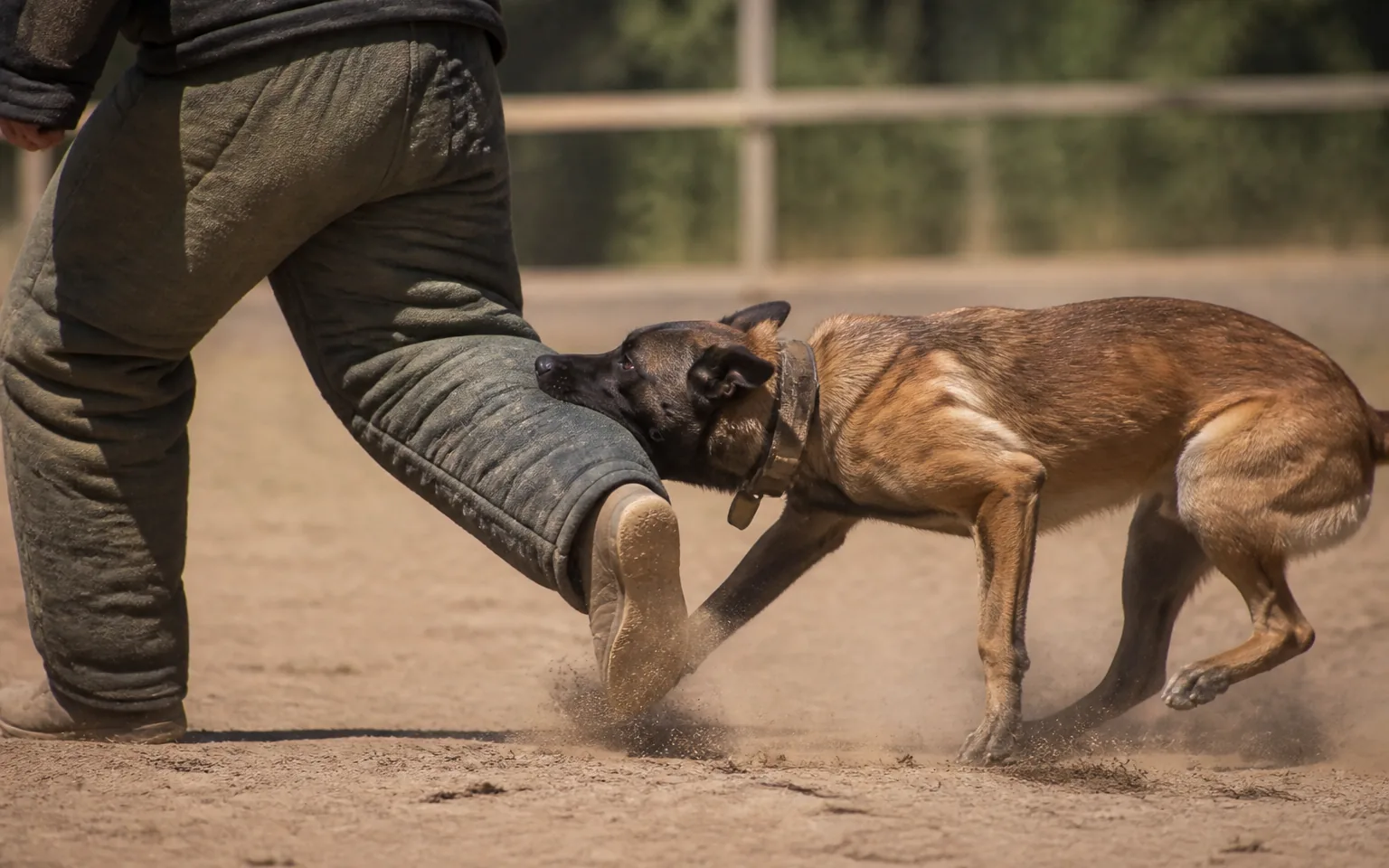
Belgian Malinois gripping the decoy's padded suit on sandy ground

Belgian Ring

The Belgian ring school: obedience, jumps and protection.

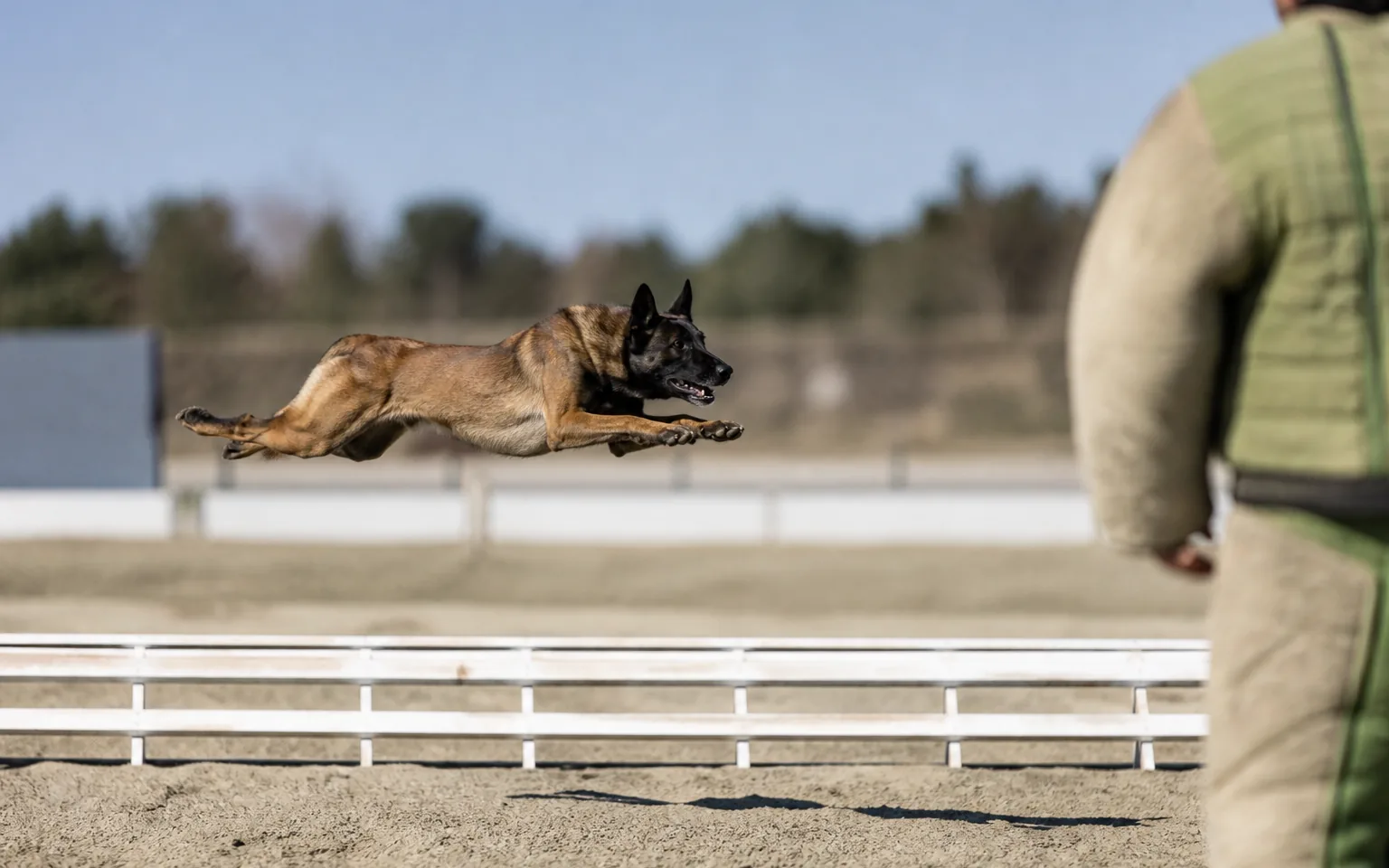
Belgian Malinois in a long jump over the broad-jump obstacle on a sand ring

French Ring

French ring sport: obedience, jumps and protection, with the palisade as its calling card.

Dog and handler working together outdoors

We do not run Rally Obedience

This page is informational. We work in mantrailing, search and rescue and preparation for the TSAC and BH exams - but if you want an honest opinion on what would suit your dog, write to us anytime.