How does it differ from IGP?
IGP has tracking, obedience and protection with fixed exercises. Mondioring has no tracking but adds jumps, object guarding and a themed decor that changes at every trial. The order of exercises is drawn by lot.

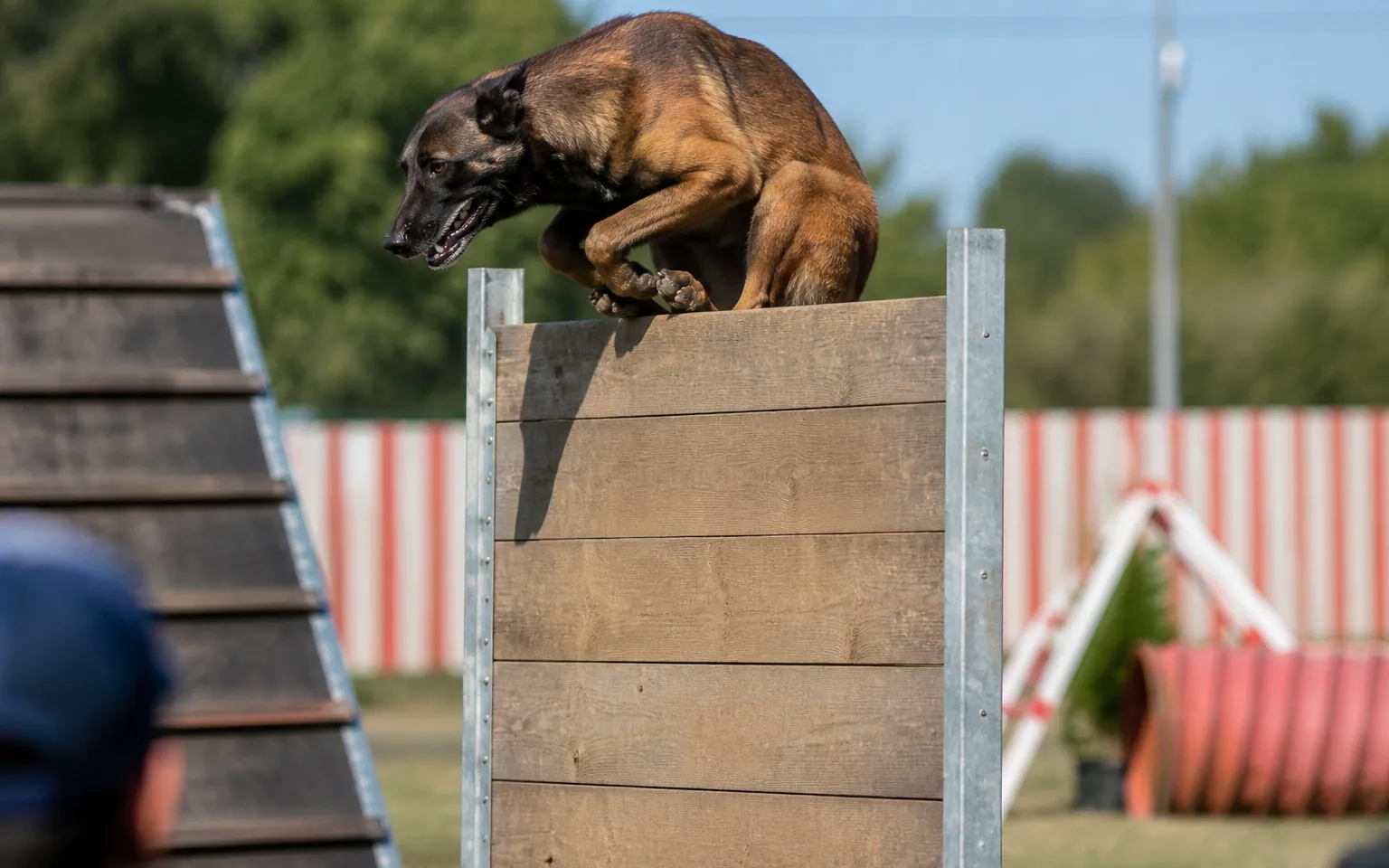
Obedience and working disciplines
Picture a working discipline moved onto a theatre set: a Mondioring trial may have a circus or a marketplace theme, and the dog must work just as cleanly among props and costumed helpers.
About the discipline
Mondioring emerged as a bridge between the French, Belgian and Dutch ring schools. It kept something from each and added an element of its own: the scenery.
Every trial has a theme and the field is decorated accordingly. The exercises stay the same, but they are performed among unusual objects and with distractions designed to test the dog's nerves.
The order of exercises is drawn by lot on the day, so a team cannot learn a routine by heart. It must know each exercise separately, anywhere and at any time.
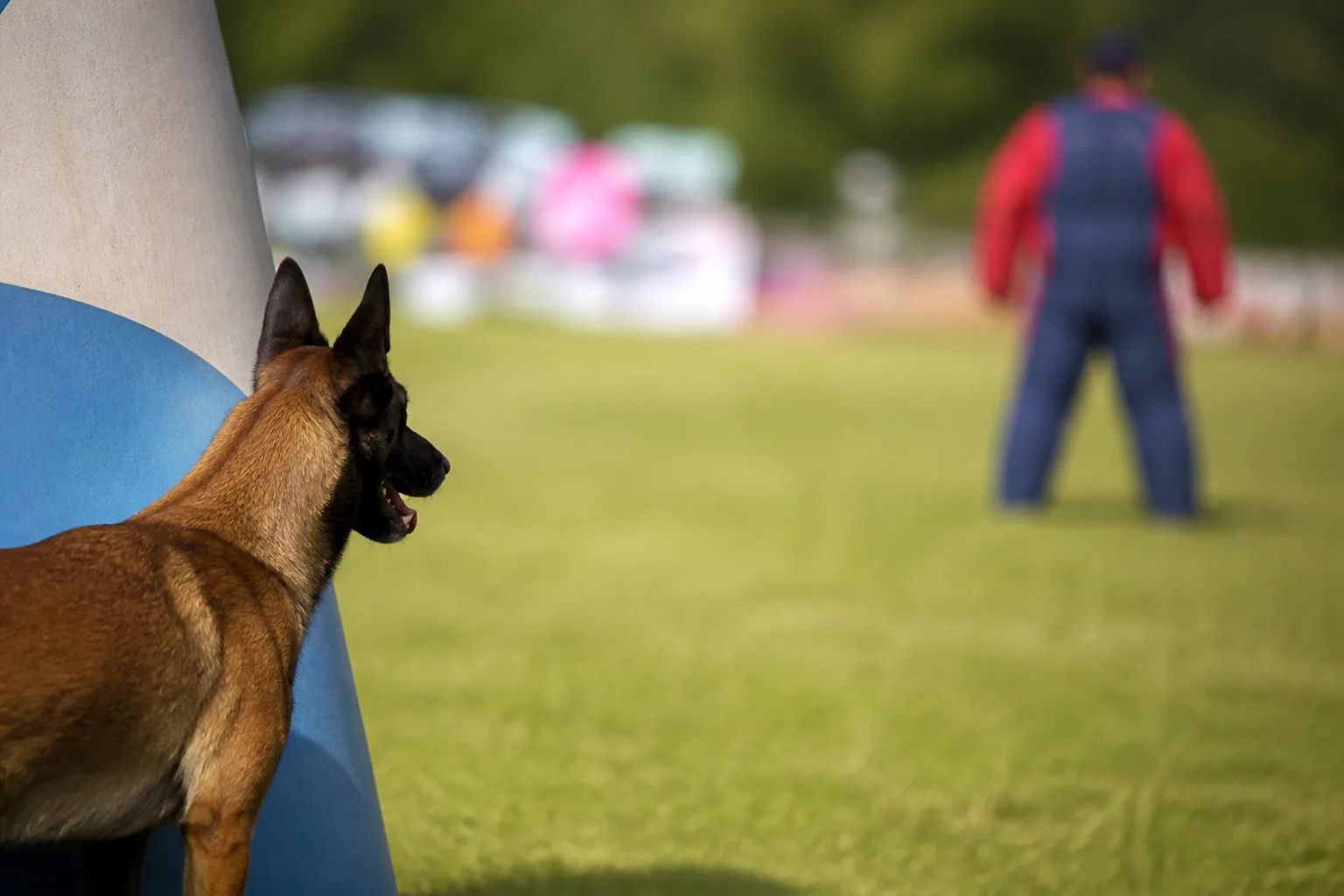
How it works in practice
From the FCI regulations
The International Rules of FCI-Mondioring require the dog to be at least 12 months old, with an FCI-recognised pedigree, a scorebook and an FCI-recognised sociability test. All breeds are admitted; males need a veterinary certificate of normal testicles.
The competition has three levels: I (200 points), II (300) and III (400). To enter Level III the dog must twice score at least 160 out of 200 at Level I and twice at least 240 out of 300 at Level II. The handler may stay at a level as long as wished; at Level III two or three decoys share the exercises.
| Exercise | Level I | Level II | Level III |
|---|---|---|---|
| Heeling without leash | 6 | 6 | 6 |
| Absence of the handler (1 min) | 10 | 10 | 10 |
| Refusal of food | 5 | 10 | 10 |
| Send away | 12 | 12 | 12 |
| Retrieve of a thrown object | 12 | 12 | 12 |
| Positions | 10 | 20 | 20 |
| Search for an object | - | 15 | 15 |
| Palisade | 15* | 15* | 15 |
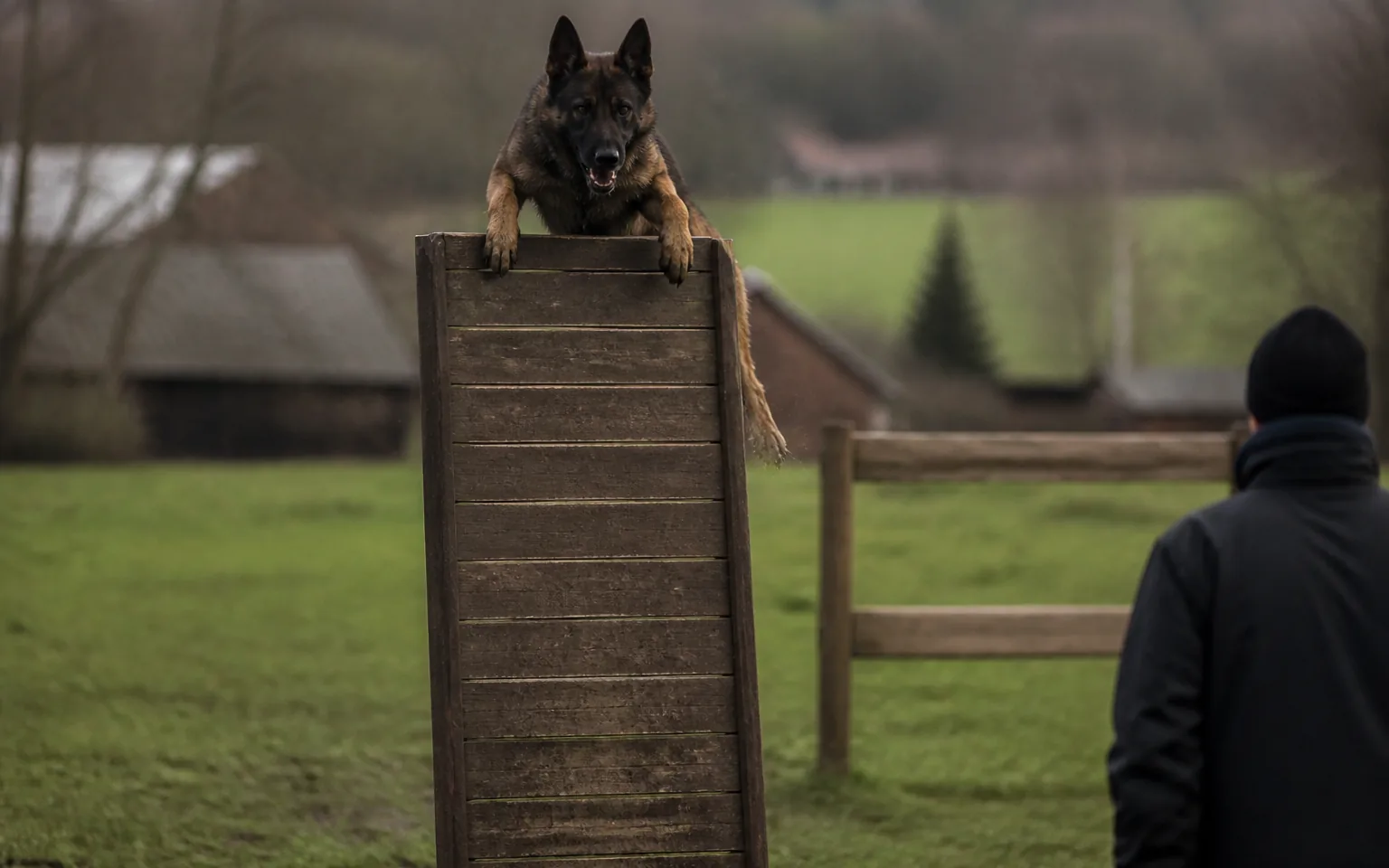
| Hurdle | 15* | 20 | 20 |
| Long jump | 15* | 15* | 20 |
| Face attack with baton (+ obstacles in II and III) | 50 | 40 | 50 |
| Flee attack | 50 | 30 | 30 |
| Defence of the handler | 30 | 30 | 30 |
| Stopped flee attack | - | - | 30 |
| Search and escort | - | 40 | 40 |
| Face attack with accessories | - | 40 | 50 |
| Guarding an object | - | - | 30 |
| Total | 200 | 300 | 400 |
Source: FCI, International Rules of FCI-Mondioring competitions, chapter VII "Table of points". * In Level I the handler chooses one of the three jumps; in Level II the hurdle is mandatory and the handler chooses between the palisade (2.1 m) and the long jump (3.5 m); in Level III all three are performed.
| Jump | Level I | Level II | Level III |
|---|---|---|---|
| Palisade (height → points) | 1.8 m = 15 | 1.8-2.1 m = 12-15 | 1.8-2.3 m = 5-15 |
| Hurdle (height → points) | 1.0 m = 15 | 1.0-1.1 m = 16-20 | 1.0-1.2 m = 12-20 |
| Long jump (length → points) | 3.0 m = 15 | 3.0-3.5 m = 10-15 | 3.0-4.0 m = 12-20 |
Source: chapter V "Jumping exercises". The dog has three attempts at each jump (at the hurdle: three forward and three back). The jump command is voice only; a refusal or going round costs 4 points, knocking the boards 2 points.
The exercises fall into three groups: obedience (heeling, absence, refusal of food, send away, retrieve, positions, search for an object), jumps and biting (attacks, defence of the handler, search and escort, guarding an object). Every extra command, gesture or hesitation costs points according to each exercise's scale; the handler is briefed on the field and the theme at the start (the "theme" changes the setting from one competition to the next).
At Level III the qualifiers are: excellent 360-400, very good 340-359, good 320-339, sufficient 300-319, insufficient below 300. Ties are broken by the points in the biting exercises, then obedience, then the jumps.
Frequently asked questions
IGP has tracking, obedience and protection with fixed exercises. Mondioring has no tracking but adds jumps, object guarding and a themed decor that changes at every trial. The order of exercises is drawn by lot.
To test whether a dog has actually learned an exercise or merely memorised the context. A dog that performs flawlessly on its home field but freezes next to a colourful umbrella has not generalised.
No. It requires a solid obedience foundation and work with a qualified helper. Most teams arrive here after years of training in other disciplines.
The rule figures on this page come from FCI - International Rules of Mondioring. Rules change and federations differ - always check the rulebook of the competition you are entering.
From the same category
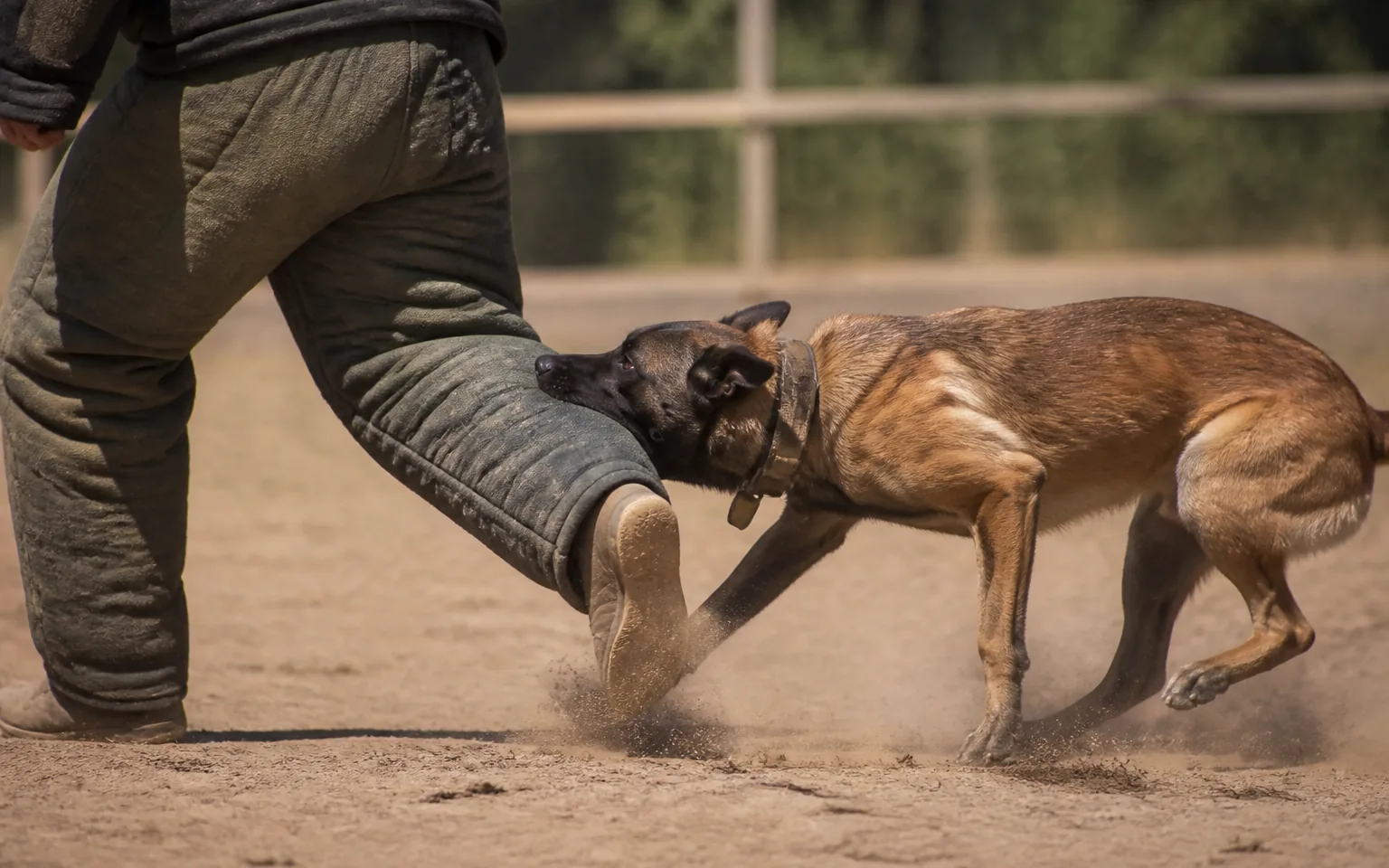
A Belgian discipline with obedience, jumps and protection.
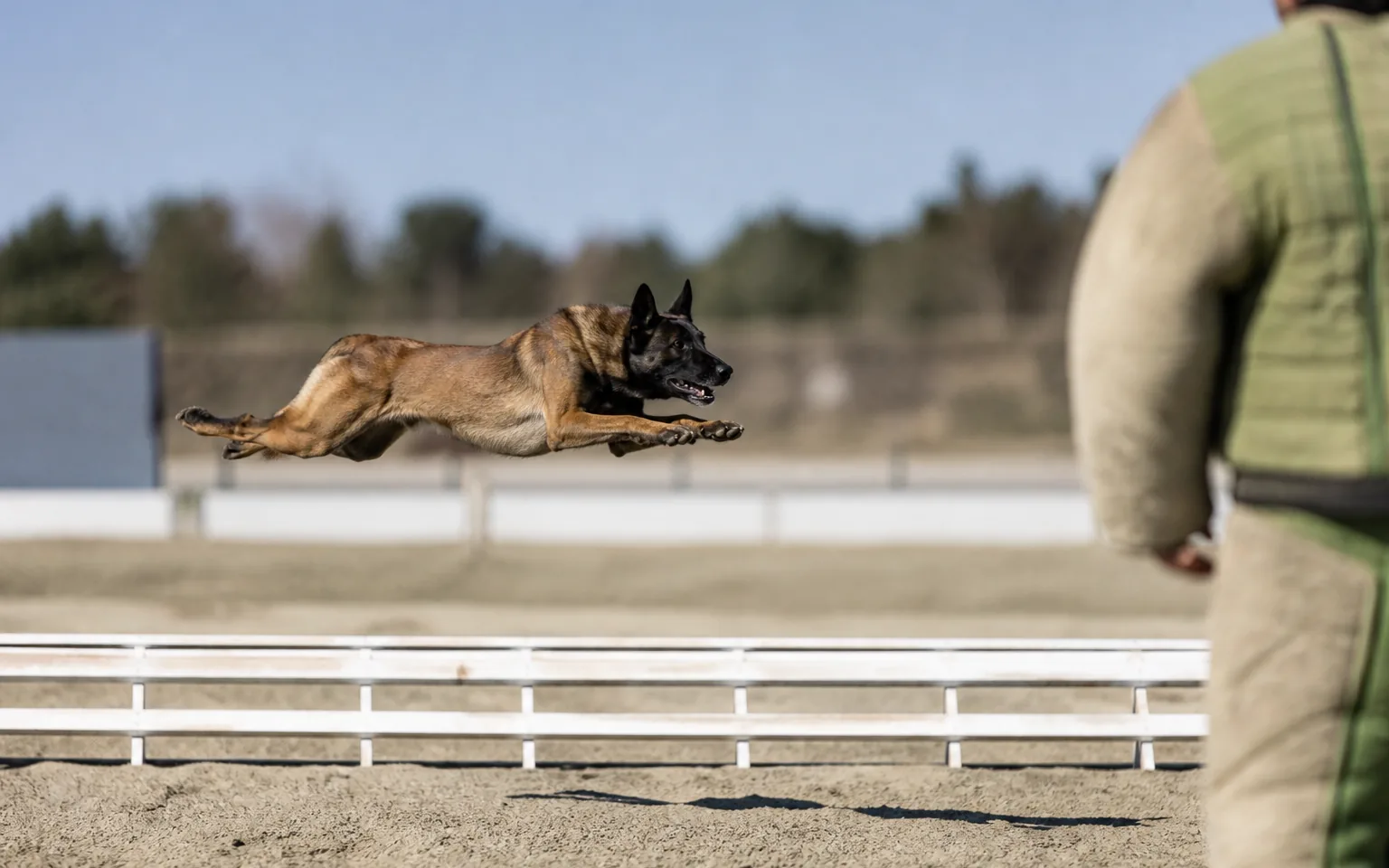
A French sport with obedience, jumps and protection.
The Dutch programme for working and selecting utility dogs.
A British discipline covering obedience, tracking, search and agility.

This page is informational. We work in mantrailing, search and rescue and preparation for the TSAC and BH exams - but if you want an honest opinion on what would suit your dog, write to us anytime.