My dog cannot swim. Can it learn?
Yes, gradually and without pressure, preferably with a life jacket and a gentle entry ramp. A dog is never thrown into water to learn.

Discs, balls and retrieving
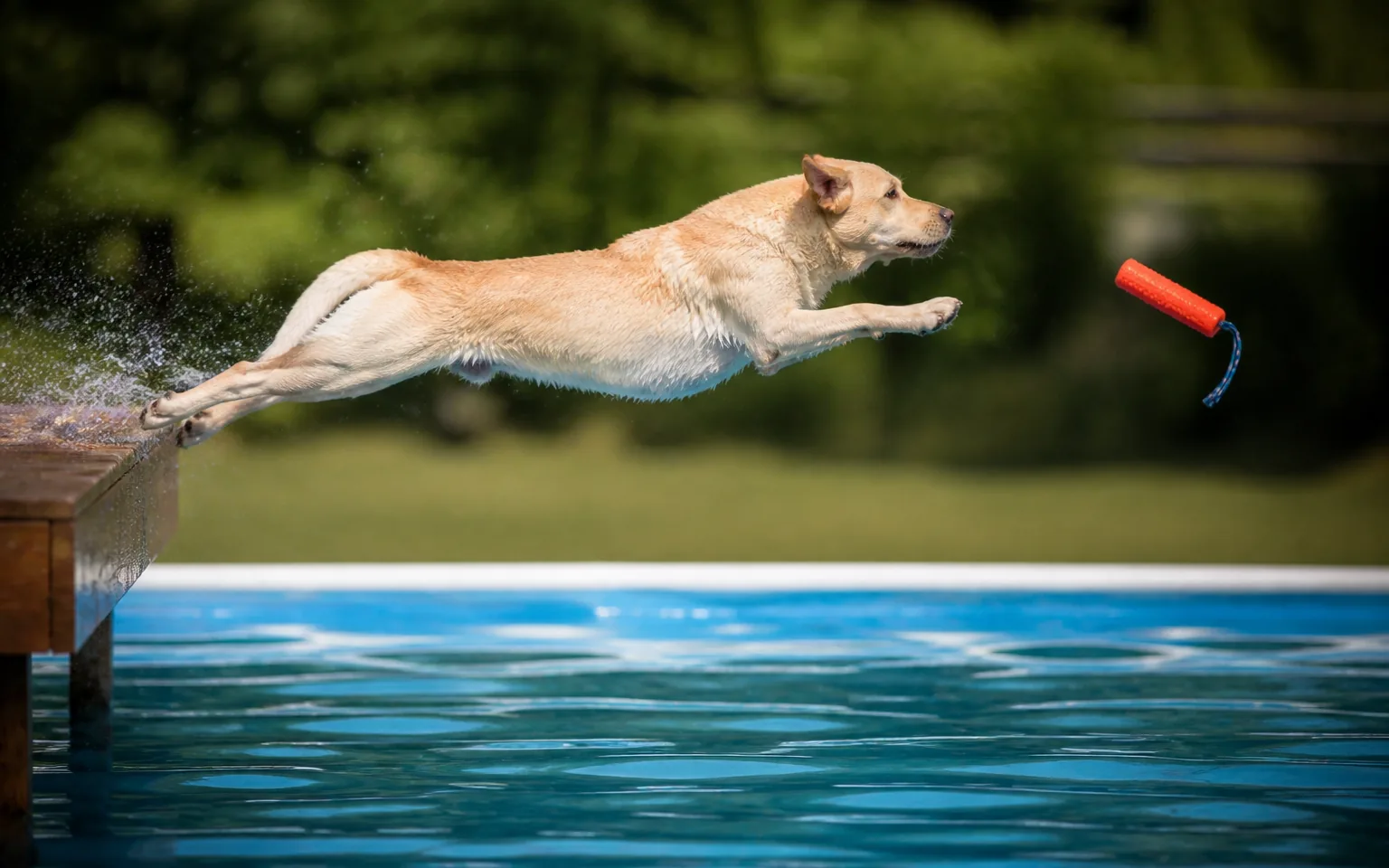
The dog runs down a dock and leaps into the water after a toy. Distance is scored, sometimes height or speed - and landing in water makes it one of the gentlest sports on the joints.
About the discipline
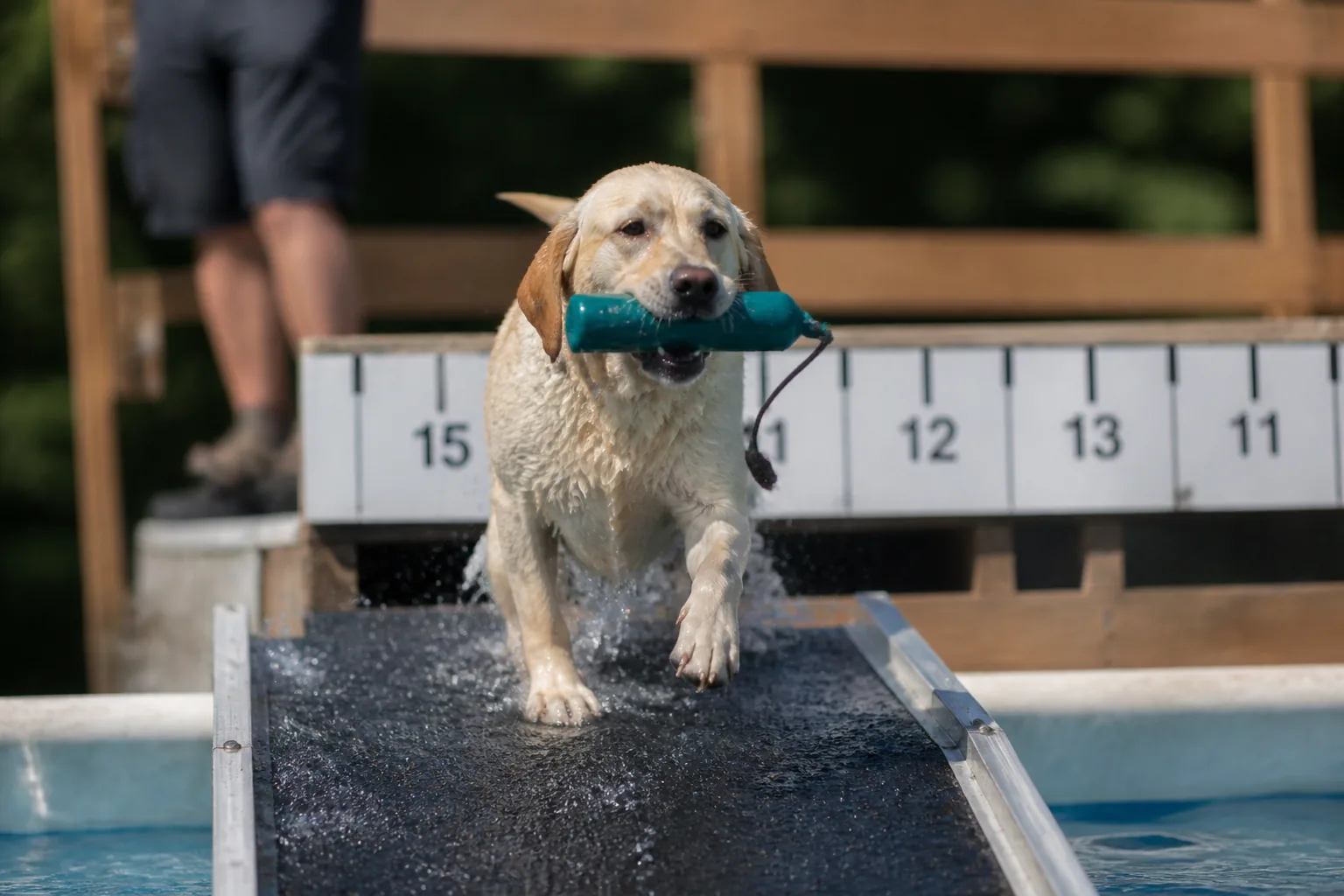
Dock diving takes place on a standardised dock set above a pool or a natural body of water. The handler throws the toy, the dog builds speed and jumps.
There are several formats: distance, the most popular, height, where the toy is suspended progressively higher, and speed, where retrieving a fixed object is timed.
It is unusually gentle on a dog's body: the effort is explosive, but the landing happens in water, so there is no joint impact. The only real requirement is that the dog likes water.
How it works in practice
Dogs that do not enter water happily are never forced. A dog pushed into a pool can be left with a lasting fear.
Frequently asked questions
Yes, gradually and without pressure, preferably with a life jacket and a gentle entry ramp. A dog is never thrown into water to learn.
Top dogs exceed nine metres. An ordinary dog having fun jumps between two and four metres, which is perfect for amateur classes.
It is among the safest explosive sports, precisely because the landing is in water. A warm-up still matters, as with any intense effort.
From the same category
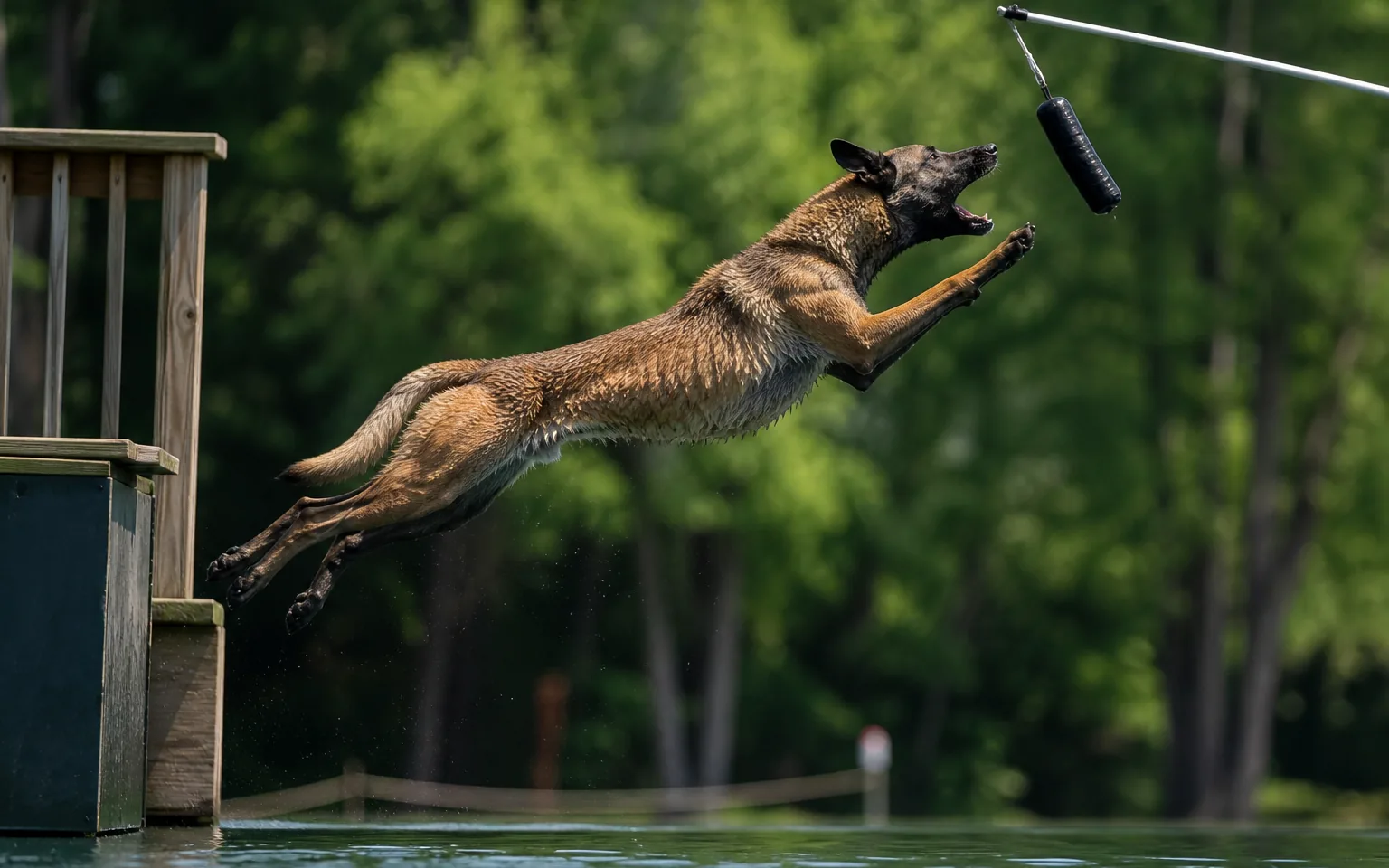
The dog leaps to grab an object suspended over water.
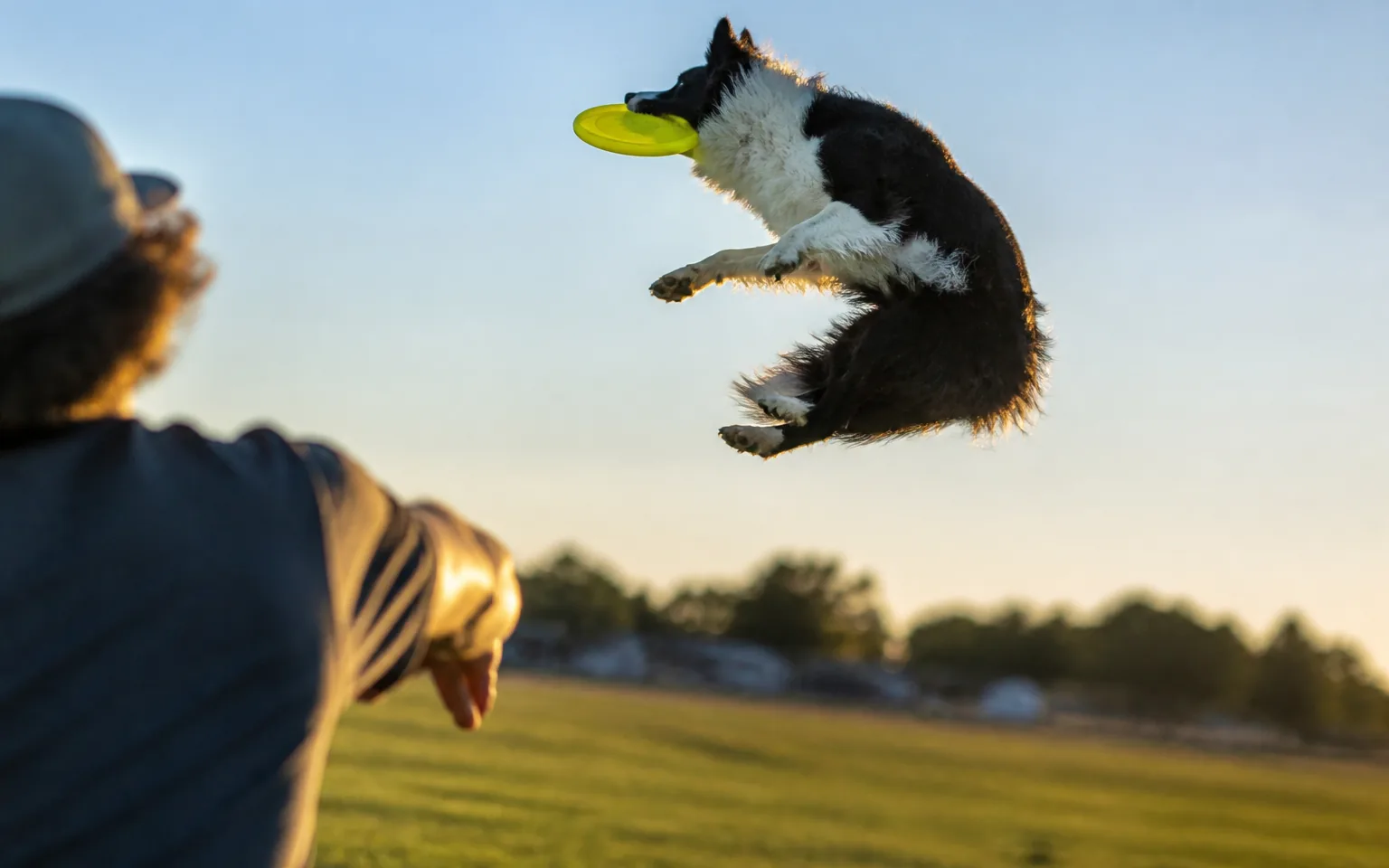
Catching the disc, in distance events or freestyle routines.
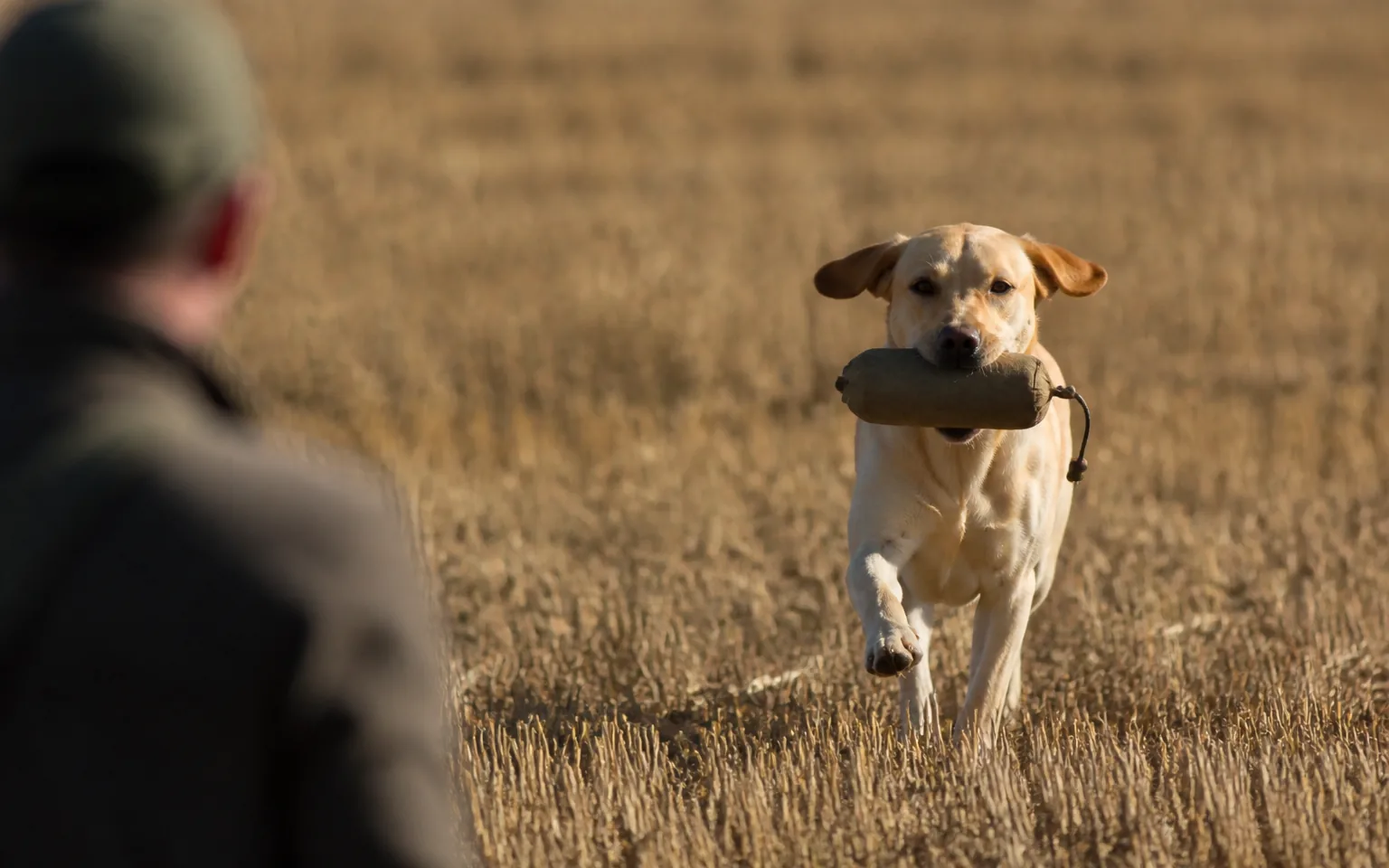
Retrieving trials for finding and delivering objects.
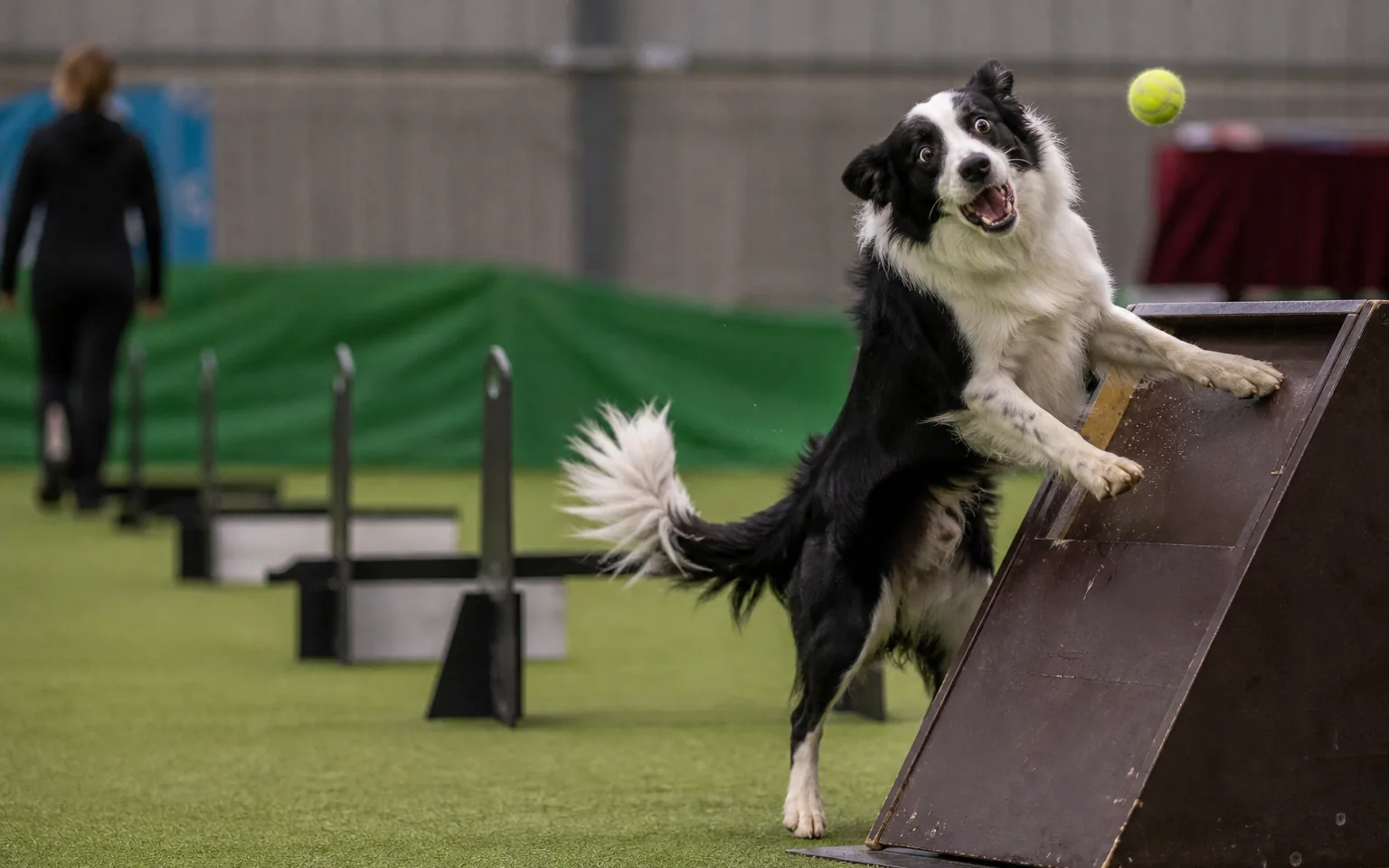
A team relay with hurdles and retrieving a ball.

This page is informational. We work in mantrailing, search and rescue and preparation for the TSAC and BH exams - but if you want an honest opinion on what would suit your dog, write to us anytime.