Which dog suits it?
One with stamina and a real urge to pull: huskies, malamutes, shepherds, pointers and their crosses. Build and motivation count for more than breed.

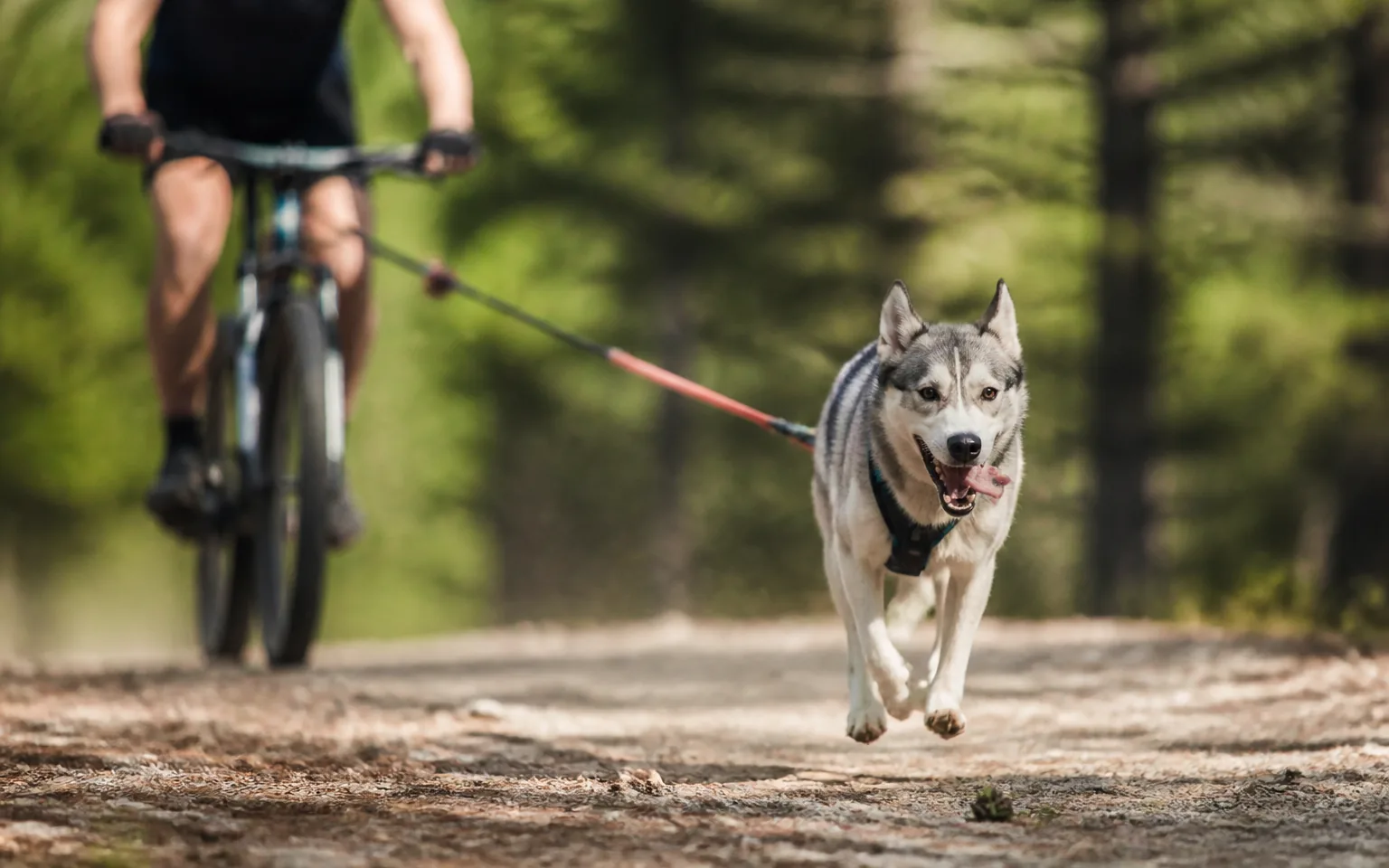
Speed and running
The dog runs ahead of the bike and pulls, and you pedal as much as you need to. You're going a lot faster than in canicross, so the direction cues have to be spot on.
About the discipline
In bikejoring one or two dogs pull a bicycle. They're hooked up either with a rigid bar mounted on the fork or with a bungee line held well clear of the front wheel.
You ride dirt roads, forest tracks or wide trails. Speeds often go past 25 km/h, and at that pace a wrong turn costs you a lot more.
Before you get on the bike, the dog learns the cues: right, left, straight on, easy, stop. A dog that doesn't know them puts you both in danger.
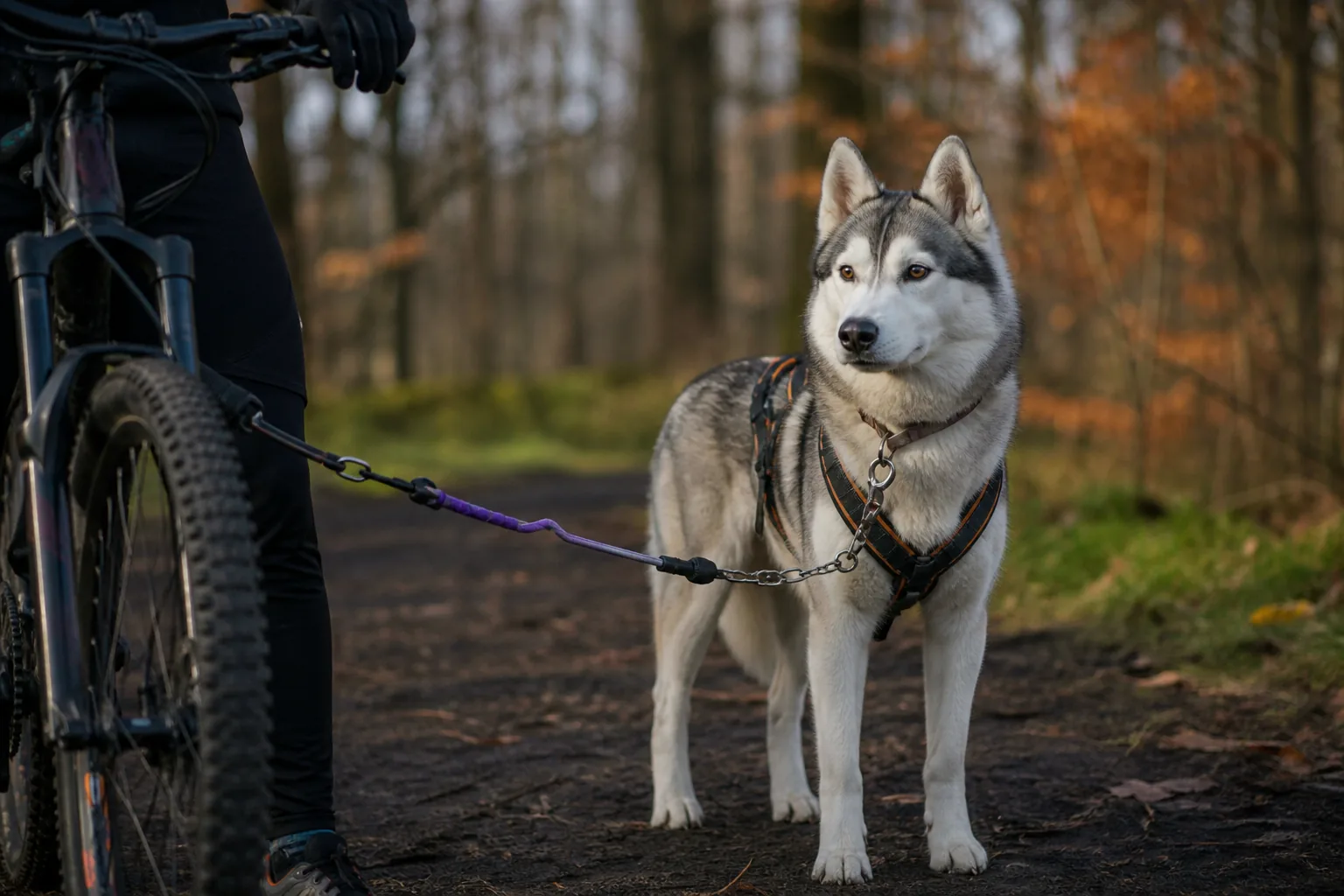
How it works in practice
Don't do it on public roads with traffic. If the dog suddenly veers off at 30 km/h, it ends badly.
Frequently asked questions
One with stamina and a real urge to pull: huskies, malamutes, shepherds, pointers and their crosses. Build and motivation count for more than breed.
Often over 25 km/h, and faster on the way down. That's why direction cues and braking early aren't optional.
It can be, if you skip steps. Start slow, on a straight, wide trail, once the cues work every time in canicross.
Teach the slow-down cue before you ride anything with slopes, and brake early, not at the last second. On long descents, hold a pace where the dog isn't really pulling any more and just runs out front. If the two of you haven't got that down yet, stay off routes with big climbs and drops.
The rule figures on this page come from IFSS - International Federation of Sleddog Sports. Rules change and federations differ - always check the rulebook of the competition you are entering.
From the same category
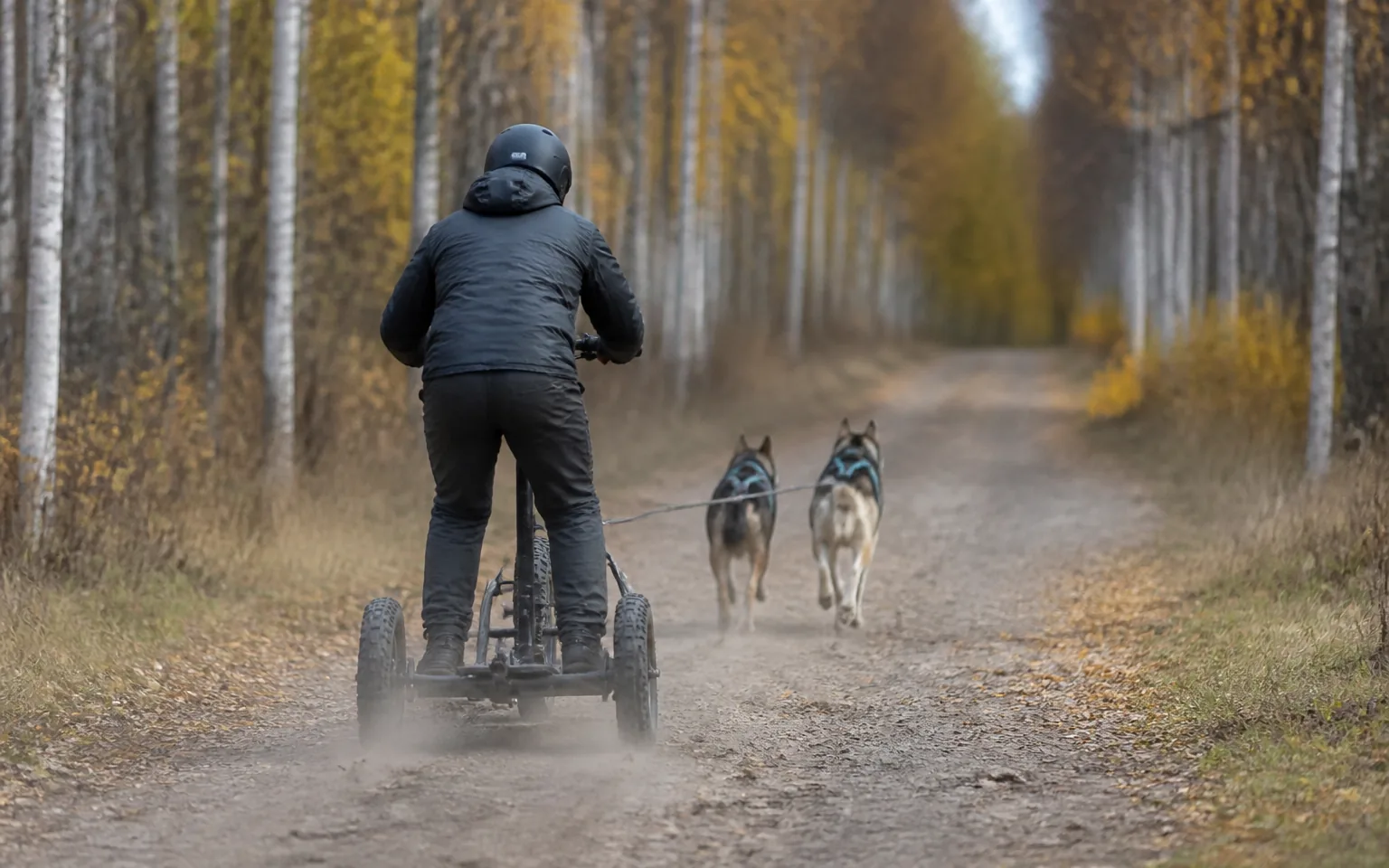
The dog pulls a purpose-built off-road scooter.
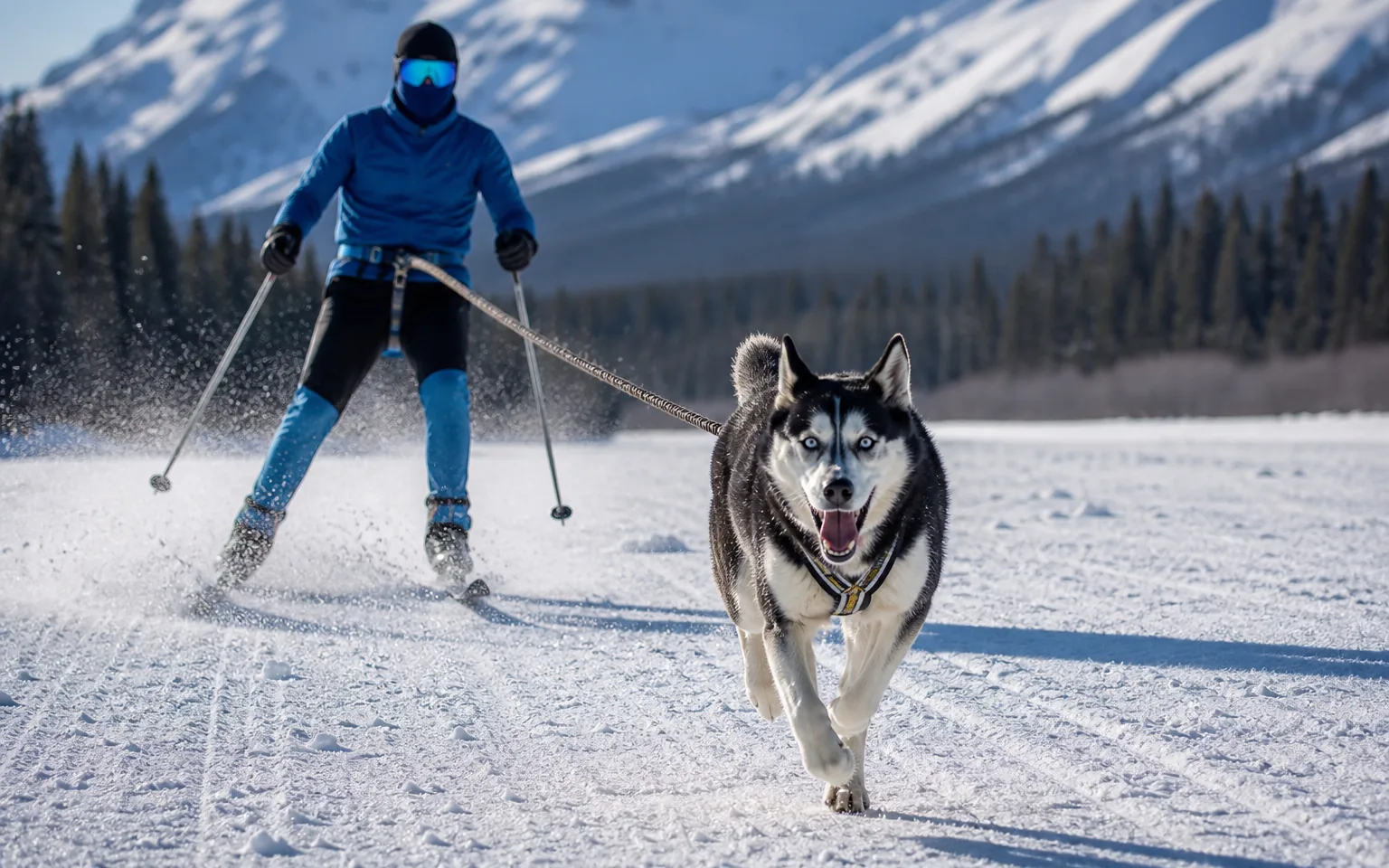
Cross-country skiing with one or more dogs pulling you.
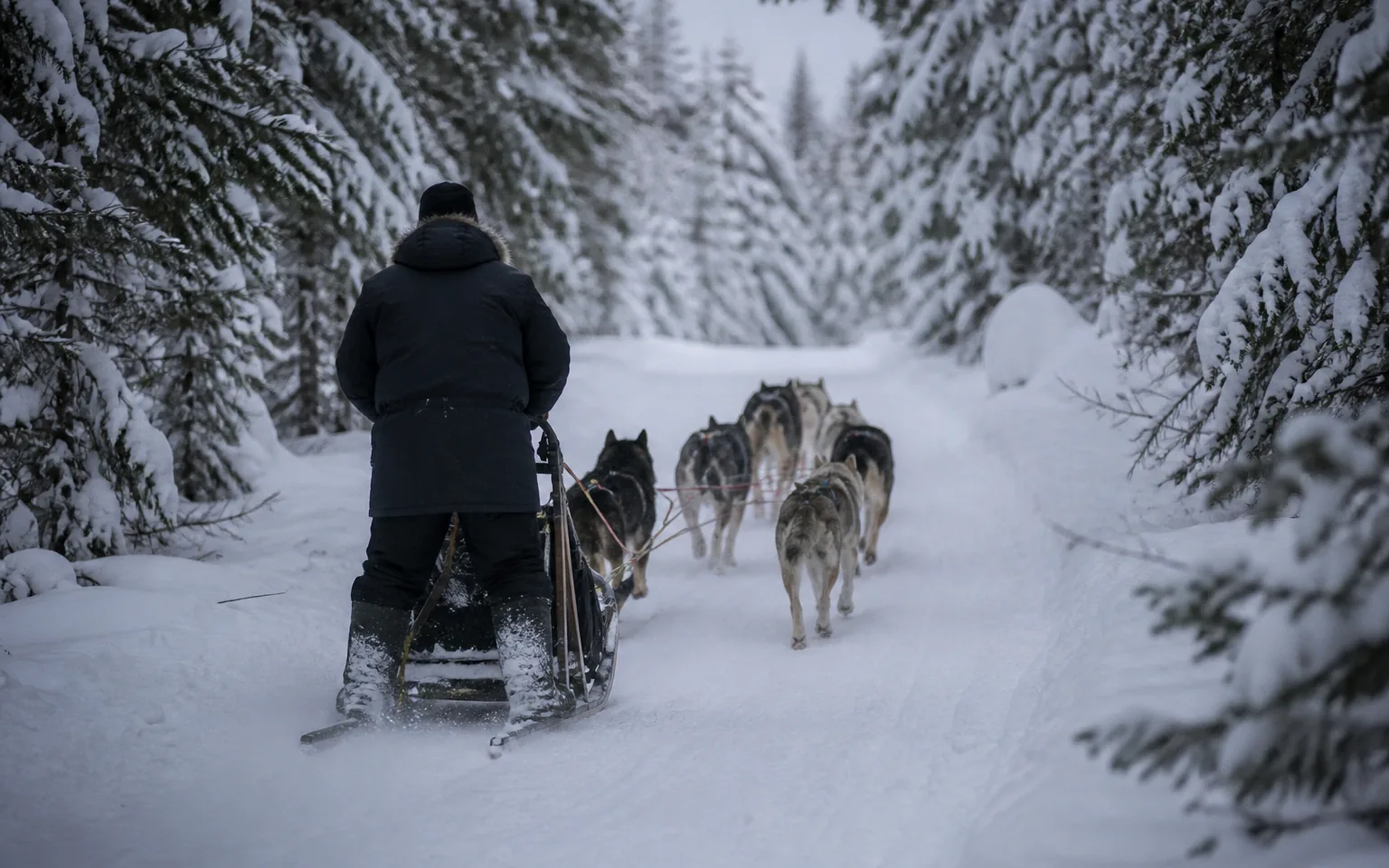
Racing dog teams over snow.
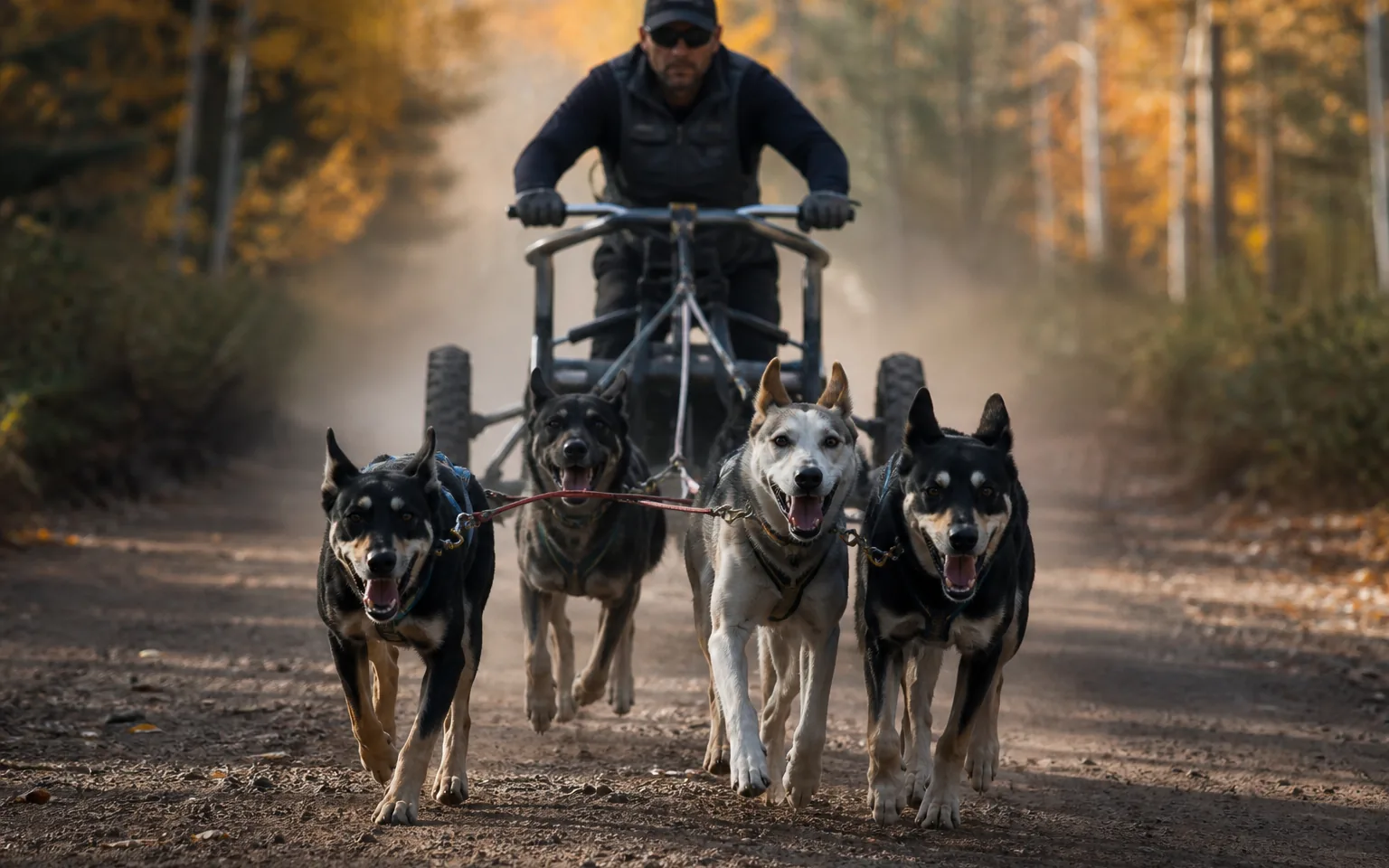
Dog team racing on dry ground.
This page is informational. We work in mantrailing, search and rescue and preparation for the TSAC and BH exams - but if you want an honest opinion on what would suit your dog, write to us anytime.