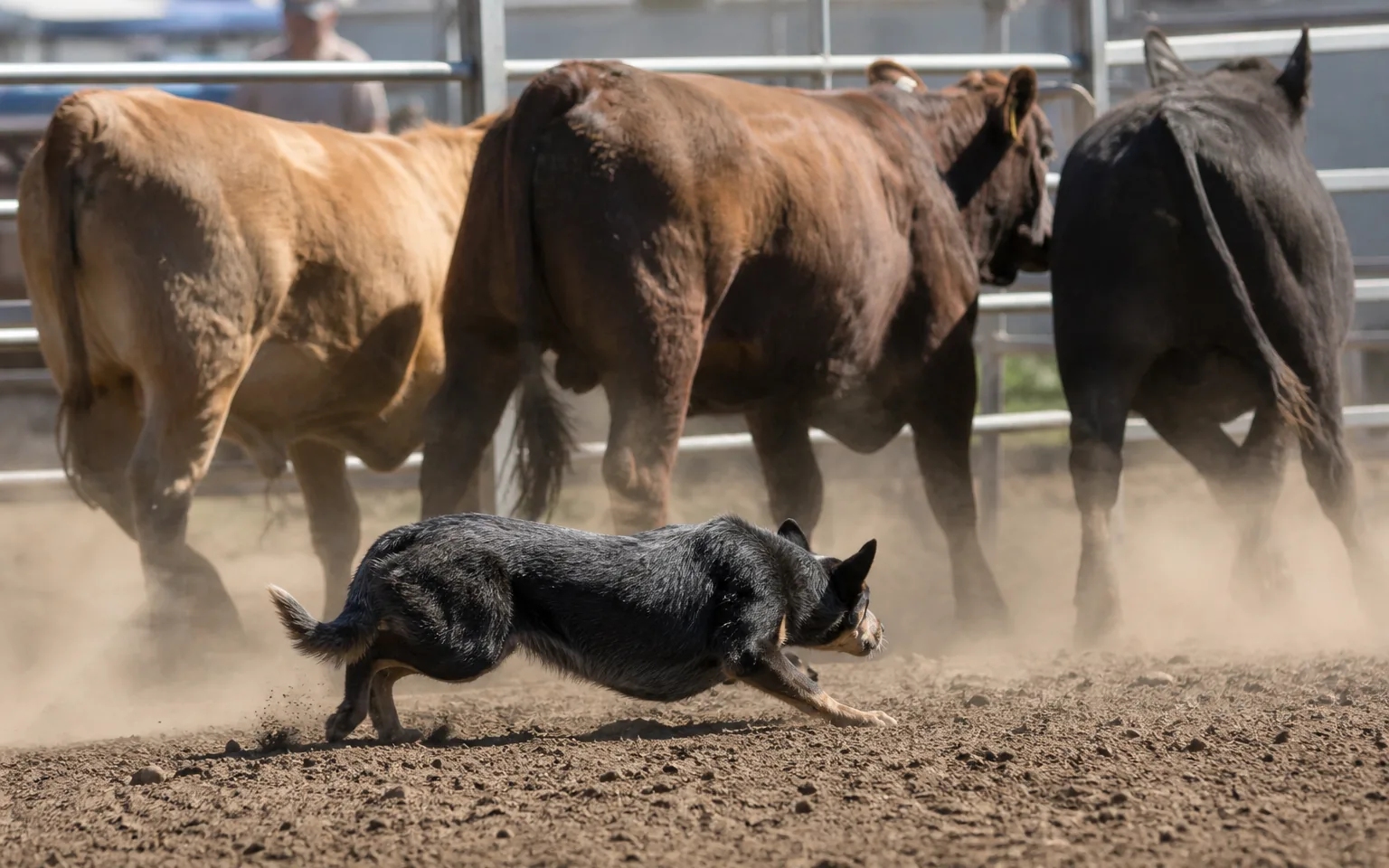
Why do the dogs nip at cattle's heels?
Because a cow does not respond to visual pressure the way a sheep does. The short nip at the fetlock is a genetically selected working technique, delivered and withdrawn instantly.
Herding and livestock
The same logic as with sheep, but with animals weighing hundreds of kilos. The dog must be determined, quick and, above all, know exactly when to get out of the way.
About the discipline
Working cattle demands a different kind of dog from working sheep. A sheep moves at a look; a cow does not. That is why the specialist breeds often work with short, controlled nips at the animal's heels.
The Australian cattle dog, the corgi and some Australian shepherd lines were selected for exactly this: low stature, quick reflexes and the ability to duck a hoof.
It is the riskiest of the herding trials, for both dog and handler, and is practised strictly under experienced supervision.
How it works in practice
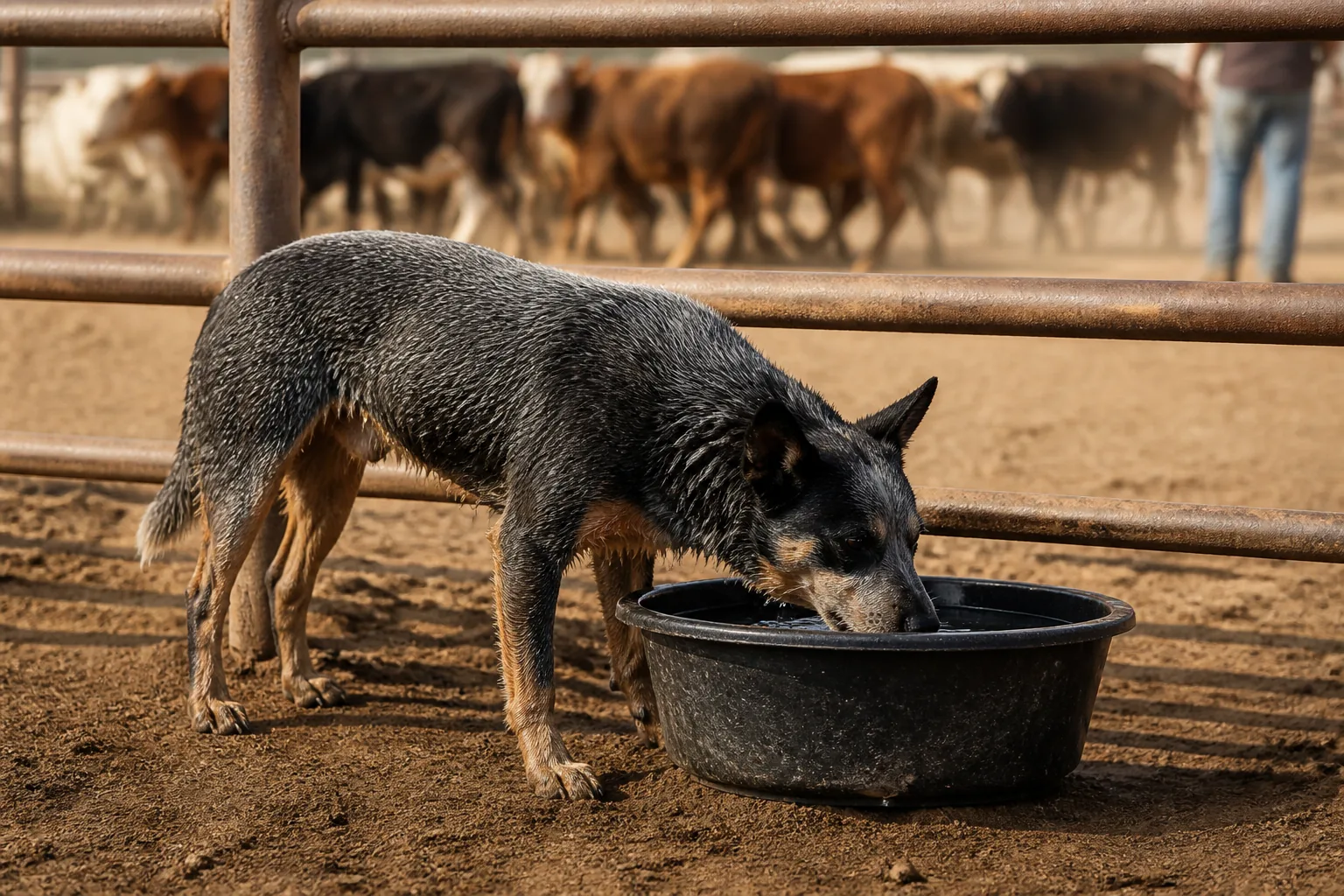
This is not a discipline for experimenting. A cow's hoof can kill a dog.
Frequently asked questions
Because a cow does not respond to visual pressure the way a sheep does. The short nip at the fetlock is a genetically selected working technique, delivered and withdrawn instantly.
Yes, more than any other herding trial. That is why it is done only with prepared dogs, on cattle accustomed to dogs, and under supervision.
Mainly the Australian cattle dog, but also corgis, Australian shepherds or local breeds selected for working large livestock.
Never by being thrown in with them. It starts on sheep or ducks, where mistakes are cheap, and moves to cattle only once the stop, the flanks and the distance control are reliable. Even then the first sessions use quiet cattle used to dogs, with an experienced handler present throughout.
From the same category
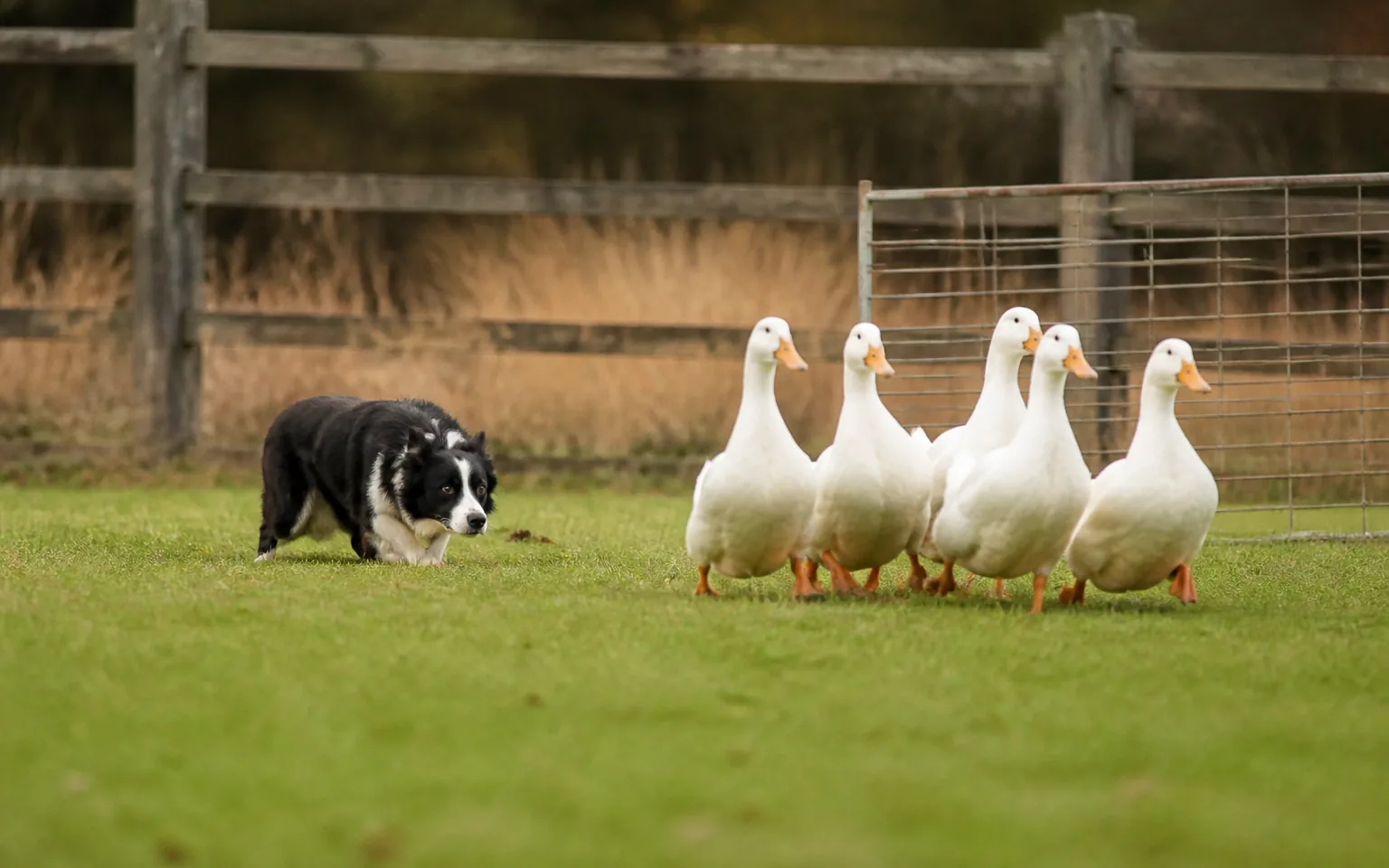
Steering ducks through obstacles.
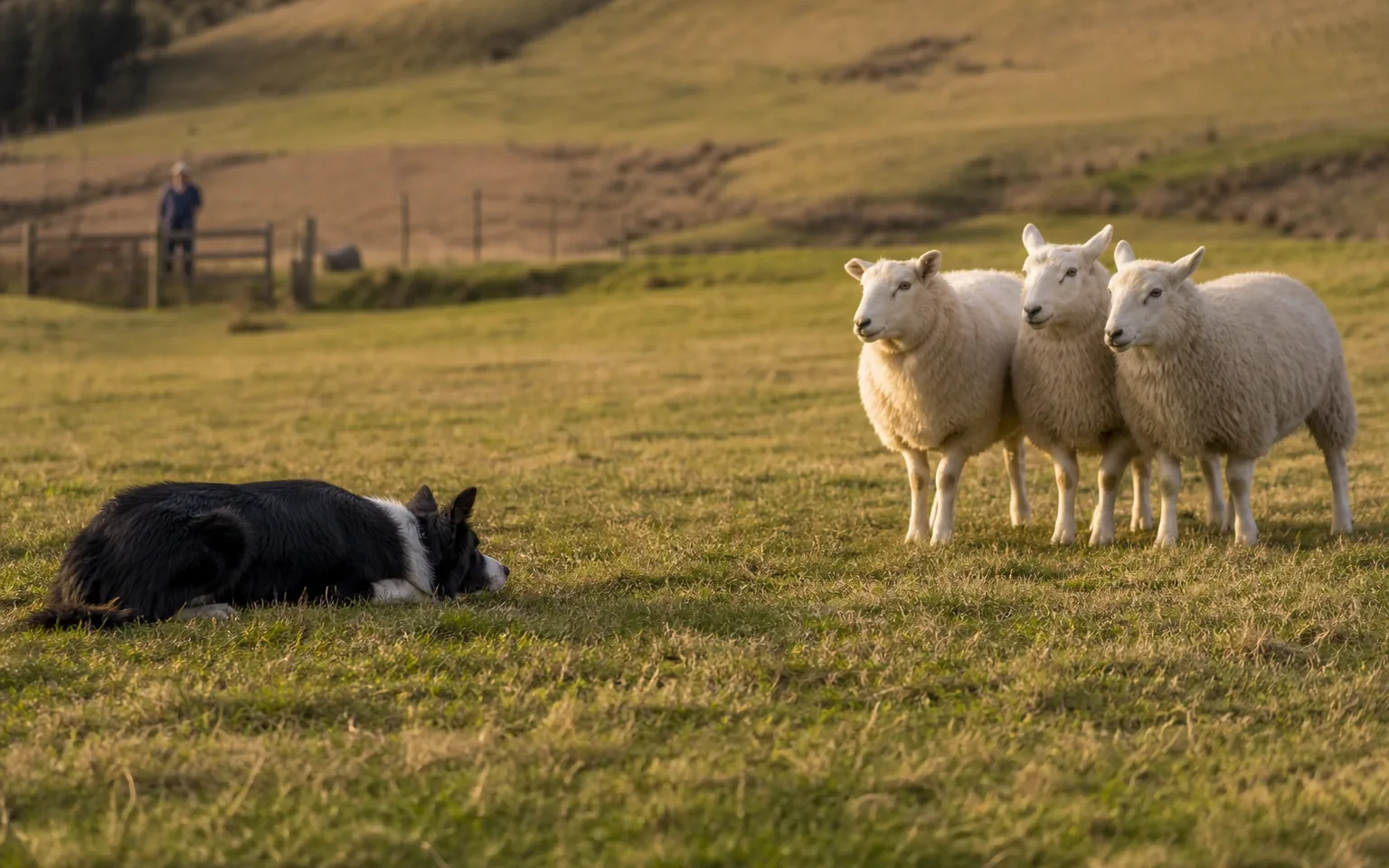
Driving sheep through a set course.
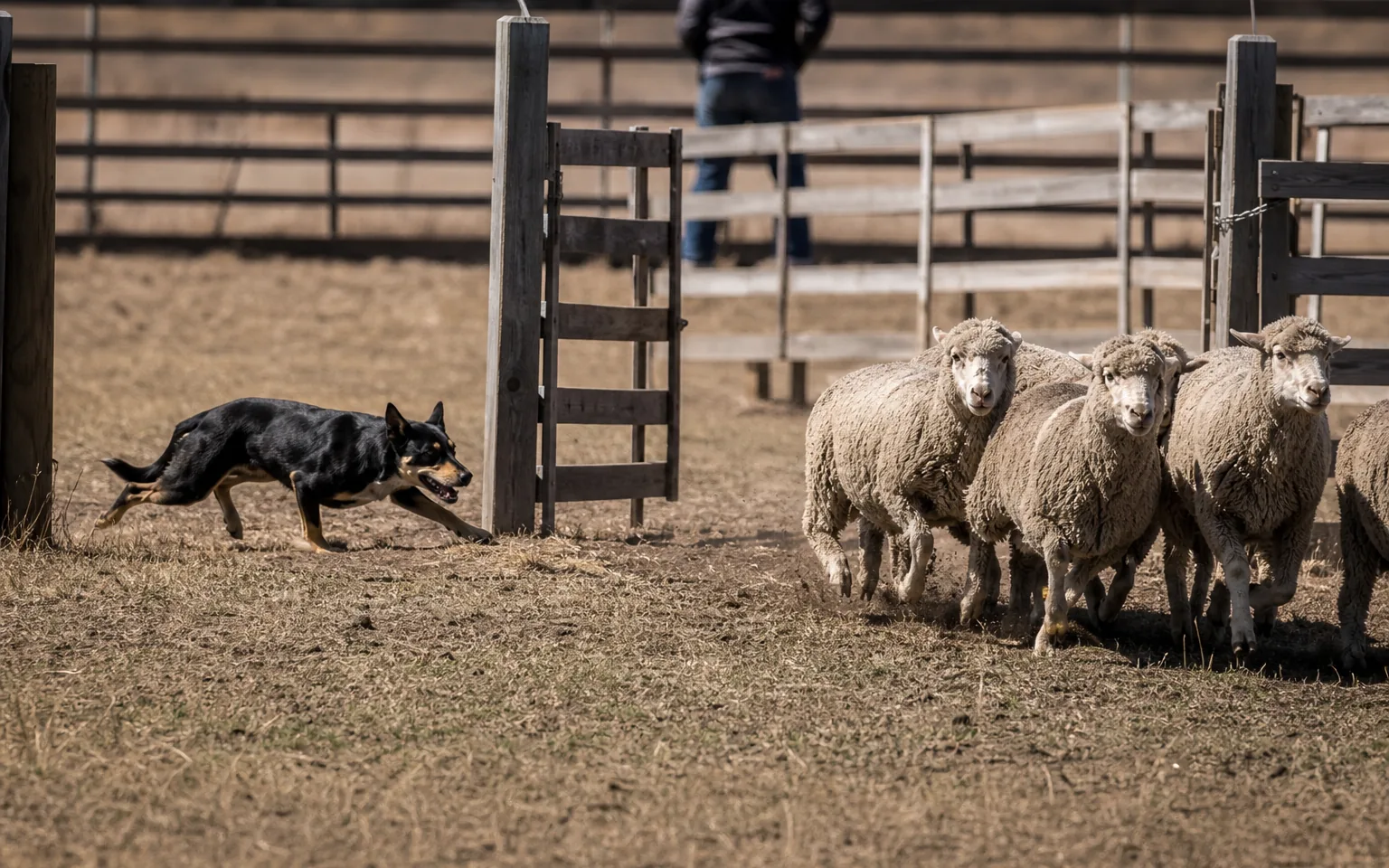
Trials in controlling a flock or herd.
This page is informational. We work in mantrailing, search and rescue and preparation for the TSAC and BH exams - but if you want an honest opinion on what would suit your dog, write to us anytime.