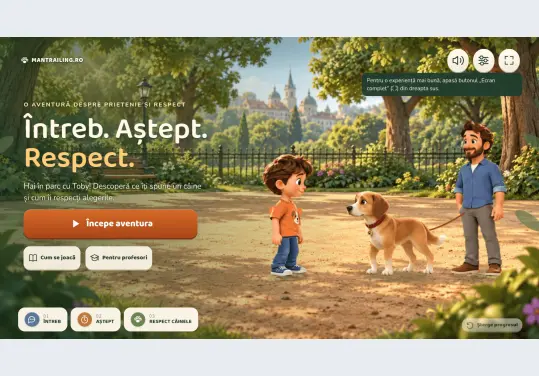
Playing The Park Adventure Together: A Guide for Parents and Teachers
The game “I Ask. I Wait. I Respect. – The Park Adventure” runs free in the browser at joc.mantrailing.ro/en and takes about twenty minutes. What stays with the child...

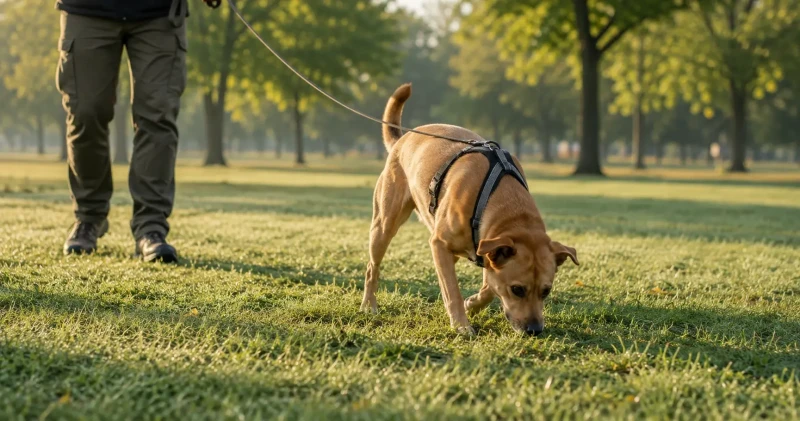
If you have a dog that barks at other dogs on walks, gets worked up around strangers, or lives in a constant state of high alert - you've probably heard all the suggestions. Socialisation. Obedience training. Behaviour modification. Medication. Maybe even "you need an easier dog."
What you probably haven't heard is that mantrailing can be one of the most effective things you can do for an anxious or reactive dog. And this isn't just a theory - it's biology.
A reactive dog lives with an overactivated nervous system. The amygdala - the brain's fear centre - is in charge most of the time. The dog isn't choosing to be "difficult." His brain is picking up threats everywhere and reacting on autopilot.
The problem is that many of the things we do with our dogs keep this state going or even make it worse. Short-leash walks expose the dog to triggers he can't avoid. Classic obedience asks for focus on the handler at exactly the moment he's overwhelmed. Forced socialisation with other dogs can make things worse, not better.
Mantrailing works differently, for one simple reason: it puts the nose first.
When a dog is actively following a scent trail, the olfactory lobe shifts into focused working mode. It's an old evolutionary mechanism: tracking requires focus, not panic. Research in canine neuroscience shows that activating the olfactory system reduces amygdala activity. A dog that is intensely sniffing is, literally, less afraid.
In mantrailing, the dog spends 20 to 40 minutes in active tracking mode. There's no mental bandwidth left to process environmental threats - all cognitive processing is tied up with the trail. At the end of a session, the dog is mentally tired in a good way, not drained from stress.
Canine behaviour studies show that sniffing activities lower heart rate and cortisol levels both during and for hours after the session. A dog that does mantrailing regularly two or three times a week ends up with a lower baseline stress level. You notice it in daily life: less barking at triggers, easier to manage on walks, calmer at home.
Anxious dogs often lack confidence too. They don't have a history of doing things right, of being praised, of finishing something successfully. In mantrailing, the dog finds the person and gets a big reward. Then does it again. And again. Each successful session builds on the last, and over time the dog starts to behave differently overall - less hesitant, more willing to explore, more able to handle new situations.
Another thing many owners notice is that the relationship with their dog changes. In mantrailing, the dog leads and the handler follows. You don't tell him where to go. You trust his nose. The dog feels this - and for a dog that's been put into overwhelming situations without much say, that experience is genuinely different.
If your dog has severe anxiety or a diagnosed reactivity issue, talk to a veterinary behaviorist before starting any new activity. Mantrailing pairs well with behaviour therapy but doesn't replace it.
The first thing that matters is the environment. Don't start on a busy street. The first session should be somewhere quiet and familiar: your backyard, an empty park early in the morning, a traffic-free path. The dog needs to be below his stress threshold - meaning in a state where he can actually process information, not in full panic mode. If he's in high alert, he can't follow a trail.
For the first three to five sessions, keep the trails short - 50 to 100 metres - and simple. The person being tracked (the layer) lays the trail right in front of the dog and hides just a few metres away. The goal isn't performance. It's a positive association: mantrailing means something good.
Don't rush progress. An anxious dog needs more time at each level. If you notice the dog is frequently losing the trail, showing stress signals during the session, or no longer excited when he sees the equipment - go back a step. If he gets visibly excited when he sees the harness, tracks with focus, and finishes sessions with energy - you're at a good pace.
What if my dog can't be around other dogs?
Yes, you can still do mantrailing. At training sessions, dogs work one at a time, not simultaneously. There are no face-to-face encounters between dogs. Distance and session management can be fully adapted.
In fact, many owners of dog-reactive dogs find that mantrailing is the first environment where their dog can be around other dogs without an incident - because all his attention is on the trail, not on the dogs nearby.
Mantrailing isn't a quick fix. You won't do three sessions and have a transformed dog. But with consistency, in the first two to four weeks you'll notice the baseline stress level dropping and the dog being calmer at home. By one to two months, the positive association with the gear and sessions is solid. By three to six months, noticeable improvements in everyday behaviour start to show. Many owners report significant changes in reactivity after six to twelve months of regular practice.
How fast it goes depends on how severe the anxiety is, the dog's history, and how consistent you are. Dogs with more complex trauma progress more slowly - but they do progress.
An anxious or reactive dog isn't a broken dog. He's a dog that hasn't found the right activity yet. Mantrailing works with his biology, not against it - and for a lot of dogs, it turns out to be exactly what they needed.
If you want to find out whether mantrailing is a good fit for your dog, come to one of the Mantrailing Romania introductory sessions. We run training adapted for dogs with special needs.
Articles
The game “I Ask. I Wait. I Respect. – The Park Adventure” runs free in the browser at joc.mantrailing.ro/en and takes about twenty minutes. What stays with the child...
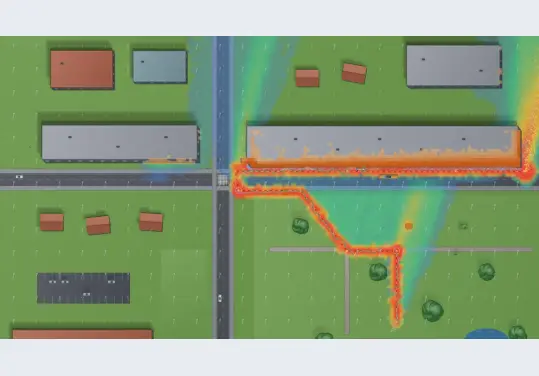
There is a moment every handler knows. The dog stops, lifts its nose, turns a full circle, then pulls sideways, several metres off the line you watched the person wa...
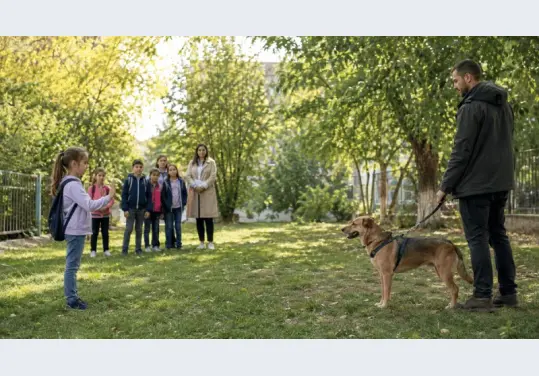
In a park, the entire situation can unfold in just a few seconds. A child notices a dog, runs towards it and reaches out to pet it. Sometimes the child jumps off a b...
Events


