One of the most common questions we receive from dog owners interested in mantrailing is:
“Can my dog actually do this? They’re not a special breed.”
The short answer is: yes, almost any dog can do mantrailing. And that’s not just motivational encouragement — it’s a biological reality.
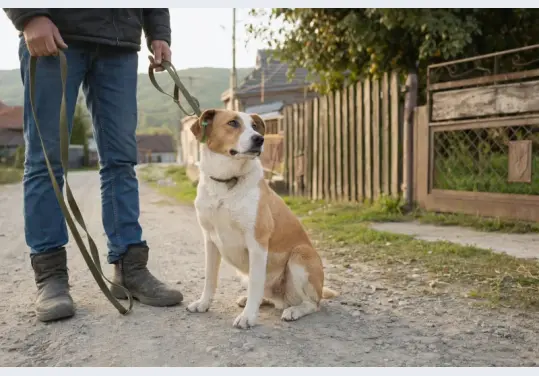
Mantrailing doesn’t require an impressive pedigree, perfect physical structure, or elite athletic ability. The activity is based on the dog’s most developed sense: smell. And every dog has that ability, whether we’re talking about a Labrador Retriever, a rescue mixed breed, or a small companion dog like a Bichon.
Why Breed Doesn’t Matter That Much in Mantrailing
Unlike other canine sports — agility, protection work, or sled pulling — mantrailing is not based on strength, speed, or physical build. Everything starts with the dog’s ability to follow a specific human scent.
Dogs have between 200 and 300 million olfactory receptors, while humans have around 5 million. That means even a small dog has a nose dozens of times more powerful than ours.
In practice, what makes a dog good at mantrailing is not the breed itself, but:
- motivation to work
- desire to search for a reward
- relationship with the handler
- training experience
- overall health condition
A highly motivated and balanced dog can easily outperform a “famous working breed” that simply lacks interest in the activity.
Dog Breeds Commonly Seen in Mantrailing
Although mantrailing is suitable for almost any breed, there are certain categories of dogs you’ll commonly see at training sessions.
Scent Hounds and Tracking Dogs
- Breeds such as:
- Beagle
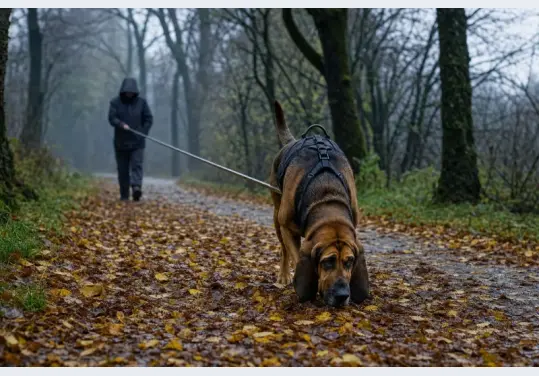
- Bloodhound
- Basset Hound
…were genetically selected for scent detection and tracking.
The Bloodhound is considered one of the most powerful scent-tracking breeds in the world and is frequently used in real search and rescue operations.
Advantages of these dogs:
- excellent scent focus
- natural motivation for tracking
- endurance on long trails
The main challenge is that their strong tracking instinct can sometimes make them harder for beginner handlers to control.
Working Dogs
This category includes:
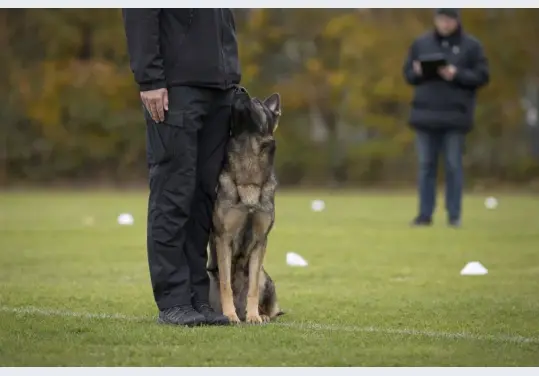
- German Shepherd
- Belgian Malinois
- Labrador Retriever
- Golden Retriever
These breeds are very popular in operational mantrailing and SAR (Search and Rescue) work because they combine:
- high motivation
- trainability
- physical endurance
- emotional stability
Labradors and Golden Retrievers are especially popular among beginners thanks to their balanced and cooperative temperament.
Companion Dogs and “Unexpected” Breeds
This is where many owners are surprised.
In mantrailing training sessions across Romania, we often see:
- Bichons
- Poodles
- Dachshunds
- Jack Russell Terriers
- Shih Tzus
- mixed-breed rescue dogs
And yes — they do exceptionally well.
Small size is not a disadvantage. In some cases, it can even help because smaller dogs are physically closer to scent particles near the ground.
Many dogs considered “just companion pets” discover through mantrailing an activity that gives them mental stimulation, confidence, and purpose.
What Matters More Than Breed
1. The Dog’s Motivation
Mantrailing works through reward and the satisfaction of searching.
If your dog:
- loves food rewards
- gets excited about toys
- enjoys exploring
…then you already have a great foundation for training.
Motivation beats breed almost every time.
2. Health Condition
Before starting any structured physical activity, it’s important to have a veterinary check-up.
Dogs with:
- orthopedic issues
- heart conditions
- chronic breathing difficulties
…may need adjustments in training intensity.
The good news is that mantrailing is highly adaptable and can be adjusted to each dog’s physical abilities.
3. The Dog’s Age
Puppies Under 12–14 Months
They can participate in short, easy exercises with minimal physical pressure. The focus should remain on play and exploration.
Adult Dogs
This is generally the ideal stage for consistent progress and more complex trails.
Senior Dogs
Many owners are surprised to learn that senior dogs can excel at mantrailing.
The activity:
- provides cognitive stimulation
- creates routine
- reduces boredom
- keeps dogs mentally active
Trails can easily be adapted based on the dog’s condition.
4. Temperament
Anxious or insecure dogs can benefit enormously from mantrailing.
Why?
Because the activity:
- builds confidence
- encourages independence
- creates repeated success experiences
- improves communication with the handler
Many dogs considered “difficult” become significantly calmer and more balanced after several months of consistent training.
Rescue Dogs and Mantrailing
This is one of the most beautiful aspects of the sport.
Rescue dogs are often excellent candidates for mantrailing because they:
- have accumulated energy that needs direction
- seek connection with their new owner
- benefit from structure and routine
- gain confidence through repeated success
We’ve seen many dogs completely transform through this activity — becoming calmer, more confident, and more connected to their handlers.
Common Myths About Mantrailing
“I need a purebred dog.”
False. Mixed-breed dogs have the same olfactory abilities and can become excellent mantrailing dogs.
“My dog is too small.”
False. A Dachshund can follow a scent trail just as effectively as a large shepherd dog.
“My dog is too old.”
False. As long as they are healthy and active, they can start at their own pace.
“My breed is too energetic.”
In fact, high-energy dogs often benefit the most from the mental stimulation mantrailing provides.
How Do You Know If Your Dog Is Ready?
Your dog can start mantrailing if they:
are generally healthy
can walk on a leash without severe panic
accept rewards
have a basic relationship and trust with you
They do not need to:
- know advanced obedience commands
- be perfectly behaved
- have previous experience
Mantrailing works with a dog’s natural instincts. Everything else is built from there.
Conclusion
If you’re asking yourself “what dog breed is best for mantrailing?”, the honest answer is:
the dog you already have beside you.
Mantrailing is not reserved for elite working breeds or “special” dogs. It is an accessible activity for almost any healthy and motivated dog.
Whether you have a Labrador Retriever, Golden Retriever, German Shepherd, or a rescued mixed breed, you can absolutely start mantrailing.
What matters most is not the breed, but the relationship between you and your dog, the patience you bring into training, and the consistency you build together.
Want to get started? Discover Mantrailing Romania training sessions and the essential equipment for your first steps into this fascinating activity.