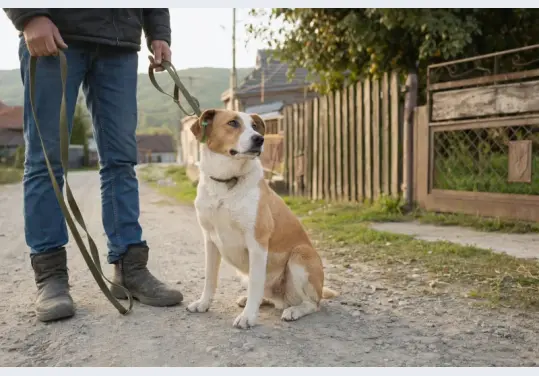
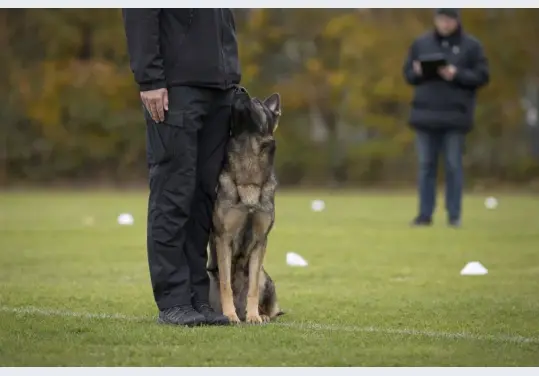
Anxiety and reactivity are among the most common challenges in the modern human–dog relationship. Urban noise, lack of predictability, past negative experiences, or unclear communication can easily turn a sensitive dog into an anxious or reactive one. In this context, mantrailing has proven to be one of the most effective and gentle ways to support these dogs, offering them a safe framework for emotional and behavioural growth.
Understanding Anxiety and Reactivity in Dogs
An anxious dog often lives in a constant state of alert. This can manifest as avoidance, freezing, trembling, or attempts to escape. Reactivity, on the other hand, usually appears as intense responses to specific triggers such as other dogs, people, bicycles, vehicles, or sounds. In most cases, reactivity is not true aggression but a response rooted in fear and emotional overload.
Both anxiety and reactivity stem from a dog’s inability to cope effectively with overwhelming stimuli and emotions.
Why Mantrailing Is Different from Other Activities
Mantrailing is a dog-centred activity, not a control-based one. Unlike traditional training methods that rely heavily on commands and corrections, mantrailing allows the dog to make decisions and work at its own pace.
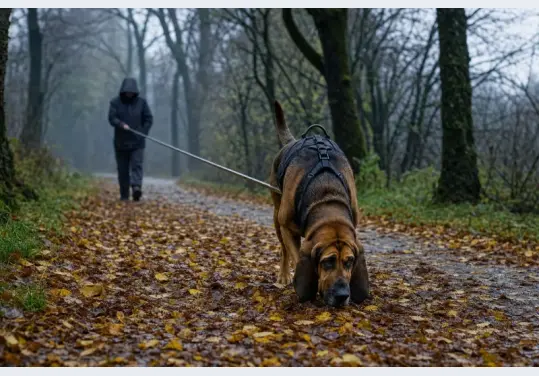
Wearing a harness and connected to a long line, the dog has a single, clear task: to follow the scent of a specific person. This predictable and instinctive task has a powerful calming effect on the dog’s nervous system.
The Nose: A Key to Emotional Balance
When a dog works with its nose, the brain shifts into a different functional state than the one responsible for fear or reactive responses. Intense olfactory engagement promotes focus, reduces emotional noise, and supports stress regulation.
For anxious dogs, this leads to:
- reduced avoidance and shutdown behaviours,
- lower hypervigilance,
- improved ability to stay present in new environments.
For reactive dogs, it results in:
- focus on the task rather than on triggers,
- emotional distancing from stimuli that would normally provoke strong reactions,
- more controlled and balanced responses.
Autonomy and True Sense of Control
A crucial factor in helping anxious and reactive dogs is restoring their sense of control. In mantrailing, the dog leads the process. It chooses the direction, pace, and strategy.
This autonomy:
- builds self-confidence,
- reduces frustration,
- helps the dog perceive the environment as manageable rather than threatening.
Over time, dogs learn that they can navigate challenging situations without resorting to extreme reactions.
The Handler Relationship: Safety Without Pressure
For anxious and reactive dogs, the relationship with their handler plays a vital role. In mantrailing, the handler does not correct, rush, or pressure the dog. Instead, they provide support, clarity, and emotional safety.
This approach:
- removes performance pressure,
- creates a secure emotional space,
- strengthens mutual trust.
The dog learns that the handler is a reliable partner, while the handler learns to truly listen to the dog.
Controlled and Gradual Exposure
Mantrailing allows work in diverse environments, always in a controlled and adjustable manner. Trails can be tailored to the dog’s emotional capacity, with difficulty increasing progressively.
As a result:
- anxious dogs are introduced to new stimuli without becoming overwhelmed,
- reactive dogs learn to function around triggers without direct confrontation.
This gradual exposure, paired with a positive and meaningful activity, leads to long-lasting behavioural changes.
Why Mantrailing Is Not a "Quick Fix" — but a Solid One
Mantrailing does not promise instant results. It does not "correct" behaviour but addresses the emotional roots behind it. With consistent practice, dogs become more balanced, confident, and capable of coping with their surroundings.
For anxious and reactive dogs, this represents deep, sustainable change.
Conclusion
Mantrailing is more than a sport—it is a powerful therapeutic tool. For anxious and reactive dogs, it offers clarity, purpose, and emotional safety. For handlers, it provides a new way of understanding their dogs and the relationship they share.
Through mantrailing, dogs are not forced to "behave better." They are supported in feeling better. And from that place, behavioural change follows naturally.
For many dogs, mantrailing is not just training. It is the beginning of genuine emotional balance.