
How to Choose the Right Mantrailing Leash
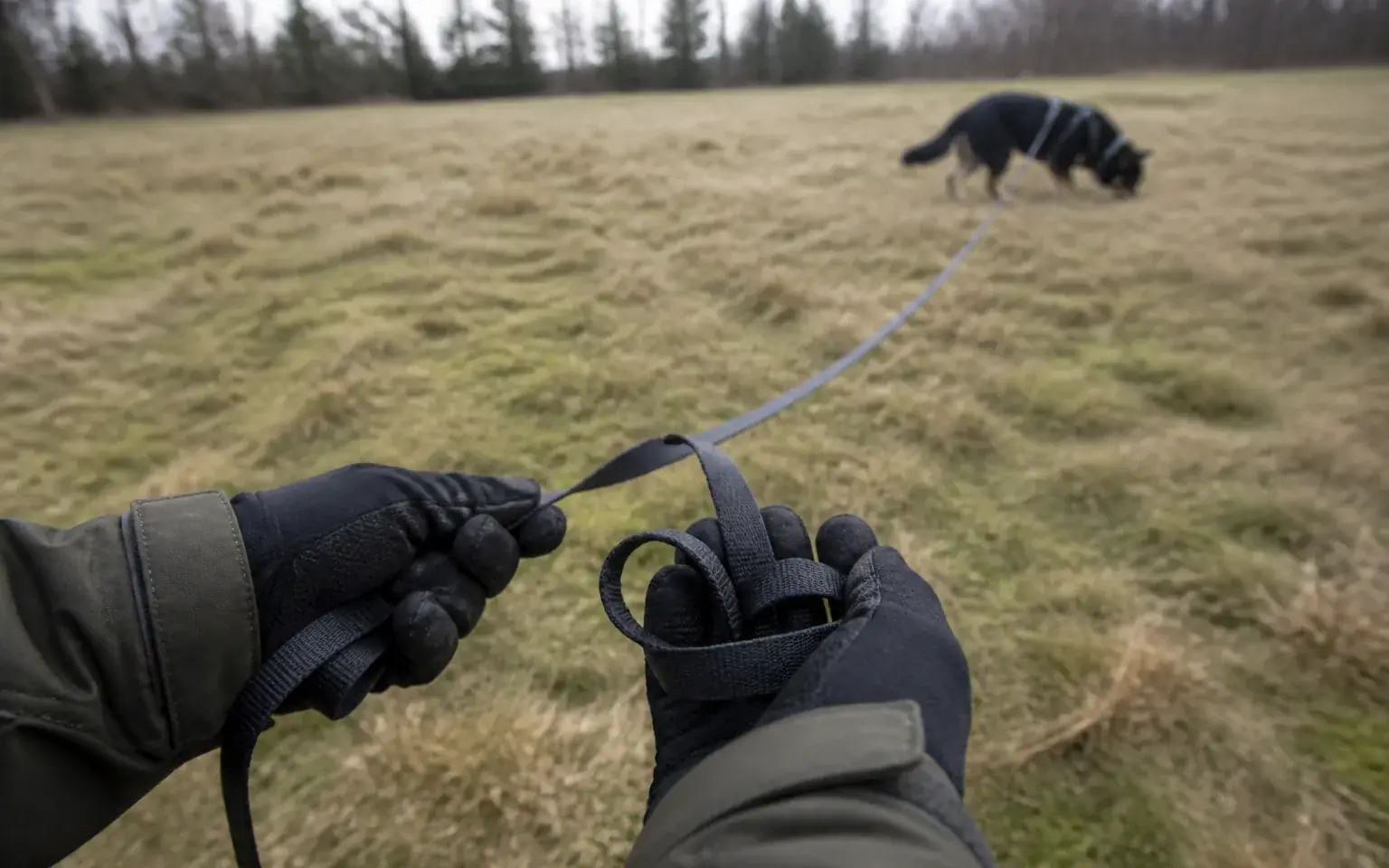
The leash is the second most important piece of equipment in mantrailing, right after the harness. Unlike a regular walk, in mantrailing the dog works on a long leash with consistent tension. This means the material, length, and weight of the leash directly affect how well the dog can work.
A leash that is too short restricts the dog's movement and disrupts its ability to follow the scent at ground level. One that is too heavy tires the dog and distracts it. The wrong material becomes stiff in cold weather or absorbs water and mud.
1. Leash material
The choice of material depends on how often you train and the terrain conditions you work in:
- Textile (nylon): Lightweight, flexible, and affordable. Good for beginners and occasional training. Downside: absorbs water and dirt, wears out faster with intensive use.
- Rope: Durable and strong, with a good grip. Suitable for dry terrain. Can become heavy and stiff when fully wet.
- Synthetic Biothane: The professional standard for mantrailing. Waterproof, odour-resistant, easy to wipe clean. Does not stiffen in cold temperatures. Lasts years with regular use. Recommended for regular practitioners.
- Natural leather: Elegant and comfortable in hand, but requires regular maintenance and is not ideal for wet or muddy terrain.
2. Leash length
Leash length is one of the most important factors in mantrailing. One of the most common beginner mistakes is shortening the leash for "more control," which has exactly the opposite effect.
- 5–7 metres is the standard recommended length for mantrailing, suitable for most terrain types and experience levels.
- 8–10 metres is used by advanced dogs on open terrain, where the dog needs maximum freedom to work the scent.
- A leash shorter than 5 metres restricts the dog's head position and disrupts its trailing posture. The dog pulls, you pull back - the tension destabilises both of you.
3. Weight and comfort
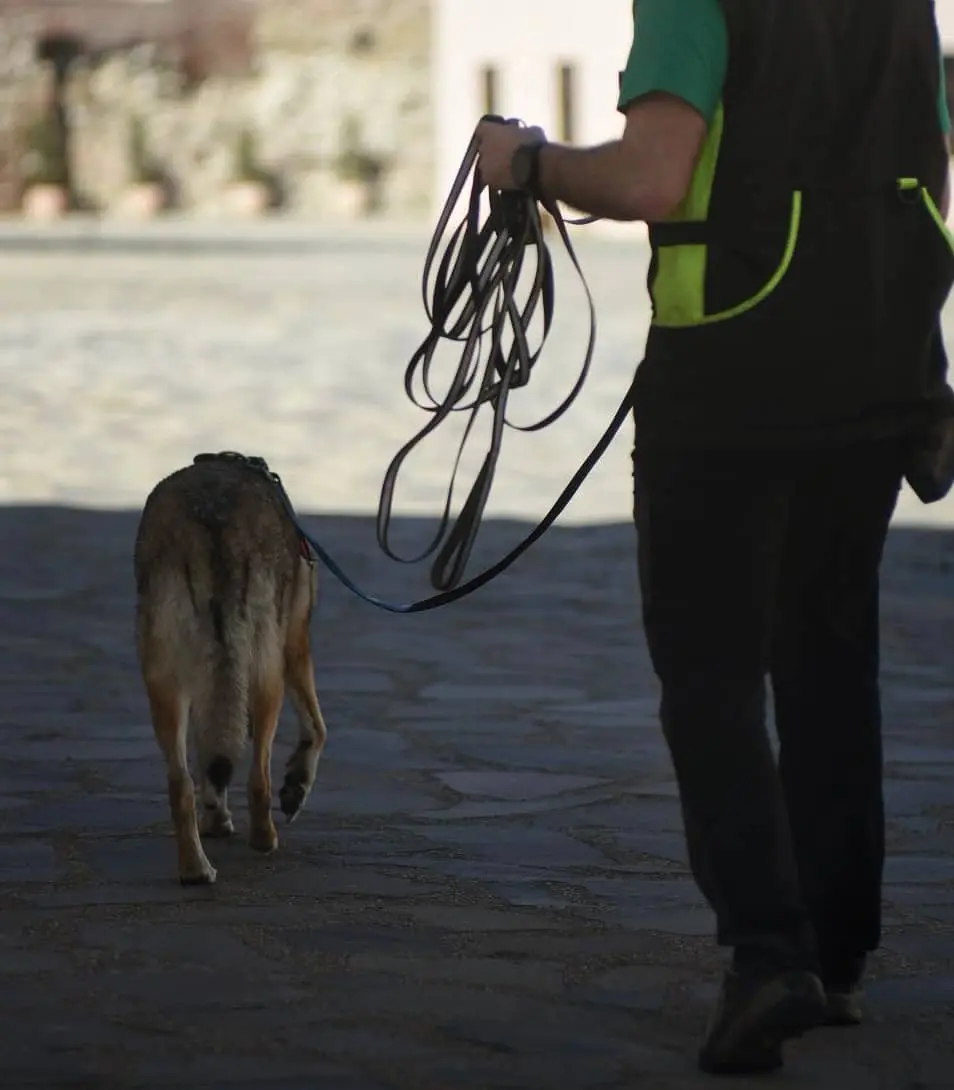
A leash that is too heavy tires the dog and distracts it from the trail - especially for small or medium-sized dogs. Biothane and nylon are the lightest options. Rope and leather can become significantly heavier when wet.
- Choose a leash proportional to your dog's size: a 10mm rope is appropriate for a large dog, but excessive for a Jack Russell.
- Consider your own comfort as handler too: the leash must be easy to manage in hand without cutting into your palm when the dog pulls.
4. Strength and durability
- Regularly check stitching and carabiners - the highest-stress points under pulling force. A low-quality clip can fail unexpectedly.
- Quality biothane withstands intensive use for 3–5 years without visible degradation. Nylon requires more frequent replacement.
5. How to hold the leash
An often-overlooked aspect: how you manage a long leash directly affects the dog's performance. The leash should never be wrapped around your hand - hold it in loose loops with minimal tension. The dog needs to feel freedom, not constant restraint.
The goal is to find a leash that is comfortable, easy to manage, and durable for your training conditions. For beginners, a quality nylon leash is a solid starting point. Long-term, investing in biothane is the most economical choice.
6. Leash Care
Whatever material you choose, regular maintenance extends the leash's lifespan. Biothane cleans up quickly with a damp cloth after every session - it doesn't absorb odours and doesn't hold onto dirt. Nylon can be washed with water and a neutral soap, but needs to dry completely before storage to prevent mould. Rope requires more attention when cleaning, especially after muddy terrain. Regularly check the carabiners and rings - they take the highest stress under pulling force and should be replaced at the first sign of wear or deformation.
The rest of the equipment
Why Choose Mantrailing?
Discover why mantrailing is one of the most engaging and rewarding canine sports.